


Products


Wholesale Recyclable Coffee Bags | Flat Bottom Coffee Packaging
01. Product Overview

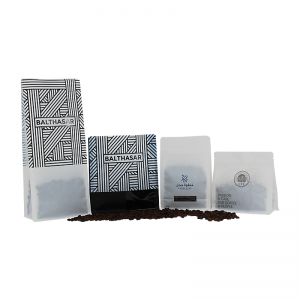
These Recyclable Coffee Bags measure 135 × 75 × 265 mm and are available in a classic black and white combination with a minimalist matte finish. Suitable for packaging whole coffee beans, ground coffee, and specialty coffee products.
The black and white combination gives coffee brands greater flexibility in organizing their product lines. Different colors and labels can be used to distinguish coffee origins, roast levels, and seasonal collections while maintaining a consistent brand identity.
The compact flat bottom structure allows the bags to stand upright when filled, while the flat panels provide space for brand labels, barcodes, and roast information. This makes them a practical packaging option for coffee brands and roasters managing multiple SKUs.
02. Product Specifications
2. Standardized Bag Design for Simplified Purchasing
The consistent 135 × 75 × 265 mm dimensions are suitable for coffee brands looking to reduce the number of packaging formats they manage.
Provided that the filling capacity and packaging process are compatible, different coffee products can share the same bag format, with product names, origins, and roast information updated through individual labels.
This approach helps simplify packaging procurement, inventory organization, and routine replenishment.

|
Specification |
Details |
| Product Name | Recyclable Flat Bottom Coffee Bags |
| Bag Style | Flat Bottom Pouch |
| Dimensions | 135 × 75 × 265 mm |
| Width | 135 mm |
| Bottom Depth | 75 mm |
| Height | 265 mm |
| Colors | Black & White |
| Surface Finish | Matte |
| Applications | Whole Bean Coffee, Ground Coffee |
| Material | Packaging structure designed with recyclability in mind |
| Filling Capacity | Subject to coffee density and filling tests |
| Supply Options | Wholesale / Custom Packaging |
| Supplier | YPAK |
03. Key Features & Benefits
1. Black & White Combination for Flexible Product Management
For coffee brands managing multiple product lines, packaging needs to support both product presentation and efficient identification.
The black and white combination allows brands to distinguish different coffee origins, roast levels, blends, and seasonal collections while maintaining a consistent packaging style.
By combining the two colors with different product labels, businesses can reduce the need for separate printed packaging designs for every coffee variety, making new product launches and ongoing SKU management more convenient.
3. Flat Panels for Branding and Product Information
The flat front and back panels provide space for brand labels and essential product information, including:
- Coffee origin, variety, and processing method
- Roast level and roast date
- Net weight and product details
- Product barcodes and batch numbers
- Brewing recommendations and additional information
The matte black and white surfaces provide a clean visual background for different label designs, helping brands maintain a consistent appearance across their retail coffee products.
4. Barrier and Heat-Sealing Performance for Coffee Storage
Coffee packaging requires suitable barrier materials and sealing structures based on actual storage conditions.
These Flat Bottom Coffee Bags are designed with recyclability in mind. Their oxygen barrier, moisture resistance, and heat-sealing performance should be verified according to the final material structure.
Before bulk purchasing, buyers should consider the following:
Oxygen Barrier (OTR)
Evaluates the material's resistance to oxygen transmission, helping determine whether the packaging meets the storage requirements of roasted coffee.
Moisture Barrier (WVTR)
Measures resistance to water vapor transmission, helping assess protection against external humidity during storage.
Heat Seal Strength
Helps verify whether the seals remain intact during transportation, stacking, and routine handling.
Filling Equipment Compatibility
The material should be evaluated against the sealing temperature, pressure, and dwell time used by the existing packaging equipment.
5. Recyclable Packaging Design for Material Upgrades
For coffee brands considering recyclable packaging, material selection affects not only recyclability but also barrier performance, processing requirements, and compatibility with existing packaging operations.
The recyclability of these bags should be assessed according to the final material structure, packaging components, and recycling systems available in the destination market.
For products intended for the European market, buyers should also consider applicable Packaging and Packaging Waste Regulation (PPWR) requirements, food contact regulations, and relevant technical documentation.
YPAK can assist customers in evaluating suitable material structures and packaging options based on their specific requirements.


Frequently Asked Questions (FAQ)
The minimum quantity required varies according to the process of printing. Digital is your solution for shorter runs. MOQs tend to be 500 to 1,000 bags with average order values or (AOV) of £750 to £2,500. The setup costs are higher with rotogravure printing. So you need to place a much bigger order, usually 10,000 units or more per design.
There are some kinds of timelines that don't get to follow these patterns. After design is approved, digital printing should last you quite a while. The production may also typically take 2-3 weeks. On the otherhand the printing by rotogravure which is much slower as it will be about for 4-6 weeks. This is due to the fact that you have to have the custom printing plates created. Be sure to check lead time with your supplier.
Yes you can trust on them totally. The custom printed stand up pouch bags are made of the most durable and high barrier whiteboards, which is also approved by FDA and provide a high degree of safety and reliability. These products meet stringent FDA standards for food contact. So, always request for this certification from your supplier before placing any order.
You can always try generic samples for size and material. In rare cases, a completely custom printed prototype of your personal design may be feasible, but it can also be costly. The dgtl file is approved, as industry standard. This is the closest approximation here of what your final pouch will look like, it is a very high quality PDF.
Resealable zipper is attached on most of the pouches for convenient use of your customer. As you fill the bags, you will employ a basic machine called an impulse heat sealer. That's all this machine needs to create a robust, tamper-evident seal over the zipper and tear notch.





QUICK LINKS
NEWSLETTER

custom sticker, sticker packs, custom sticker sheets, sticker, sticker printing, Custom Printed Coffee Bags,