


30g Matcha Pouch: Size, Film and Filling Recommendations.
A Google search for 30g matcha pouch displays mostly finished matcha products rather than empty packets. The customer desires to make comparisons of quality, price, servings and freshness. However, a packaging buyer must turn the same 30g claim into a pouch that can be made. This guide links the two intentions without treating net weight as a ready-to-go size specification.
YPAK enumerates flat-bottom bags, stand-up pouches, side-gusseted bags, four-side-sealed bags and flat pouches, as well as recyclable, compostable and conventional laminates. Its published process covers design, printing, lamination, slitting, bag making and inspection. The actual matcha, dose and sealing conditions should, however, be confirmed by the brand and filling partner.
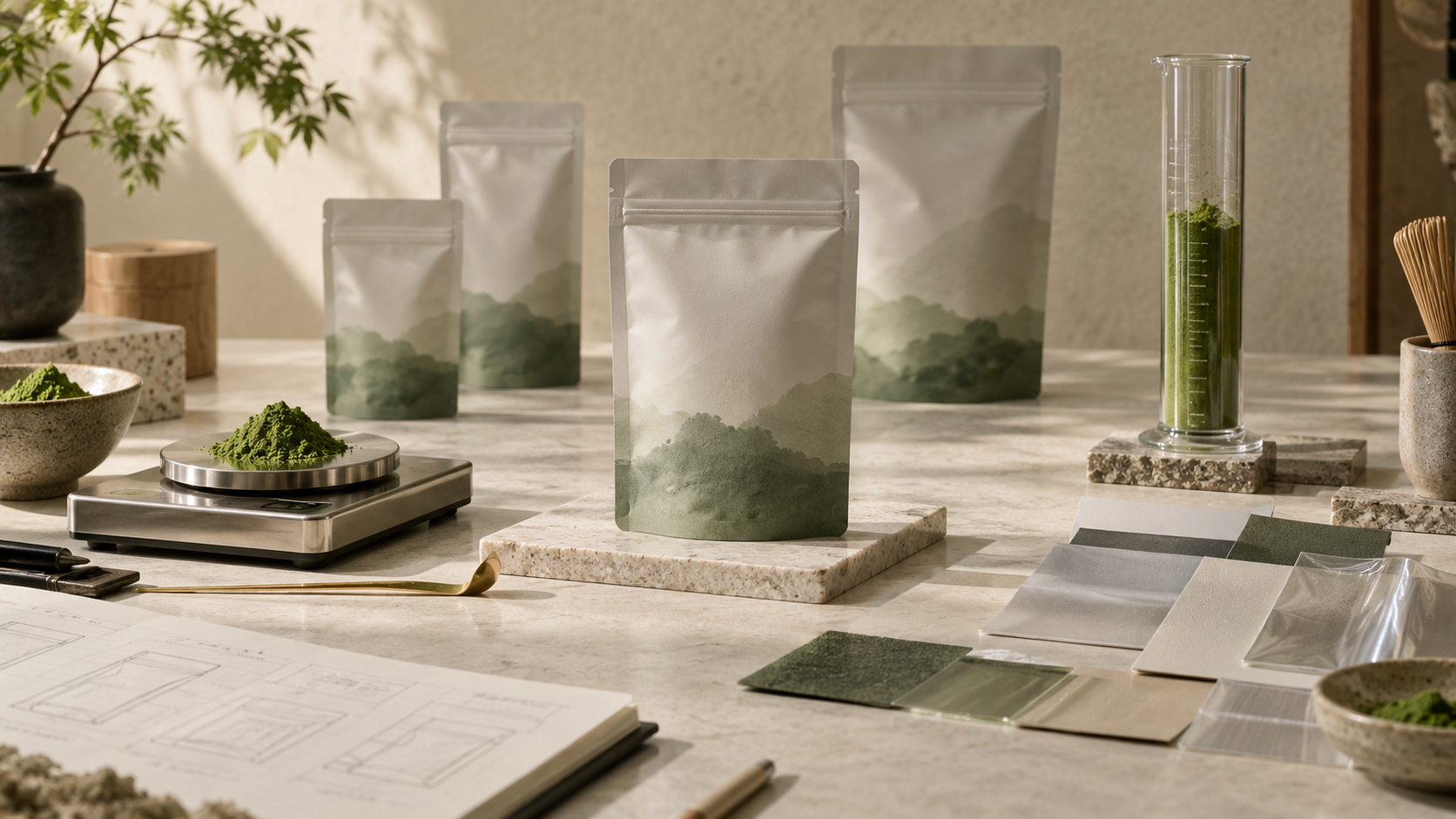
Nail What the 30g Pack Should Do.
Start with the opening pattern and sales channel. The same weight may require a premium shelf pack, an online refill, and a food-service pouch to have different presentation, closure and distribution strength.
Write the Use Case Preceding the Drawing.
● Indicate: Stand, hang, fit a carton or ship alone.
● Determine the number of times consumers will open it.
● Establish the necessary unopened life and storage guidelines.
Measure the Real Powder Volume.
The density of matcha varies depending on grade, aeration, handling and settling. Copying a competitor’s size is not a good idea; measure several production-representative 30g portions. Take the biggest credible volume as the design basis to ensure that the pouch is fillable when the powder is least compact.
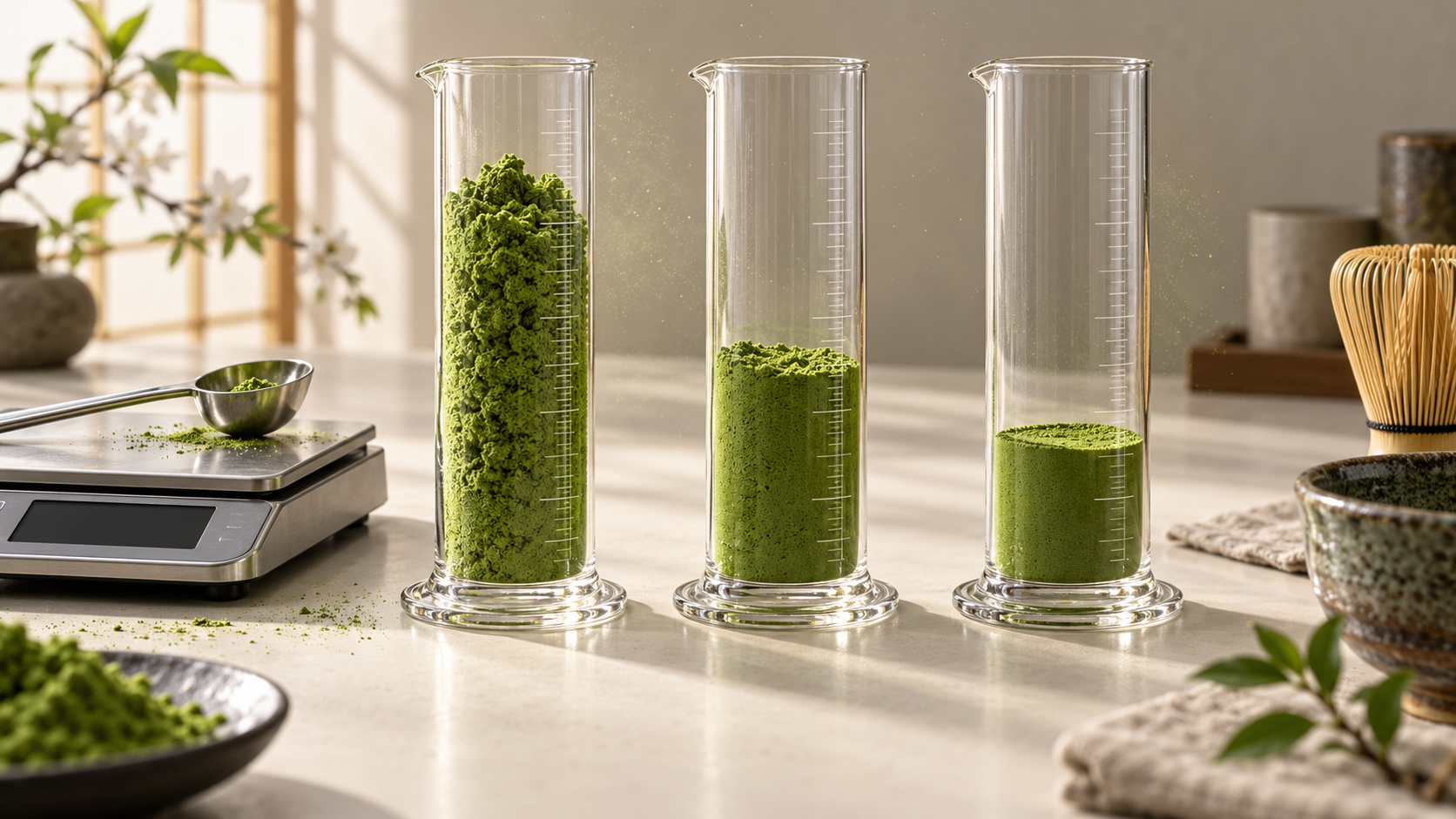
Record More Than One Reading
● Loose volume immediately after dosing.
● Final volume following normal transport vibration.
● Lot-to-lot range and procedure of measurement.
Choose an Appropriate Format.
The formats supported by YPAK provide the buyers with multiple valid starting points. A stand-up pouch provides recognizable retail appearance. A bag with a flat bottom will have a stable profile, but can be more structured than a small pack requires. Flat pouch may be used to accommodate refills or inner packs. Select according to use, not to appearance.
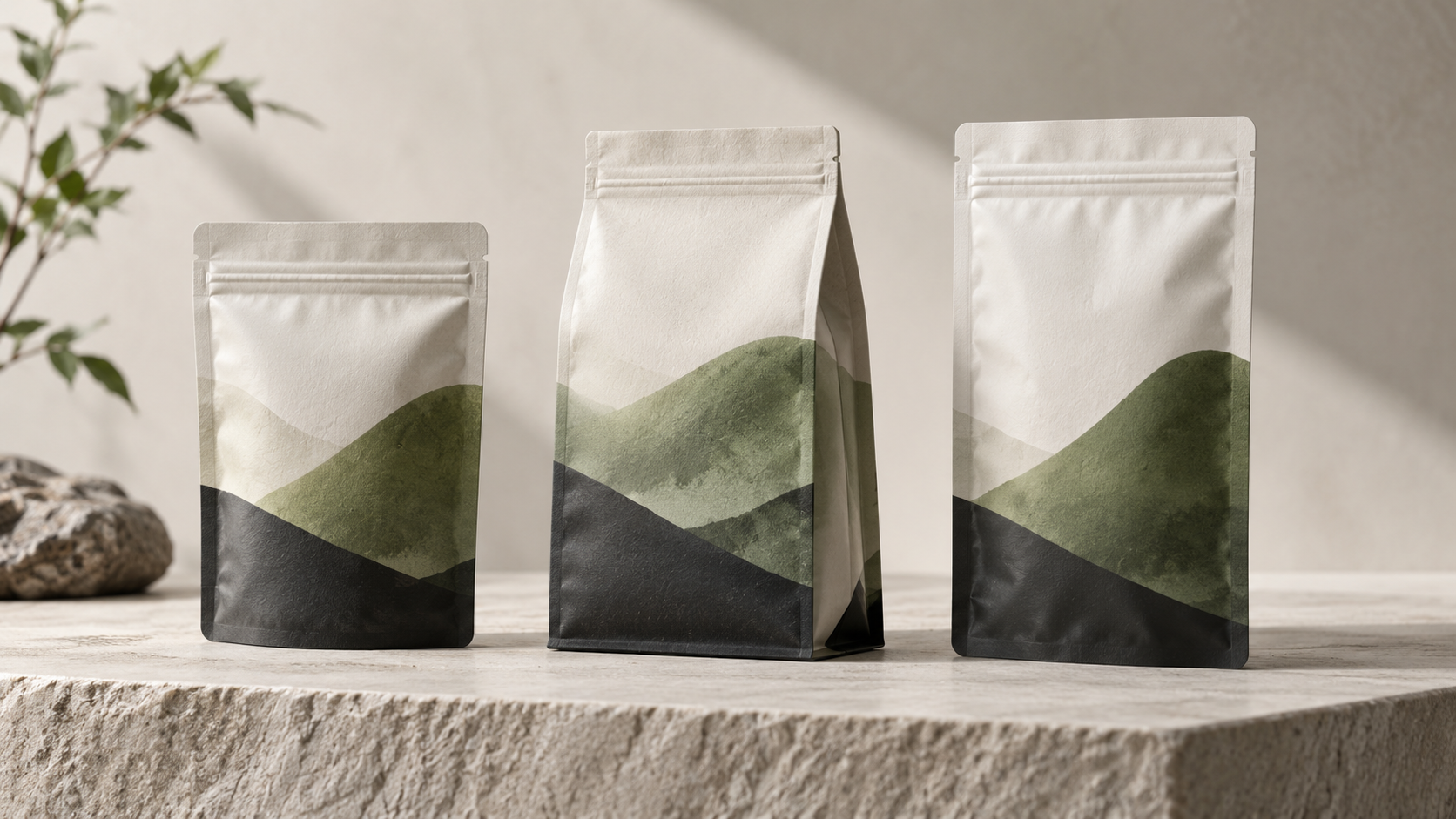
Ask One Question per Candidate.
● Will the filled pouch appear appropriate at only 30g?
● Is the format providing adequate usable panel area?
● Is the chosen packer able to deal with its top seal and opening?
Build Size depending on usable space.
Final width and height contain spaces that are unable to receive powder. Permanent seals, bottom construction, zipper placement and top-seal allowance decrease usable area. Both external dimensions and the internal product zone should be depicted in the drawing. Headspace should make sure that airborne matcha is not touching the final seal.
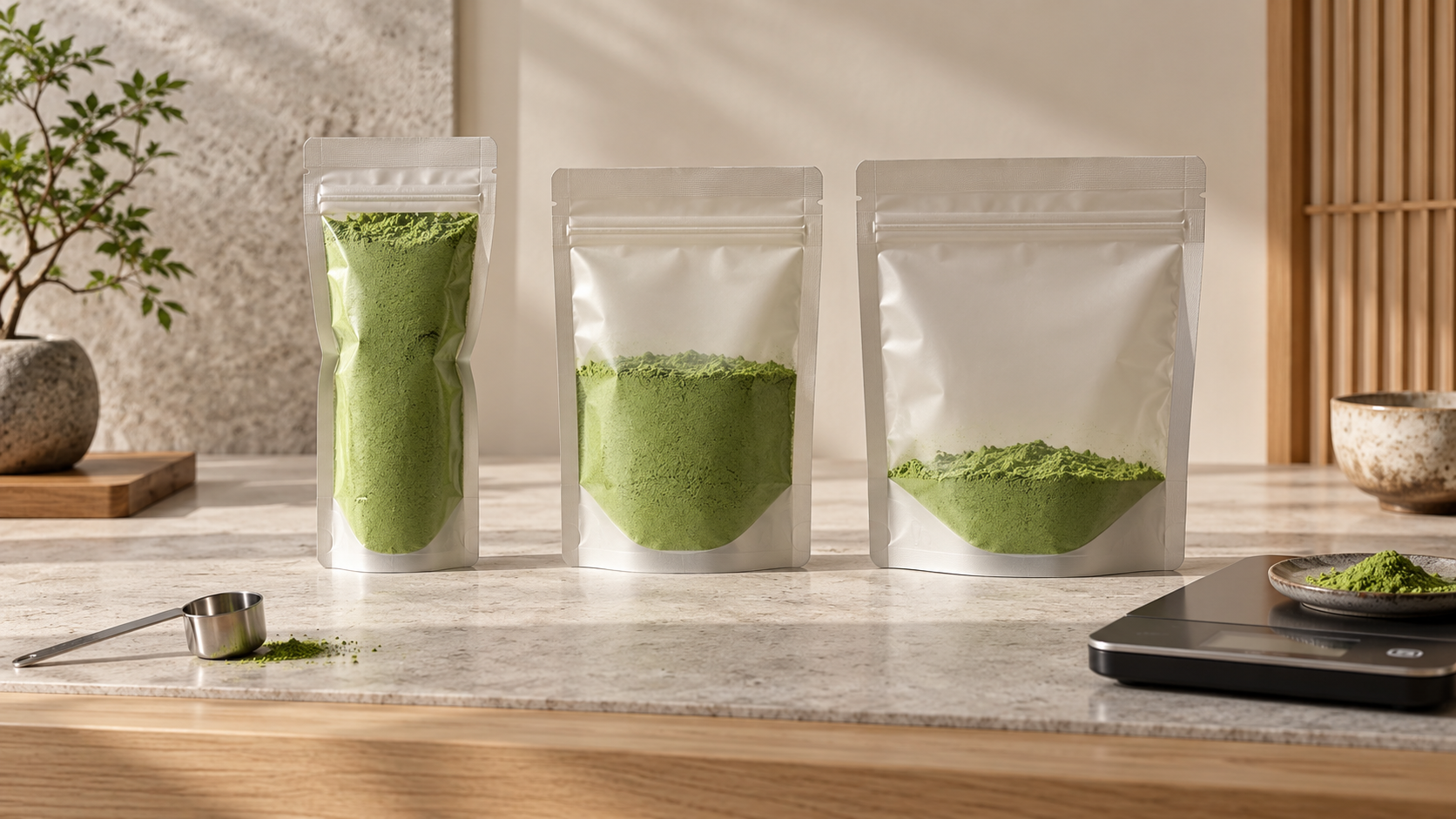
Check Dimensional Stack.
● Volume of products at low end of density expectation.
● Filling headspace and clean top-seal.
● Closure, tear notch, coding and grip allowances.
● Remaining space of artwork.
Compare Two or Three Trial Sizes.
Do not accept the first drawing from a net-weight chart. Prepare representative samples using a small size ladder, fill them with equivalent powder and compare access to production, shelf profile and emptying. The most suitable size is compact but does not press powder into the seal region.
Same Acceptance Questions.
| Trial point | Pass condition | Warning sign |
| Fill | Clean headspace | Powder reaches seal |
| Profile | Balanced 30g appearance | Tight or underfilled appearance. |
| Opening | Controlled access | Spillage or poor grip. |
| Emptying | Low residue | Powder trapped in corners. |
Protection of Matcha.
Matcha should be protected from oxygen, moisture and light. Recyclable, compostable or foil laminate are material descriptions, not promises of performance. Ask for the complete construction and barrier information of the proposed film, and verify it using filled-product storage tests.
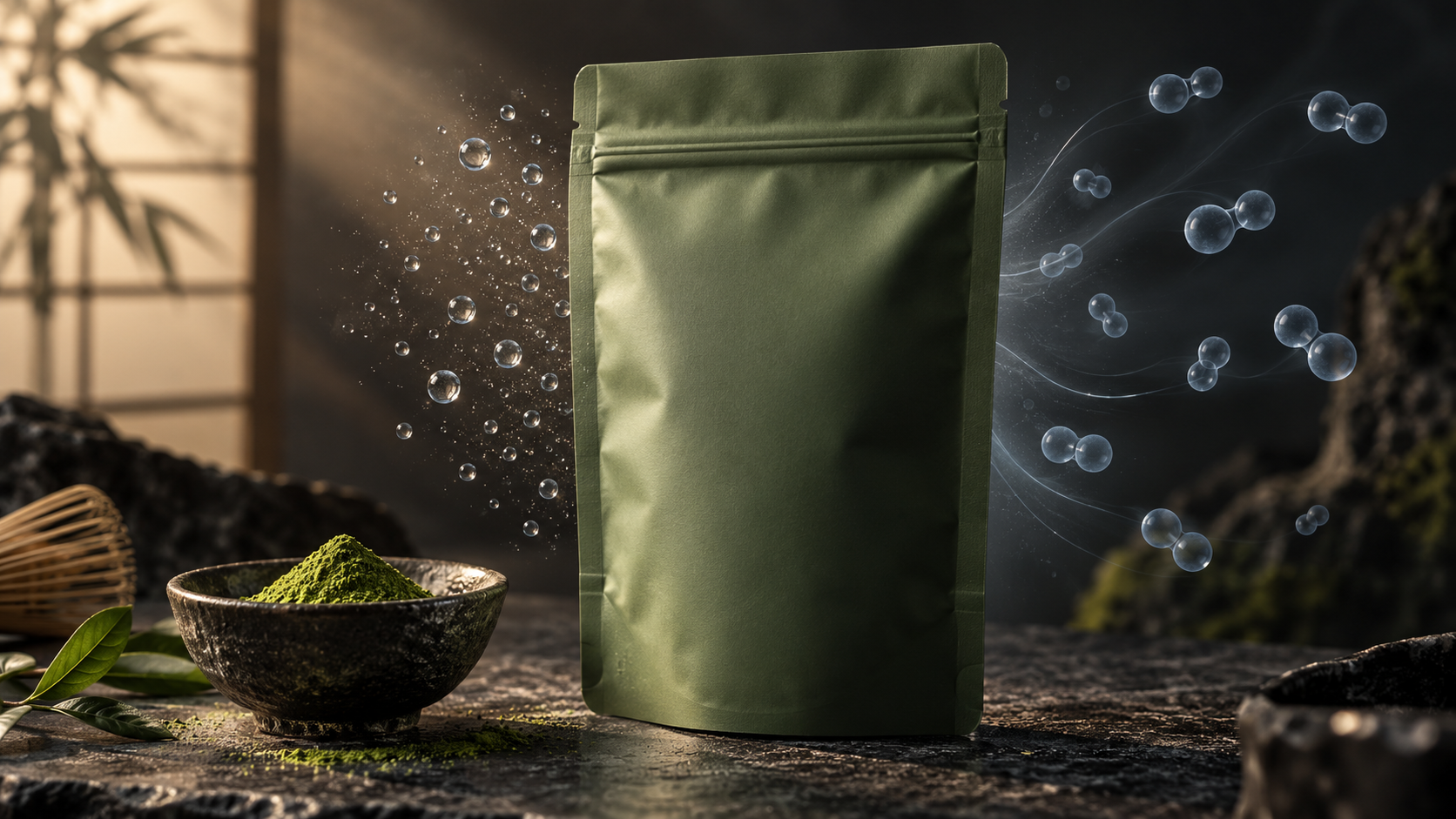
Place the Barrier Brief.
● Distribution climate and required shelf life.
● Oxygen and moisture tests under specified test conditions.
● Light protection from the complete printed pouch.
● Food-contact and market specifications of the sealant layer.
Determine Reclosure Value-Addition.
A 30g retail pouch can serve several portions hence a zipper can come in handy. It also takes up space and collects fine powder around the opening. A zipper might not be needed in case the pouch is a refill that has been emptied into a tin. Test the selected opening technique on real users and on real powder.
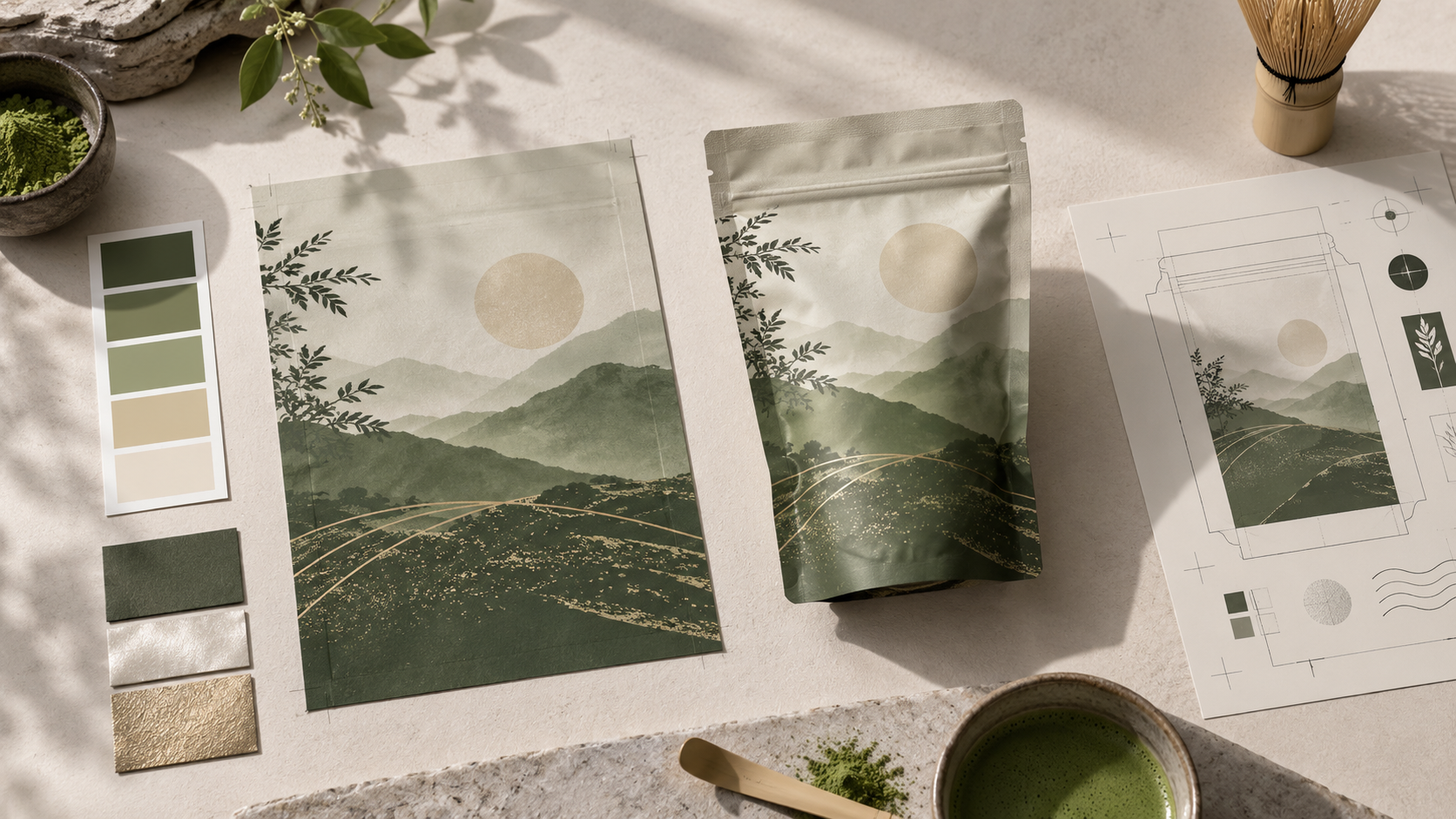
Evaluate the Opening Cycle
● Anticipated number of openings and dose removed each time.
● Powder easily clears and can be reclosed.
● Seal integrity and storage directions after opening.
Fit Artwork to Small Retail panel.
Product identity, intended use and 30g net weight should be quickly verified by the front. Origin, preparation and necessary claims should be legible at finished size. Check a printed, filled pouch since panel curvature and a zipper may decrease visible space in comparison to a flat screen proof.
Accept Three Factual Proofs.
● Dieline evidence of seals, safe zones and location of codes.
● Color, finish and contrast printed-film proof.
● Filled-pouch proof for shelf display and deformation.
Qualify separately.
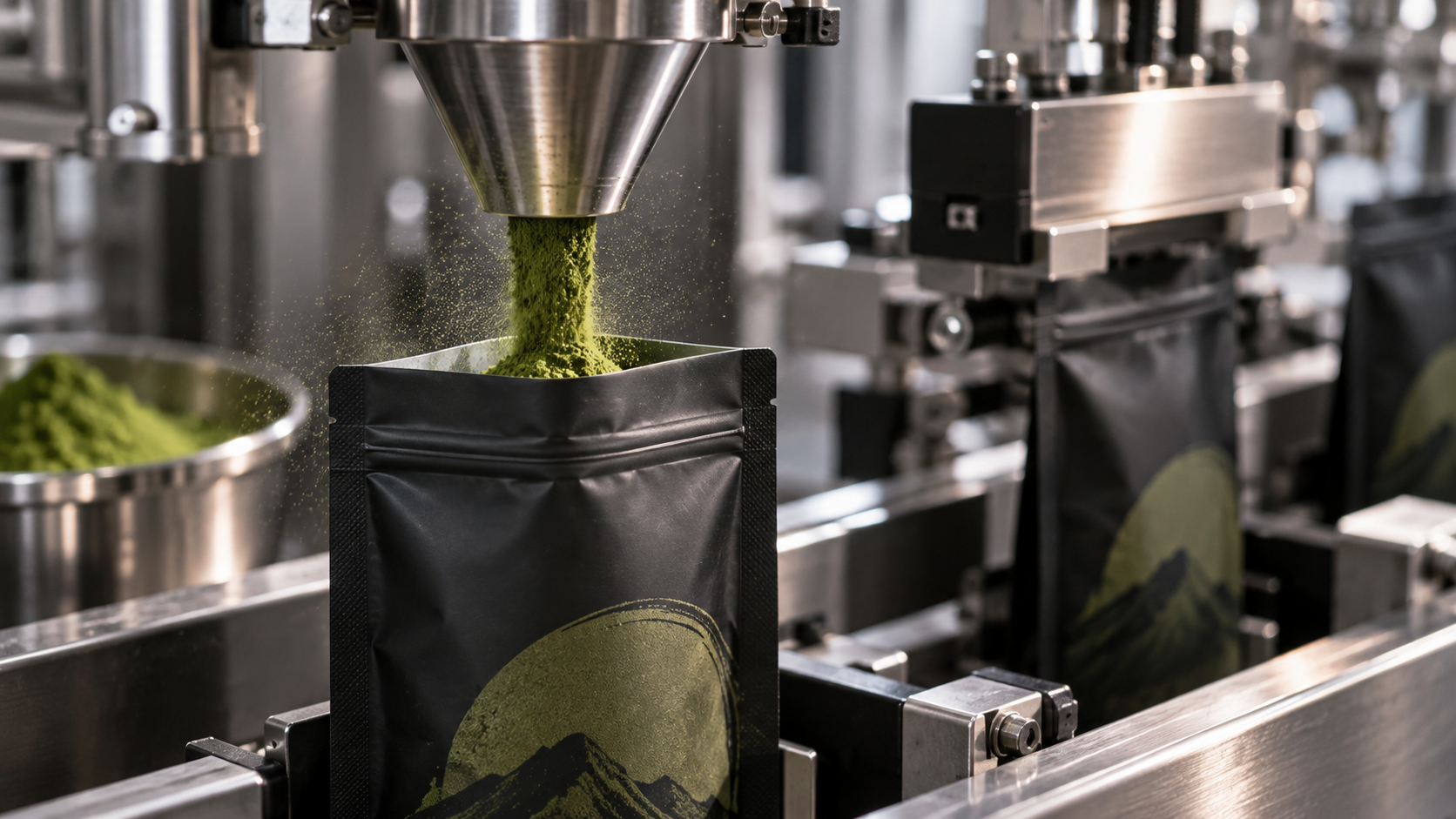
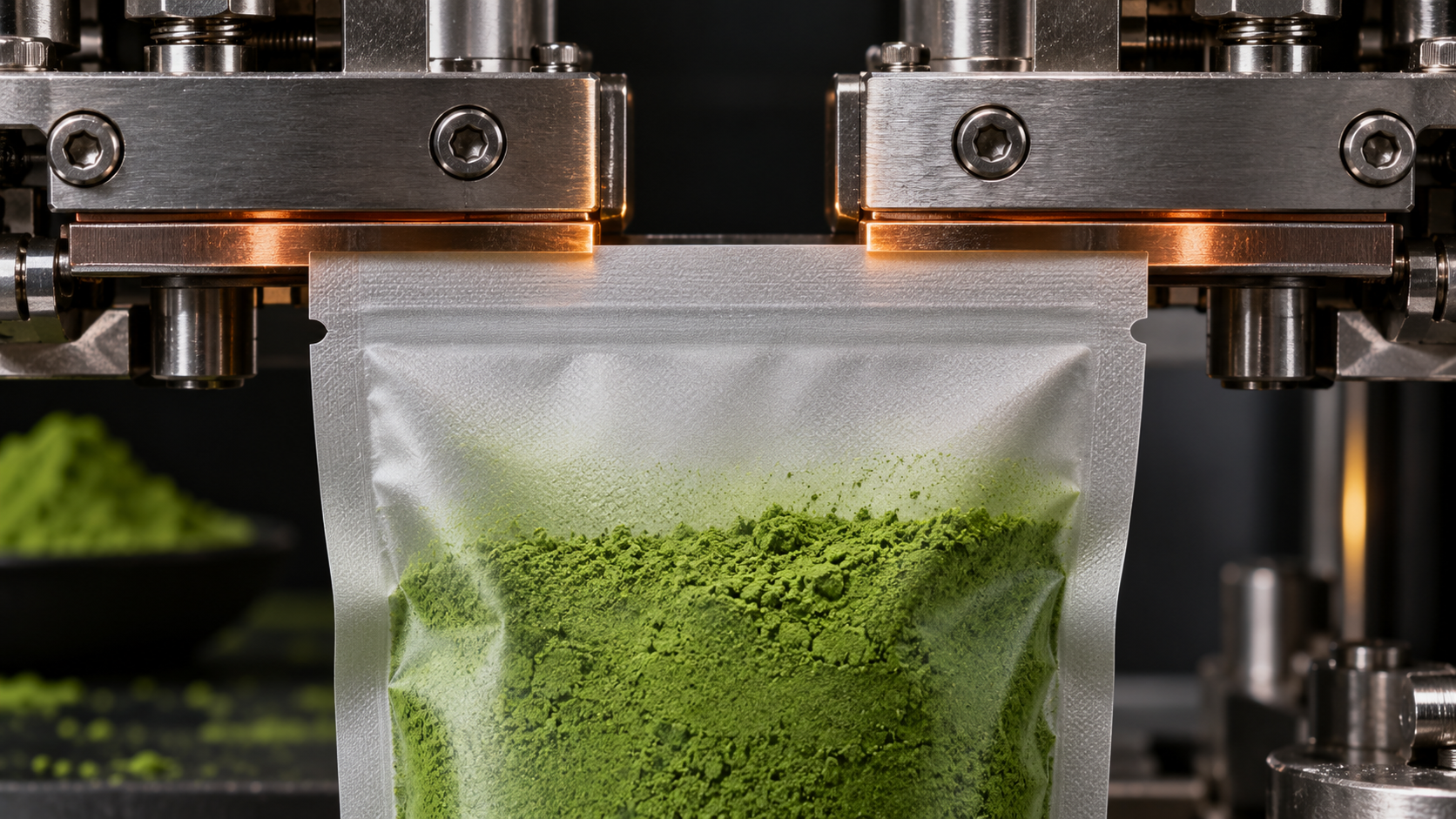
YPAK produces the packaging, whereas the chosen packer should demonstrate the ability to dose and seal the packs. Fine matcha is able to aerate, carry static and contaminate the upper area. A line trial with the recommended powder, pouch and realistic operating speed can thus not be substituted with hand-filled samples.
Get the Working Window.
● Type of filler, dose tolerance and nozzle size.
● Constant speed and startup and restart.
● Seal temperature, dwell time and pressure.
● Cleaning procedure and acceptance of leakage.
Distribution and Shelf Life Test.
A filled pouch is to be checked in its intended channel. E-commerce packs have the risk of compression and temperature variations; retail packs can be exposed to longer display times. Keep samples of the same batch and test the integrity of the package and matcha quality over time.
Retain Comparable Evidence
● Filled look prior to and subsequent to settling.
● Performance of seals following transportation simulation.
● The color, aroma, caking and preparation outcomes.
Accept One Common Specification.
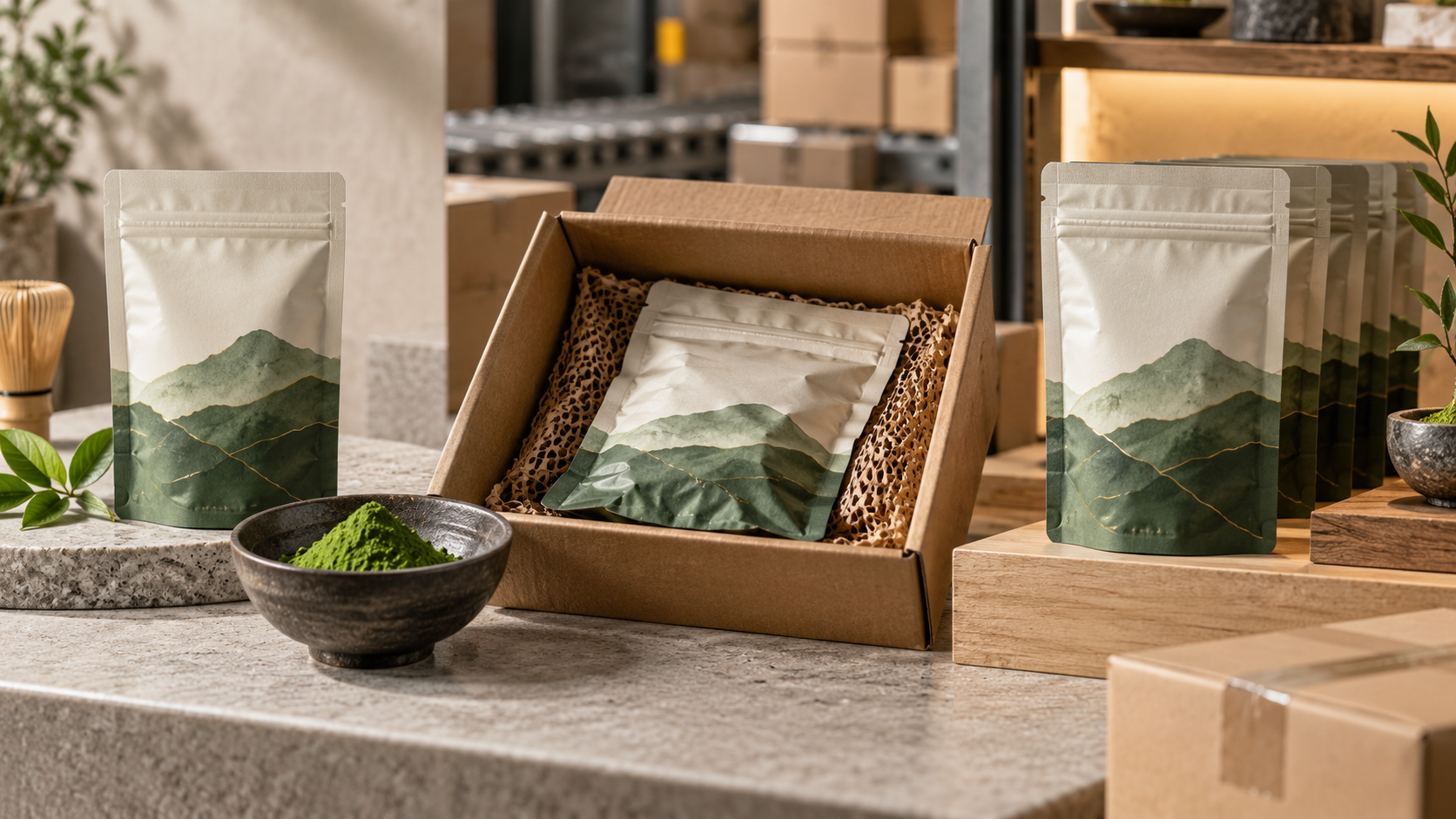
The final file must correlate material and conversion data of YPAK with filling evidence of the packer and the artwork and claims of the brand. Document the accepted drawing, laminate, print version, line settings and acceptance limits. A documented review must be initiated by any subsequent alteration of powder, film or dimensions.
Conclusion
The selection of a 30g matcha pouch cannot be done on the basis of net weight alone. Weigh the powder, select channel format, compare trial sizes, specify barrier requirements and test filling using the chosen packer. This provides the consumers with a compact, fresh product appearance and supply chain with a specification that it can replicate.
FAQ
What size pouch would fit 30g of matcha?
No standard size exists. It is based on real powder volume, format, seals, closure and filling headspace.
Does 30g pouch have a zipper?
Use one when the original pouch will be opened many times. It may not be needed for a refill that is emptied into a container.
Is YPAK able to fill the matcha?
The YPAK website explains packaging customization and conversion. Filling should be agreed with the filling partner.
Post time: Sep-11-2026


