


Child resistant bags: Closures, Testing and Adult Usability.
The way a product is to be packed, to be opened, reclosed and stored should determine the type of child resistant bags to be used. Such a small flat single portion pouch does not do the same business job that a stand‑up bag does in an opening and closing many times throughout a period of weeks. Despite the common feature of both potentially operating on a restricted‑access, both the dimensions, opening sequence, information area and production controls vary.As a packaging buyer, the paragraph starts with the bag type and the procedure that the consumer follows. The aim is to find a design that secures the contents, allows the necessary access control and should be adult‑friendly. The name of the closure is not enough to determine a bag that is finished is fit to be used in a specific product or sales market.
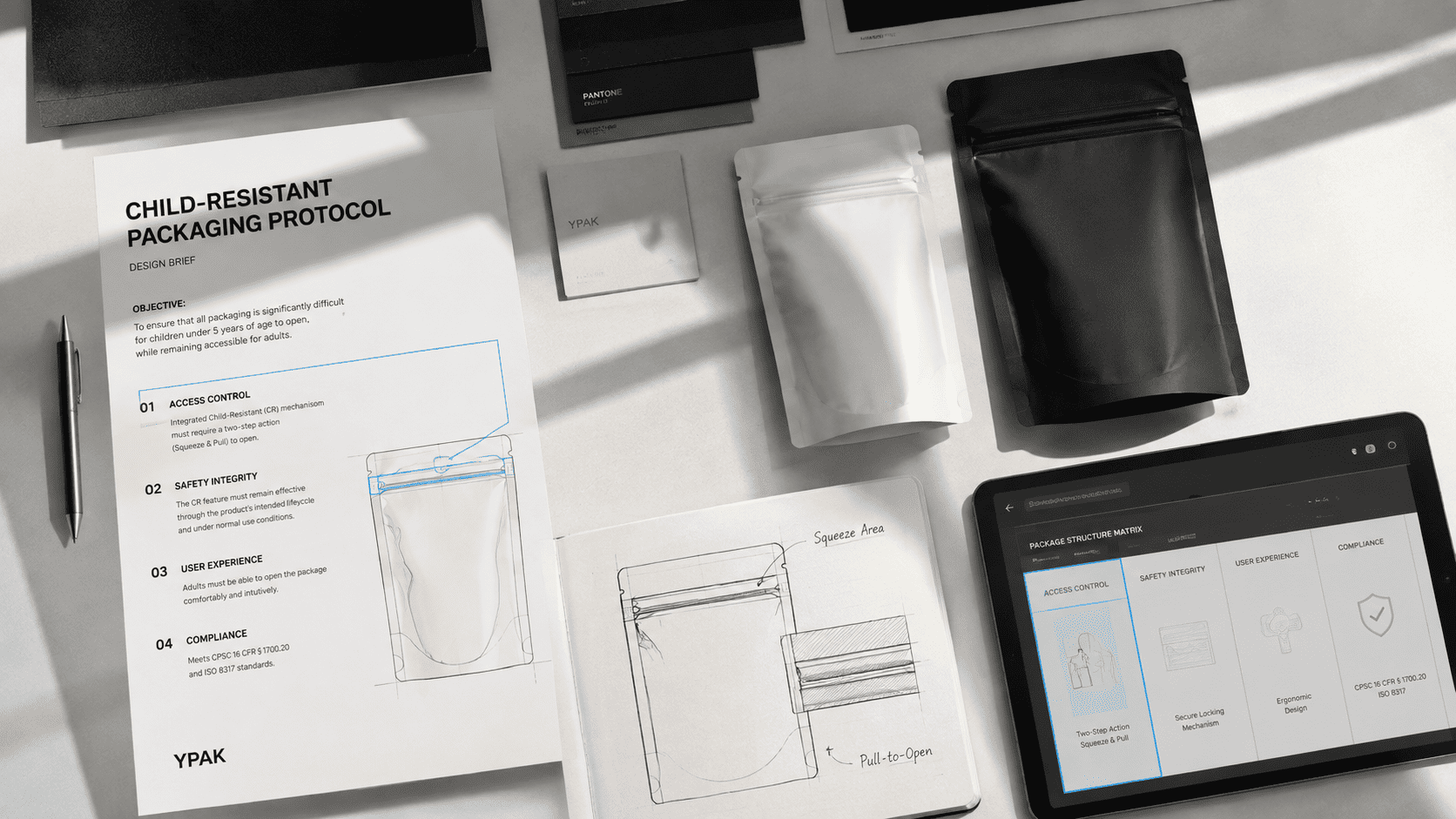
Determine What the Child Resistant Bag should do
Start with the specific packed product as opposed to the overall product category. The shape of the piece, surface oil movement, powder movement, fragrance, serving lightness/count and area of the zipper influence the film, experience of opening, and area of the zipper. The destination market defines what kind of requirements and supporting evidence should be reviewed prior to the production.
Build a use profile
The buyer must capture the path that the bag followed to fill and the disposal by the consumer. This display the fact that the package has to be accessed again, instructions on how to open the packages do not disappear after touching it, as well as the fact that the product can contaminate the packages and thus the fact that package seals can be disturbed.

- Form, size and net weight of product.
- Use: single‑serving or multi‑serving.
- Expected number of opening and reclosing cycles.
- Cleanliness of seal‑zone and filling method.
- Retail, online or distribution or wholesale distribution.
- Responsible compliance reviewer and destination market.
Compare the Main Flexible Bag Formats
Child resistant bags come in flexible designs which accommodate various merchandising and filling requirements. The format with the widest panel is not necessarily the most suitable one or the often‑complicated zipper. It is the bag which can be made, stuffed, experimented and ordered many times as a single controlled set‑up.
| Bag format | Typical purchasing fit | Main approval concern |
| Flat pouch | Samples and low-volume products or units that are small. | Area open, tear space and label space. |
| Stand-up pouch | Multi-serving retail products | Gusset growth, stability and recovery of closure. |
| Reclosable zipper bag | Products that are controlled and repeated access. | Opening and complete resecuring of adults. |
| Non-reclosable unit bag | Individually controlled portions | Integrity and one time opening performance. |
Flat bags of products of compact size
The flat bag reduces the volume of materials and shipping packages and the opening aspect may consume a significant portion of a small panel. Buyers are to determine the ability of warnings, instructions on opening and product information to be legible after final closing.
Stand‑up bags of the repeated retail use
There should be a bottom gusset which ensures display stability and extra volume. The full shape, nevertheless, modifies the shape of the hands and the force used to open it. New samples with filled sample ought to be used to test the position of the zippers, the top clearance and capability of returning the bag to a secure position.
Choose the Closure out of the complete bag
Various opening actions can be employed by restricted‑access zippers. It is not which mechanism could be perhaps said to sound most secure, but whether the mechanism so chosen will be favoured to the proposed construction and whether it could be worked correctly by the ordinary employment of it. It depends on the film tautness, bag width, the alignment of zippers and the top‑seal geometry, which affects the ultimate outcome.

Do NOT detach zipper to the pouch
A zipper that has been tested in one set up is not to be expected to work the same in all sizes or laminate. Consumer handling could vary with changing the bag width, with a gusset or relocating the instructions. Accept the shutdown, along with the specifications of the actual pouch.
Protect Adult Usability
Both child resistance and adult usability are to be taken into consideration. In case the adults will not be able to locate the opening point or close the bag completely, they can cut off the package, empty it or leave it unsealed. These actions undercut the idea of choosing a restricted‑access format.
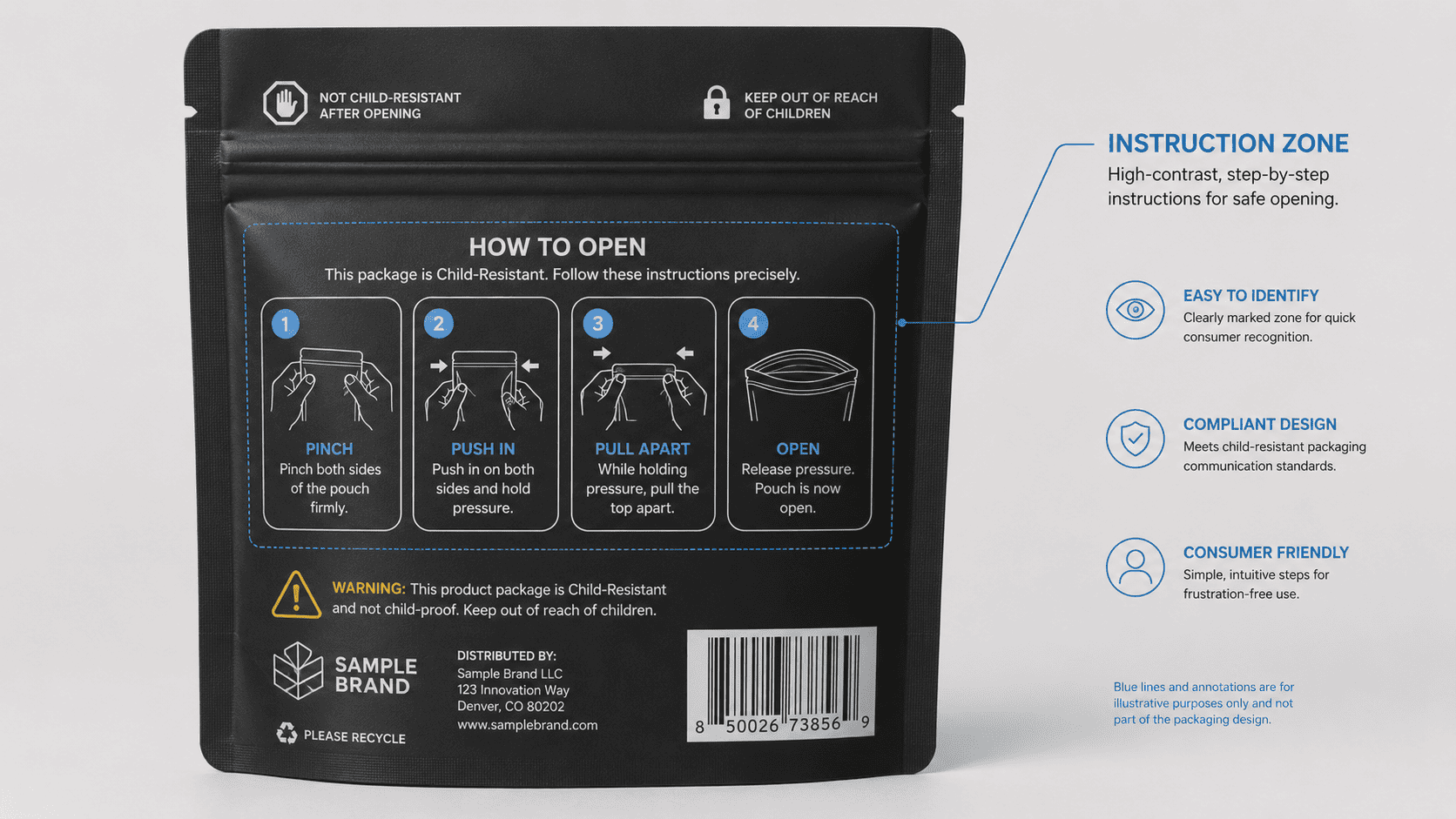
- Ensure that opening point is readily reachable by adults.
- Have explicit directional signs with sufficient contrasts.
- Have enough grip on top of the zipper.
- Force applied to check opening on a filled specimen of production.
- Ensure that users are able to identify full closure.
- Determine access to products that are small and sticky without spillover.
Opening Plan before Artwork is Approved
The type of instructions that are functional must be long‑term in the artwork hierarchy. Once the branding and regulatory information have packed the panel, they ought not to be minimized or transferred. Look through a printed message written on a converted, filled bag due to the folds and curvature and heat seals that may not make the messages visible.
Be consistent with directives among SKUs
A product family can be modified with regard to colour, taste or even size and have a similar opening actualization. Regular arrangement of packs enables adults to learn about the pack and minimise errors in artwork. SKUs that rely on another mechanism should be easily identified and examined distinctly.
Test Filled Bags Using Representative Samples
Empty samples assist in compare formats, but no indication of the full operating conditions. The volume of the fill can bulge the zipper, particle size can intrude into the fastening and oils can disperse. Representative filled bags are thus to be incorporated in development checks as well as any formal test plan needed of the target market.
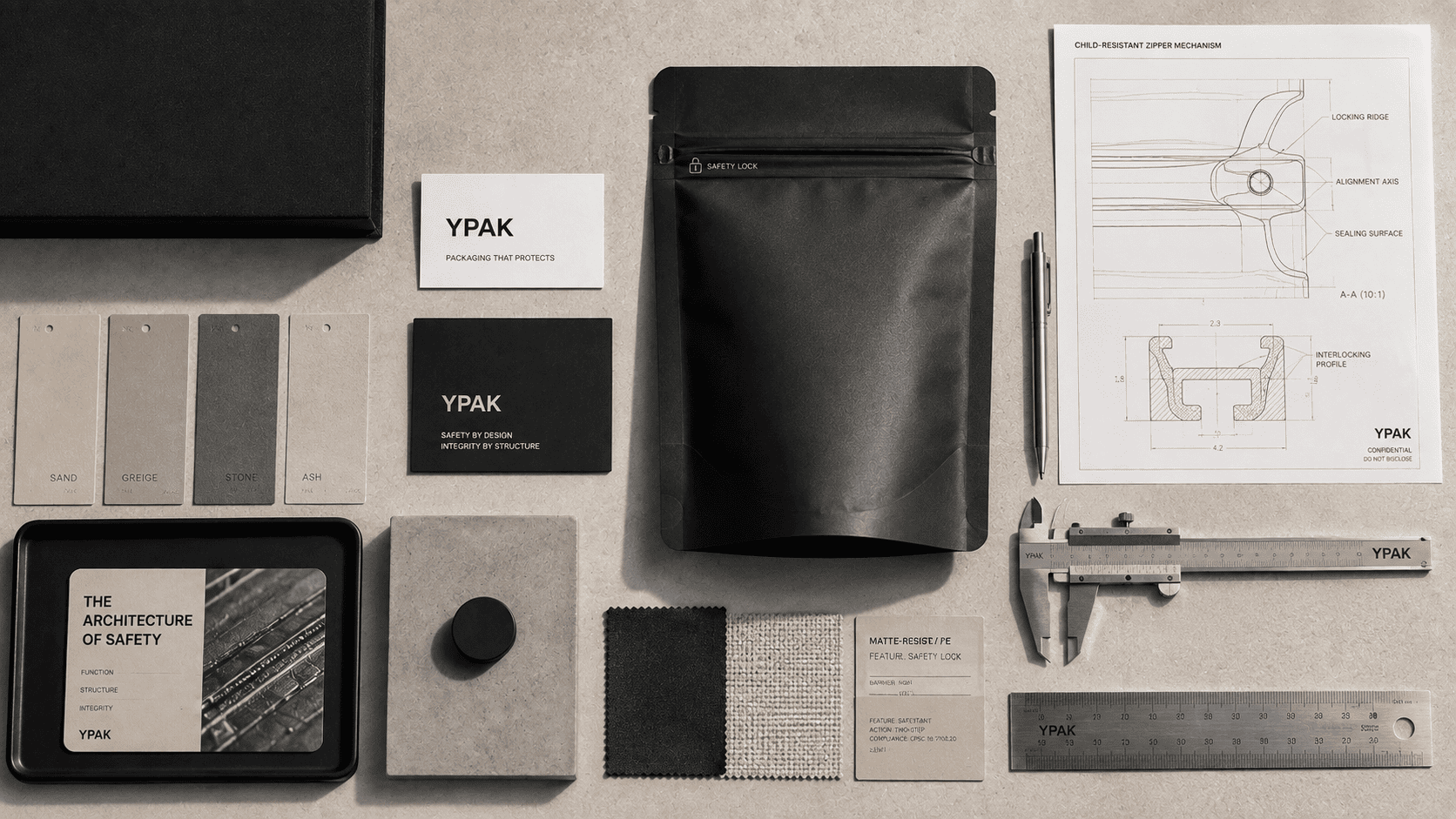
Contend the reality of circumstances
Check samples of the distribution environment anticipated and re‑open routine. Check the bag following transporting, drops and usual storage. It should be in the form of a review based on the access performance, seal integrity, legibility of the print and the ability of the closure to get fully engaged.
Manipulate Filling and Sealing
An uncontrolled packing line could compromise a proper bag specification. Inconsistency in the packaging of the products can be brought about by product in the zipper, or heat‑seal area, lack of adequate headspace, and unpredictable final seals. The supplier and the co‑packer ought to agree on the operating window, prior to a bulk order to be approved.
- Verify end fill‑weight and fill‑volume.
- Establish a minimum clearance over the product.
- Close off and seal up contamination‑free areas.
- Accept heat‑seal temperature, pressure and dwell time.
- Check on the alignment of zippers and end top seals.
- Rejects in record defect during the first run.
Match Barrier Performance to the Contents
Product protection does not conflict with child resistance. Certain laminate and sealant might be needed to hold aroma‑sensitive, moisture‑sensitive or oil bearing materials. Opacity, puncture resistance and food‑contact suitability measures need to be specified separately, and combined with the desired closure and bag format.
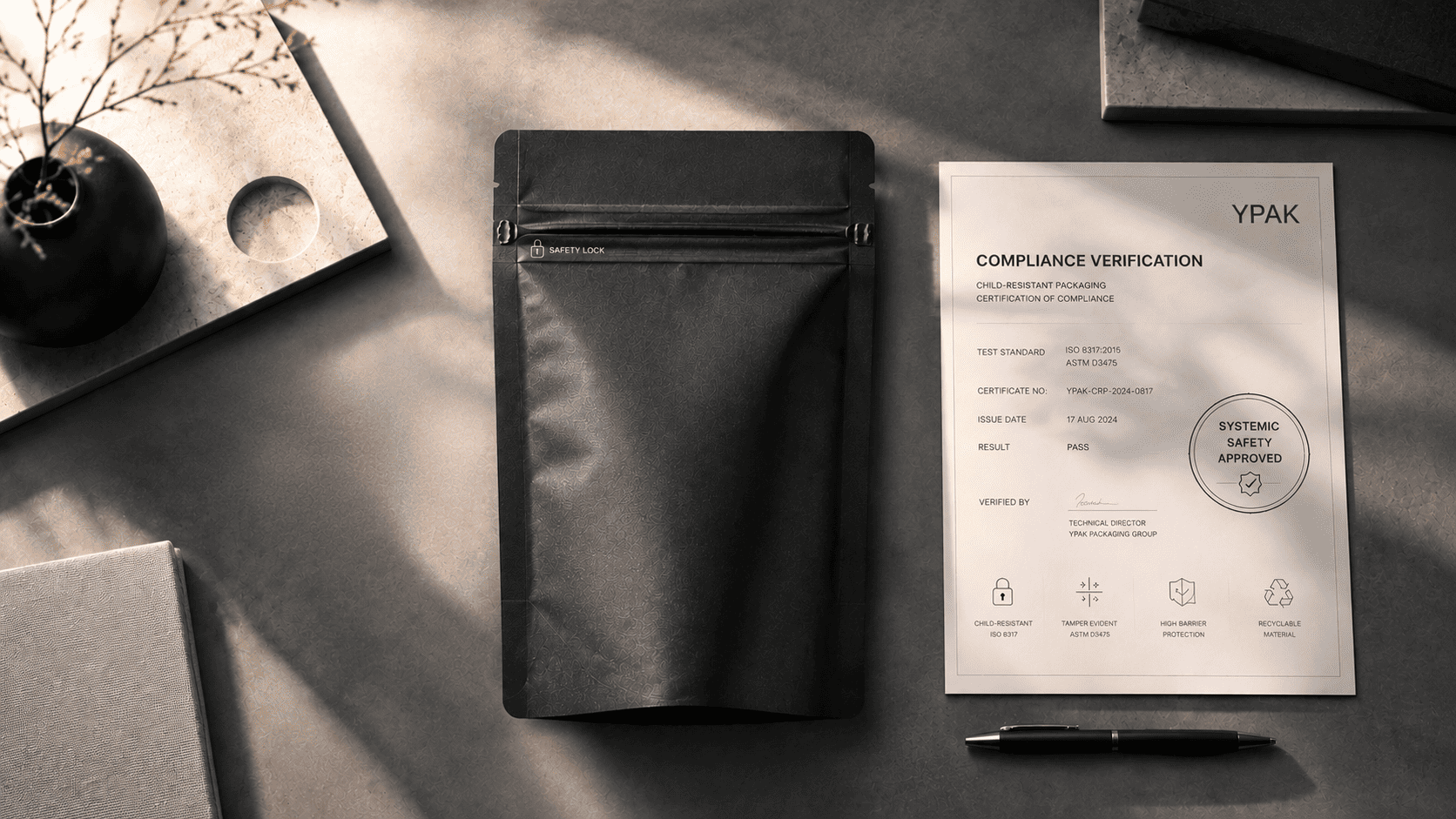
Approve the Complete Laminate
Specify the material structure and not a trade name like Mylar. The entire laminate must be a match to the product, shelf life goal, condition of filling and target market. Substitution of any material must be checked, prior to production.
Build a Complete RFQ for a Child Resistant Bag
An efficient quotation request enables suppliers to dissipate the identical commercial job. YPAK offers flexible bag formats which can be customized, route printing and closure options of product‑specific projects. When asking them to give a generic child resistant bag price, buyers are expected to come with the application and necessary evidence.
- Target market/product.
- Bag format and size required and completed.
- Grams of food eaten, fill method and serving routine.
- Resealability and action of closure.
- Needs of materials, barriers and products contact.
- Number of artwork, printing process and finish.
- Expectations in terms of sample, testing and documentation.
- Order quantity, the point of delivery and the time of reorder.
Approve Production and Handle Changes
The accepted reference ought to determine dimensions, laminate, and closure, seal geometry, artwork revision and review requirements. With that reference, the deliveries of production need to be compared. Switching to a zipper, film, size/opening direction should not be considered a regular buying replacement.
Preserve Traceability
Return approved samples, drawings, test records, artwork files and production records to revision control. This will assist the brand to differentiate a repeat order and a new set up that might need further examination.
Conclusion
The decision should be a format‑and‑use, as opposed to a closure label, which is what child resistant bags should be selected. The buyers should relate the packed product, bag geometry, the routine of opening, adult usage, needs of barrier and production controls. The package is also more easily accepted by approving representative filled samples and controlled specifications, leading to ease in filling the package and reorders.
FAQ
Child resistant bags are childproof?
No. Child resistant refers to a packaging which is designed to be extremely hard to open by young children but can still be used by adults. This does not imply that there is no access.
Are stand‑up pouch more child resistant than a flat pouch?
Not automatically. Format impacts processing and presentation, and performance is based on the overall closure and pouch configuration, guidelines and testing permissible.
Will the zipper that is difficult to the child fit all the bags?
This is not to be assumed. The width of the bag, film rigidity, positioning of zippers and stuffed state may make a difference in the operation of the completed package.
Should empty samples be tested by the buyers?
Empty samples are handy when one needs to perform early comparisons but filled bags that represent production will be required to assess contamination, head space bags, handling and reclosing.
What do you need to know in order to have a quotation prepared by YPAK?
Offer the product, market, format, dimensions, fill method, the expectations of closure, material demands, amount of artwork, quantity, documentation requirements and plan of delivery.
Post time: Sep-04-2026


