


Name the Composting Environment
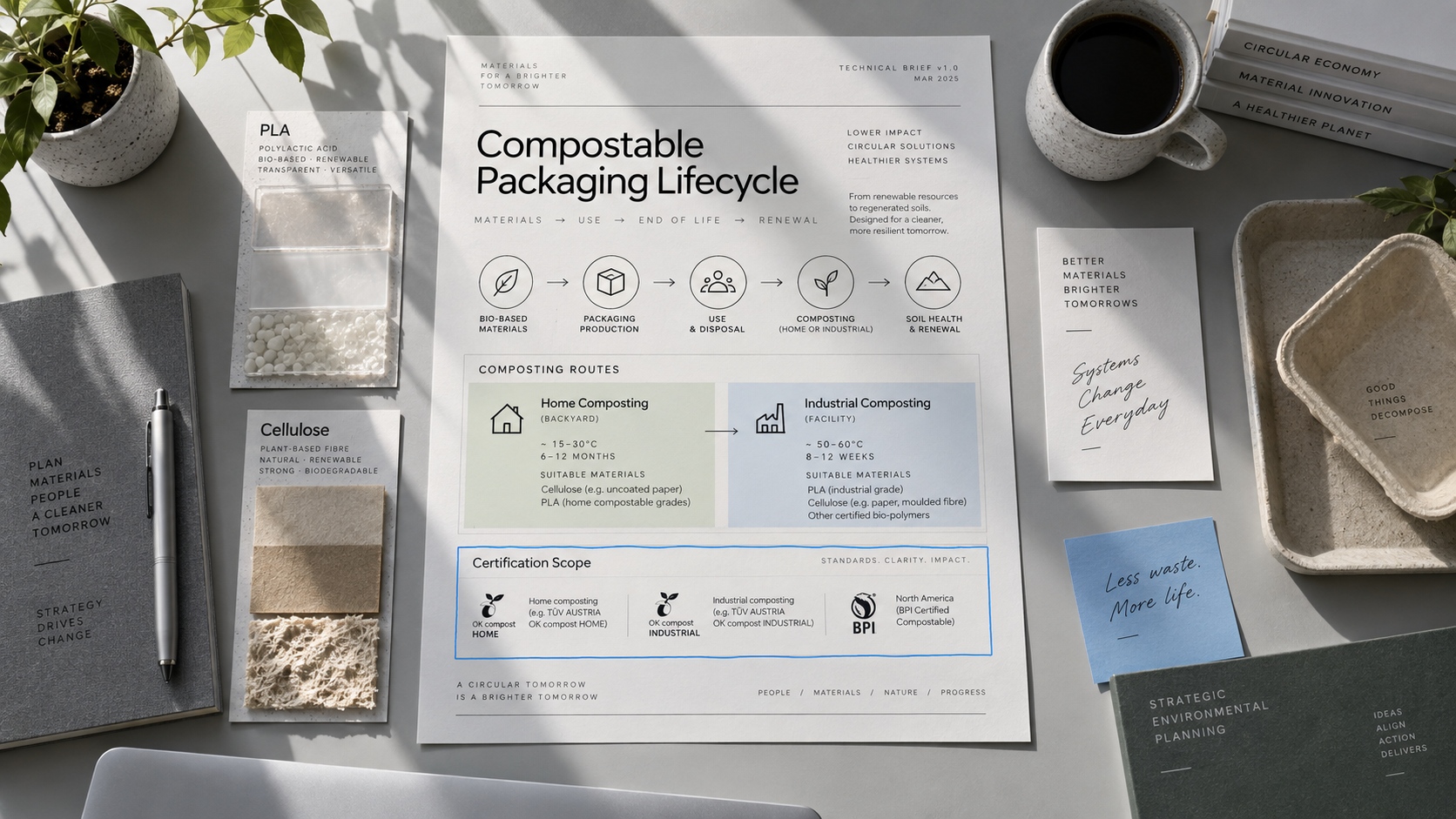
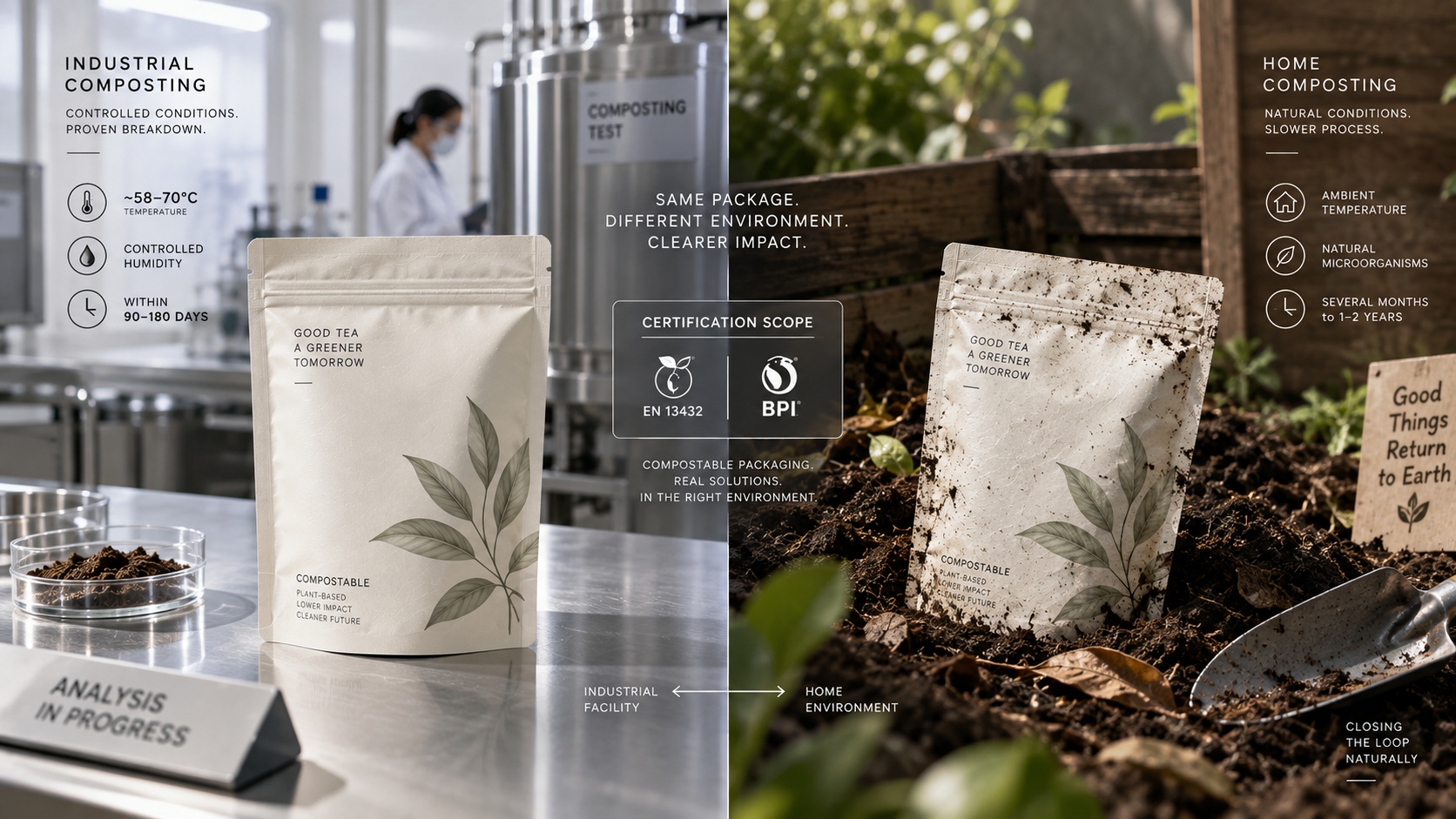
Controlled facility conditions and accepted packaging standards are applied in industrial composting. Home composting runs at other and less predictable conditions and necessitates distinct evidence. One environment should not be provided as evidence to the other.
| Claim direction | Required clarity | Buyer question |
|---|---|---|
| Industrially compostable | Named standard, certification and facility route | Does it cover the entire package and is it accepted locally? |
| Home compostable | Individual home-compostability scheme and conditions. | Does this last construction and thickness come over within the evidence? |
| Biodegradable | Time, environment, extent and standard | What is the reason it does not have a more specific compostability claim? |
Assess the Complete Package, Not a Certified Resin Alone
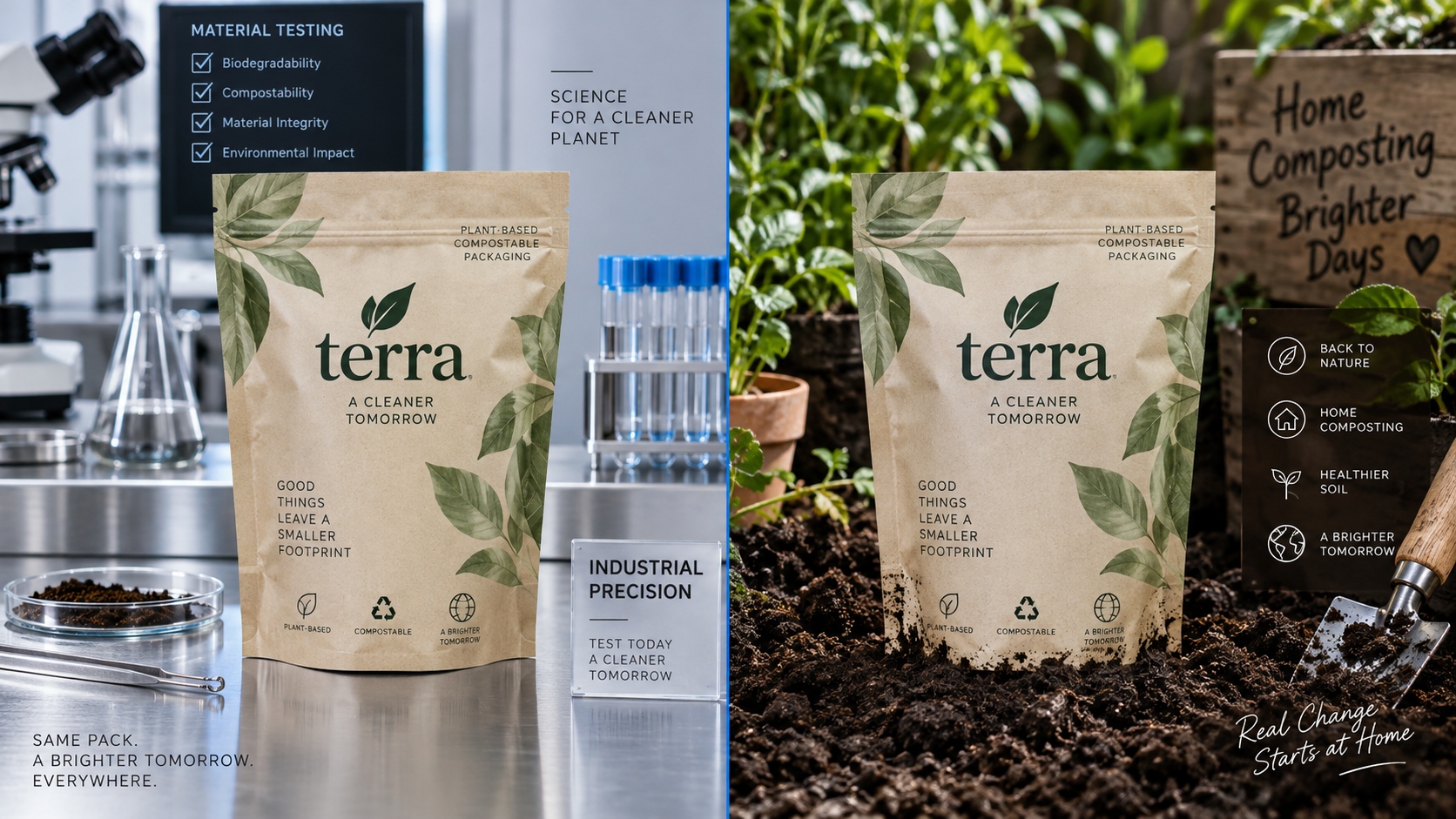
Compostable resin, film or zipper does not necessarily certify the printed and converted pouch. Check all layers, adhesive, ink, fastener, label and coating. Certification programs may establish a requirement of grade, thickness, use and artwork of material. The pack advertised should not go beyond that.
● Primary film and each working level.
● Sealing up adhesive or laminating.
● Printing inks, white layers and coverings.
● Label, certification mark and application adhesive.
● Optimum thickness and use of components.

Prove That the Pouch Can Protect the Tea
Compostability is not substitutionary to barrier, seal and handling specifications. Check structure on moisture, oxygen, light and aroma hazards of the particular tea. Ensure heat-seal performance, seal-area cleanliness, puncture, zipper and distribution performance.
In case the structure leads to loss of products, or it entails too much indirect protection, reconsider the system. Avoid a freshness language to the extent of uncertainty performance.
Keep Printing and Conversion Inside the Approved Scope

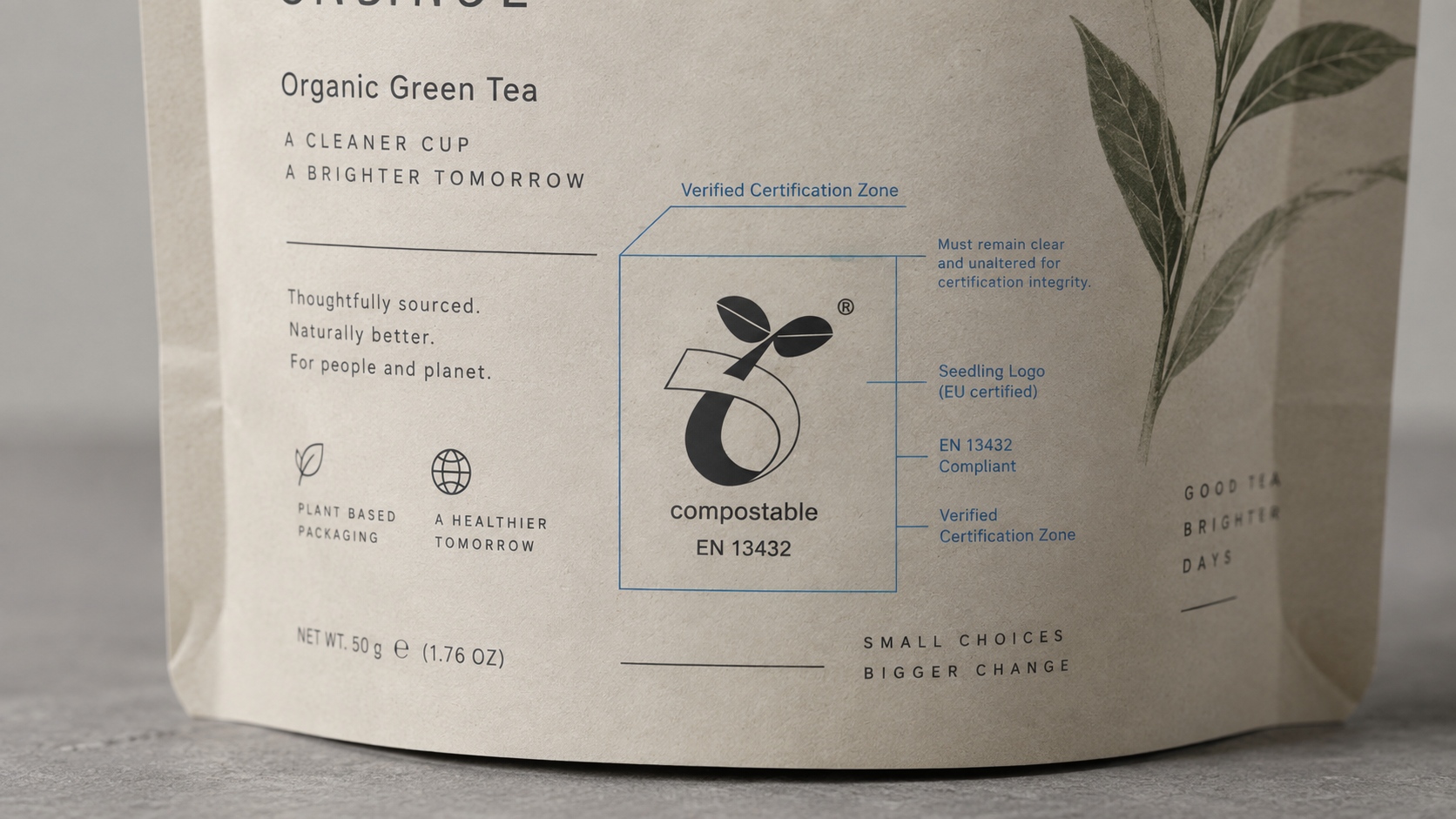
The identical underlying film may turn into another certification topic following printing, laminated, coated, and pouch making. Get the approval of which inks, adhesives and conversion shall be permitted, the name of the certificate holder and may the brand have a mark. Finally, a finishing of art work can require to undergo approval and then a certification mark can be placed.
| Conversion decision | Evidence to retain |
|---|---|
| Printed surface | Approved ink system, conditions of coverage and artwork. |
| Lamination | Layered construction and adhesive within test range. |
| Closure | Trusted or qualified part in the proposed use. |
| Finished thickness | The range of certification or test is your own. |
| Mark use | Licensing, regulations of artwork and sublicensing. |
Map Collection Before Printing the Disposal Instruction
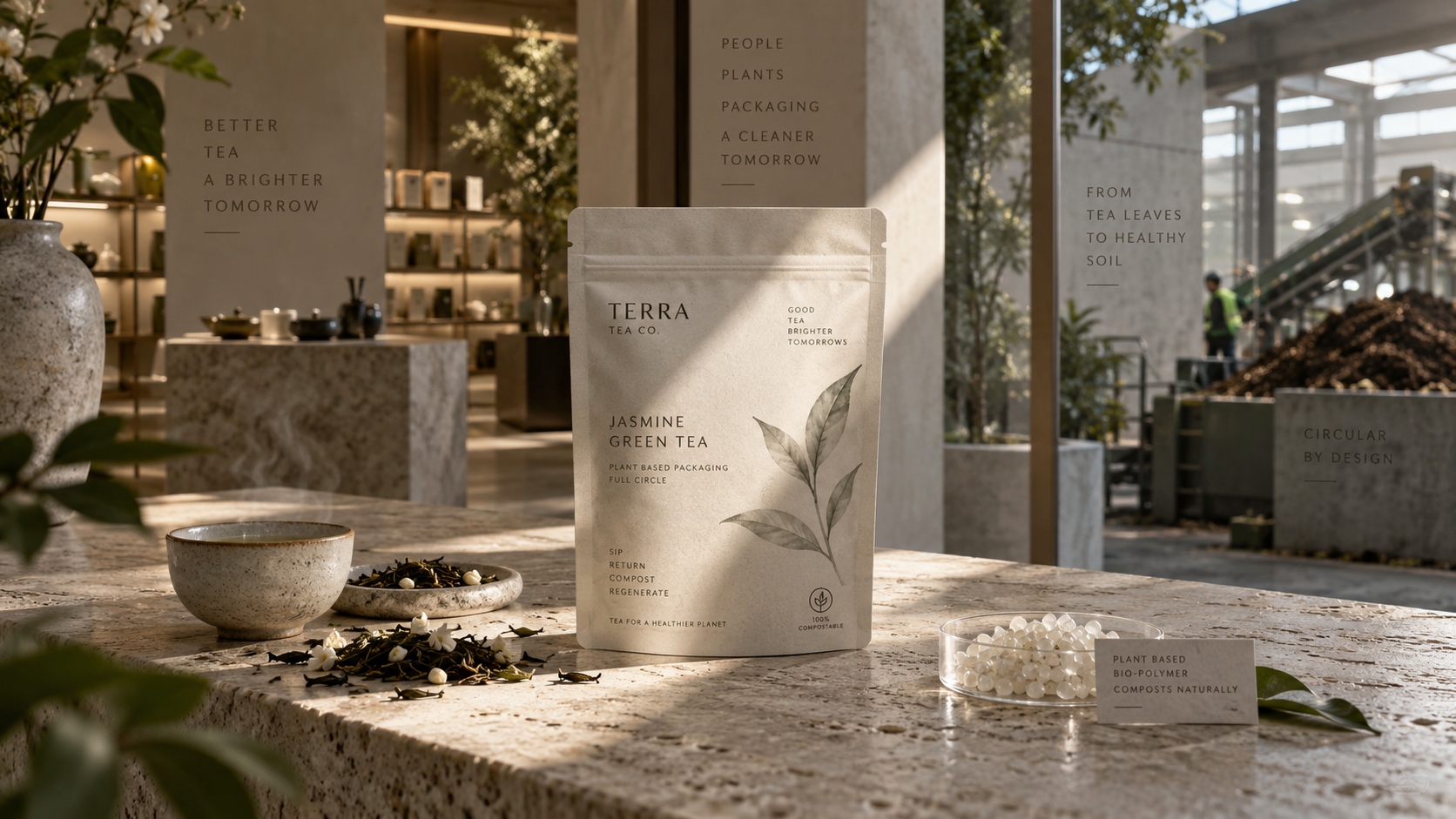
Compostable plastics usually have to be gathered and brought to a suitable facility. Depending on the municipality and operator, acceptance may vary. Other facilities do not include packaging even when it is certifiable. Study the concrete market path and not that a logo generates collection.
Where there is no established procedure it should not suggest that normal disposal would give a composting result. Look at the possibility of a more appropriate material strategy to meet the market.
Follow the Package Through Its Full Composting Route
● Identify materials and components to be used in the proposed composting environment.
● Print and convert pouch in the evidence or certification scope.
● Confirm tea protection, filling and seals and use by consumer.
● Sign package and authorized certification mark.
● Assurance of collection and reception in destination market.
● Ensure there are proper disposal guidelines, which identify the right option.
Use a Compostable Packaging Approval Checklist
| Approval area | Required record |
|---|---|
| Environment | The claim/ target market of industrial or home composting. |
| Standard | Relevant standard or certification scheme. |
| Complete pack | Layers, zipper, inks, label and finished thickness. |
| Performance | Barrier, seal, use and distribution validation. |
| Collection | Recorded route and facility acceptance. |
| Artwork | Wording authorisation, mark authorisation and disposal directive. |
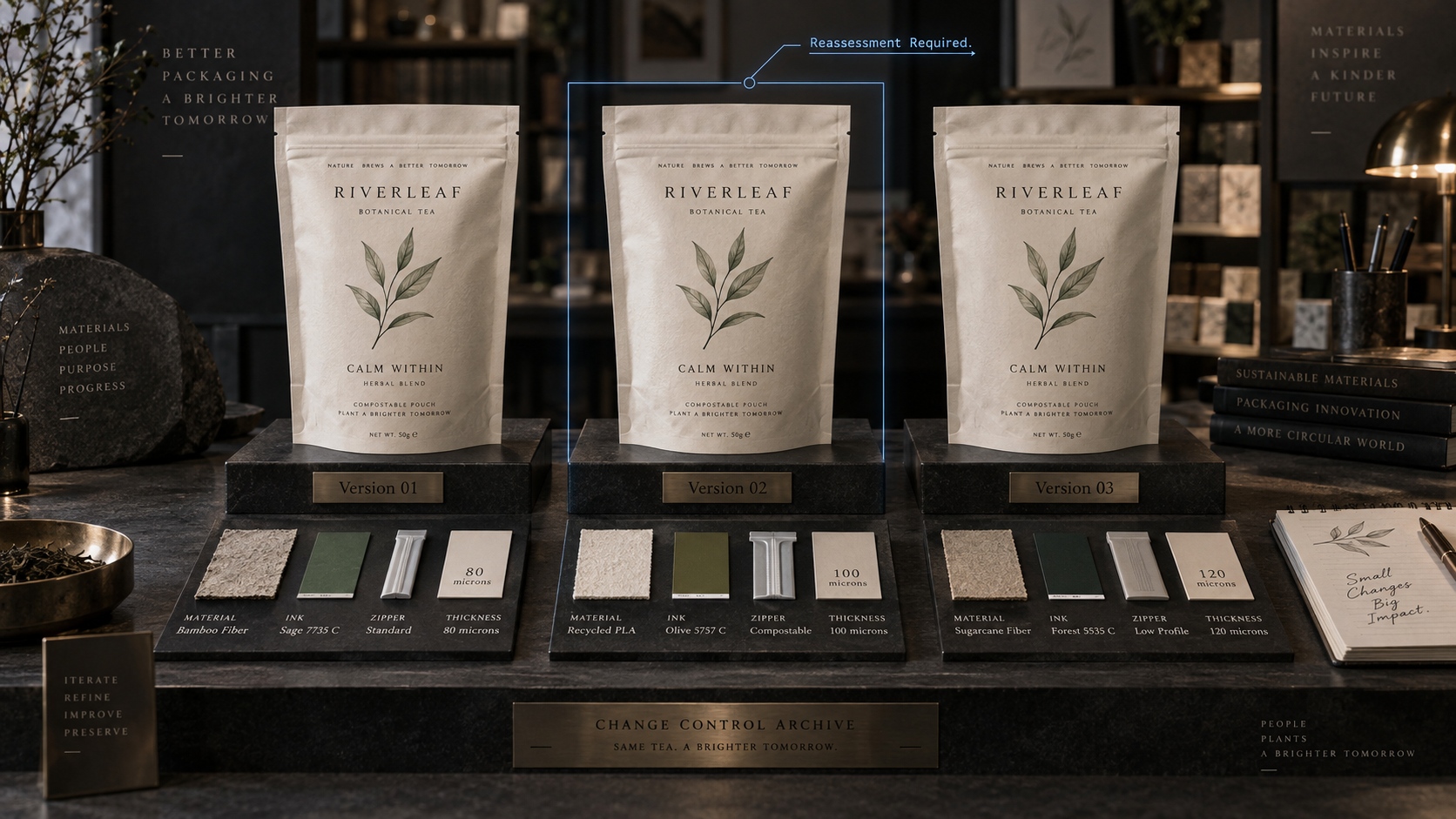
| Change control | Reasons to reassess the material or design. |
Prior storage conditions must be paid special attention. Compostable materials are engineered to act according to predetermined end of life requirements, but still the pouch must be stable during storage of materials, converting, filling, warehousing and shelf life of the product that is intended. Request handling instructions and storage directions about how to package inventory and safeguard against heat and moisture environments capable of impacting processing that might affect package inventory.
The tea brand also has to stipulate the difference the consumers make between the compostable pouch and the traditional flexible packing. Advance clarity in wording and in clearly defined disposal panel by creating an approved certification mark may help eliminate confusion, but it cannot rely just on looks. Brown or green graphics is not compostable and a consumer is not obliged to litter or even place the pack in garden soil unless an authorised instruction dictates such a course.
Co-products also need to be revised. When the pouch has a non-compostable sticker, closure, scoop or inner sachet, the message on the pouch should notify of separation or the entire system might not correspond with the claim. On the other hand, unneeded separable parts might complicate use. Trace the package the way it gets to the consumer and verify that each part of it has a route.
When making repeated orders, affix the certification or evidence file to the very same film, thickness, ink, adhesive, zipper and artwork. The slightest purchasing alteration will push the completed pouch out of the assessed scope. Formally notify change and ensure that old certification marks are not left in libraries of artwork.
Retail and food-service channels might require alternative plans of collection. Back-of-house sorting can likely be controlled by a cafe, whereas a retail pouch means the brand has less information on the local disposal. Simulate user/collector of each channel, and then choose a common instruction.
Claims must not be wrong in case consumers part components wrongly. In situations where separation is necessary, demonstrate that the action can be done without tools and is apparent. When a majority of its users are unlikely to finish it, then do not count on the idea of theoretical separation to characterize the entire package as compostable.
Lastly, the last thing to consider is inventory at the end of a certification or artwork change. Established guidelines on how remnants of the print material are to be kept, when to replace, and update to the digital material. The appearance of a new material claim on the internet cannot be presented as an old package with updates to its structure is still being sold without any elaboration.
Compostable Tea Packaging Questions

Can compostable be referred to as biodegradable? Compostability is a narrower assertion that is associated with norms and parameters. General biodegradability terms ought to be environment, period and scope.
Will industrially compostable packaging fit into a residential compost pile? Do not assume so. The separate evidence and conditions of home compostability are needed.
Will a certified pouch be certified by a certified film? Not automatically. The entire construction, parts, thickness, use of conversion and mark usage also need to be within the scope applicable.
Will all composting facilities take the pouch? No. The rules regarding facility and local collection are different and, thus, should be validated at the destination market.
Start With the End Route, Then Engineer Backward
Prior to ordering a compostable pouch, identify the target market and composting site, type of tea, barrier necessary, pouch format, closure, extent of print, quantity and suggested claim. Enquire into what evidence will cover the ultimate package.
There should be an appropriate end route and a plausible pouch that is technically appropriate. In case the disposal route is unsupportable, change the direction of claim or material prior to launch.
Post time: Sep-16-2026


