


Matcha Sample Packets: Size, film and filling recommendations.
Matcha sample packets should not just contain a little powder. The typical sample program is designed to answer a set of business questions: do people comprehend the product, does the dose prepare properly, does the pouch shield the powder over the intended trial period, and is the idea worth a bigger commercial order? The sample should not be considered a miniature retail pack as it would complicate the decision and make it more expensive.
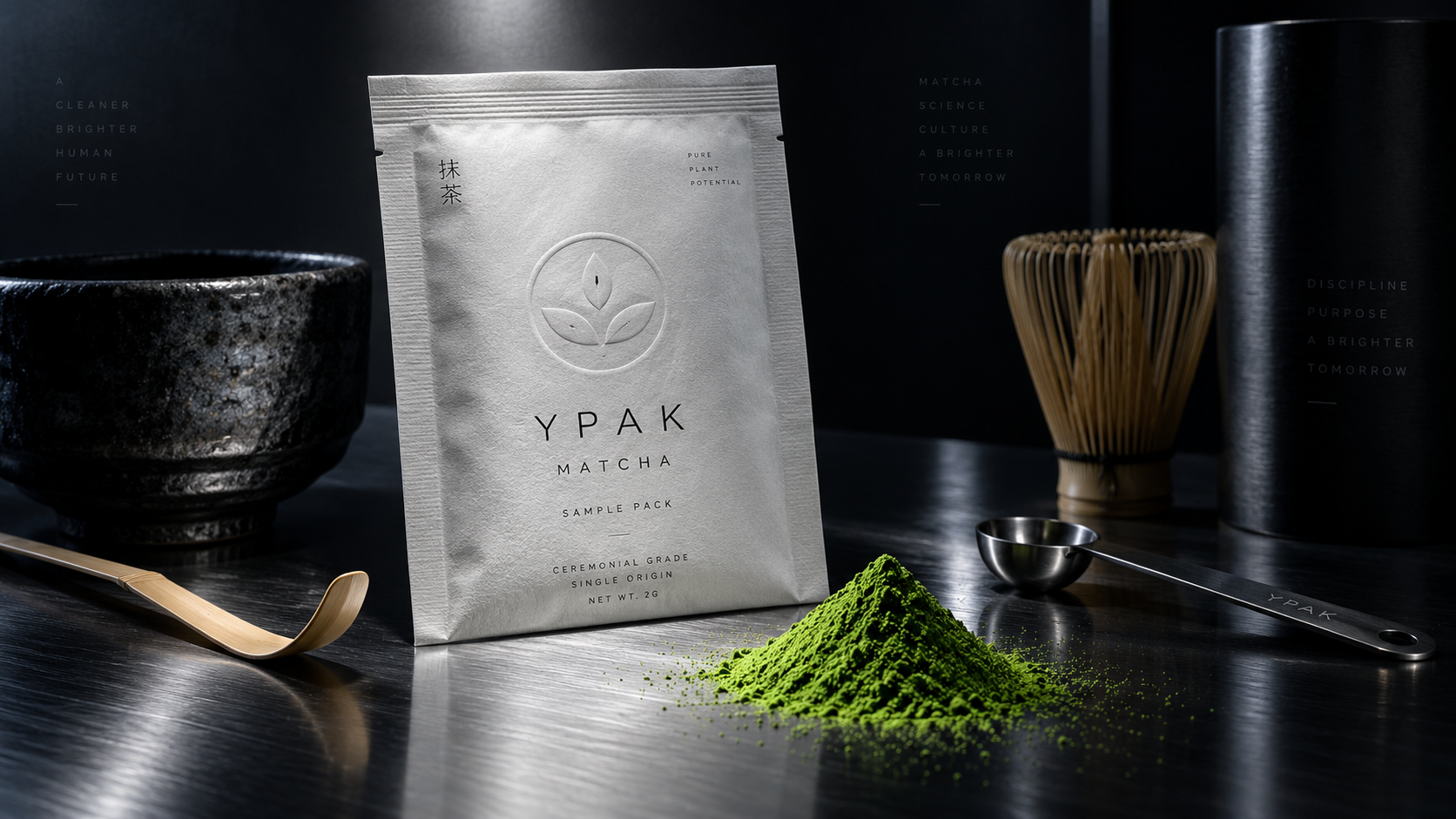
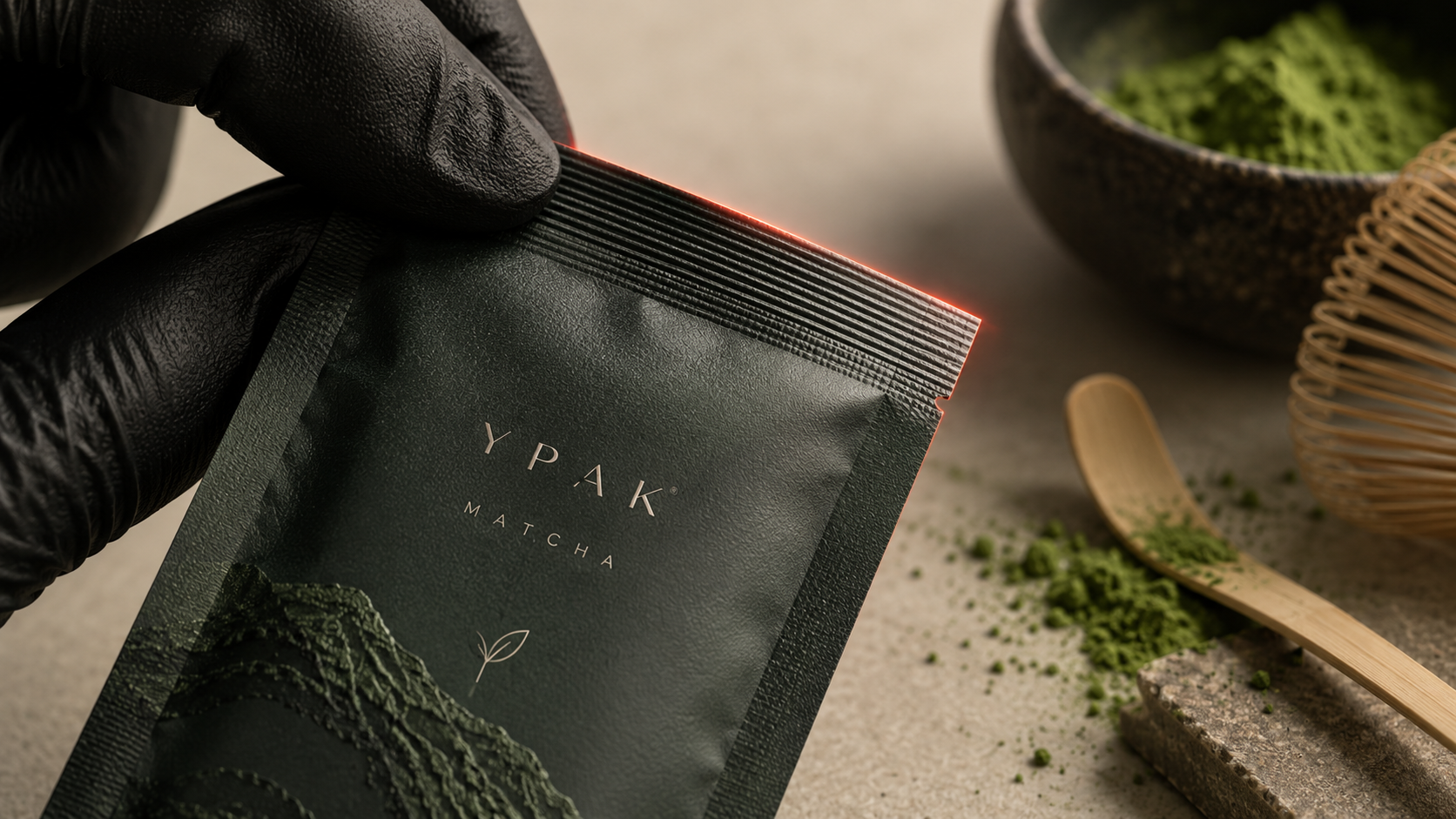
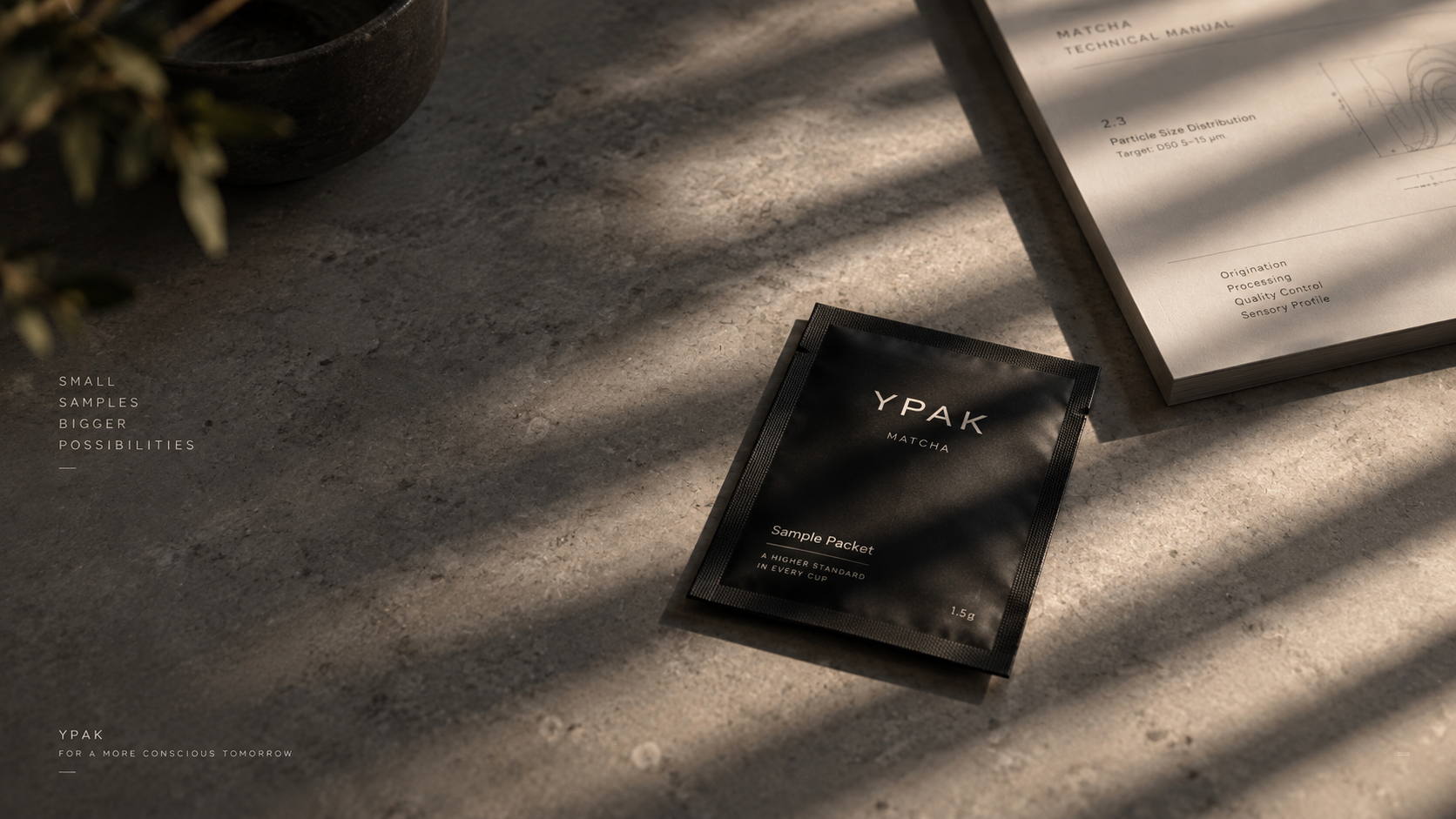
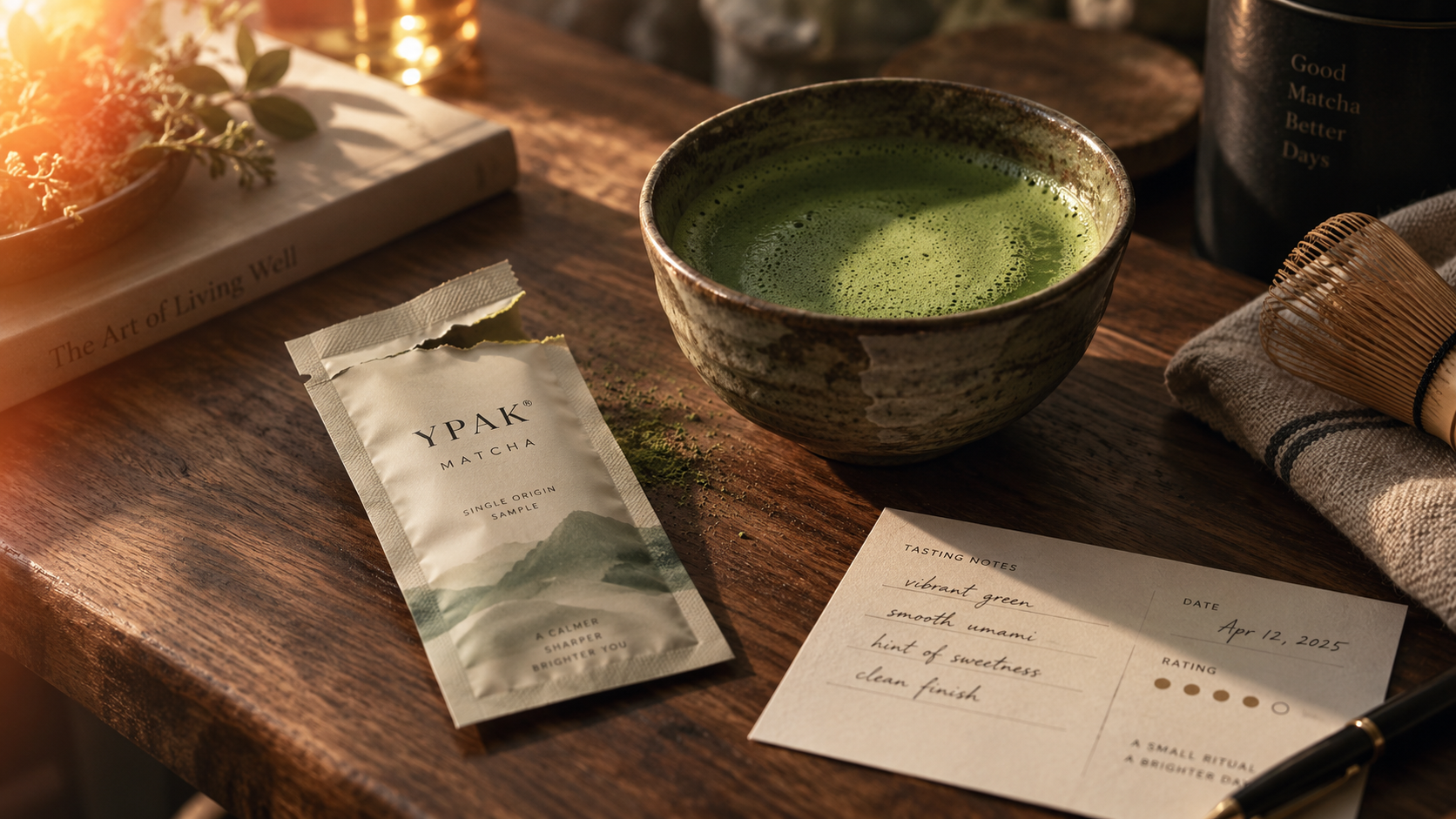
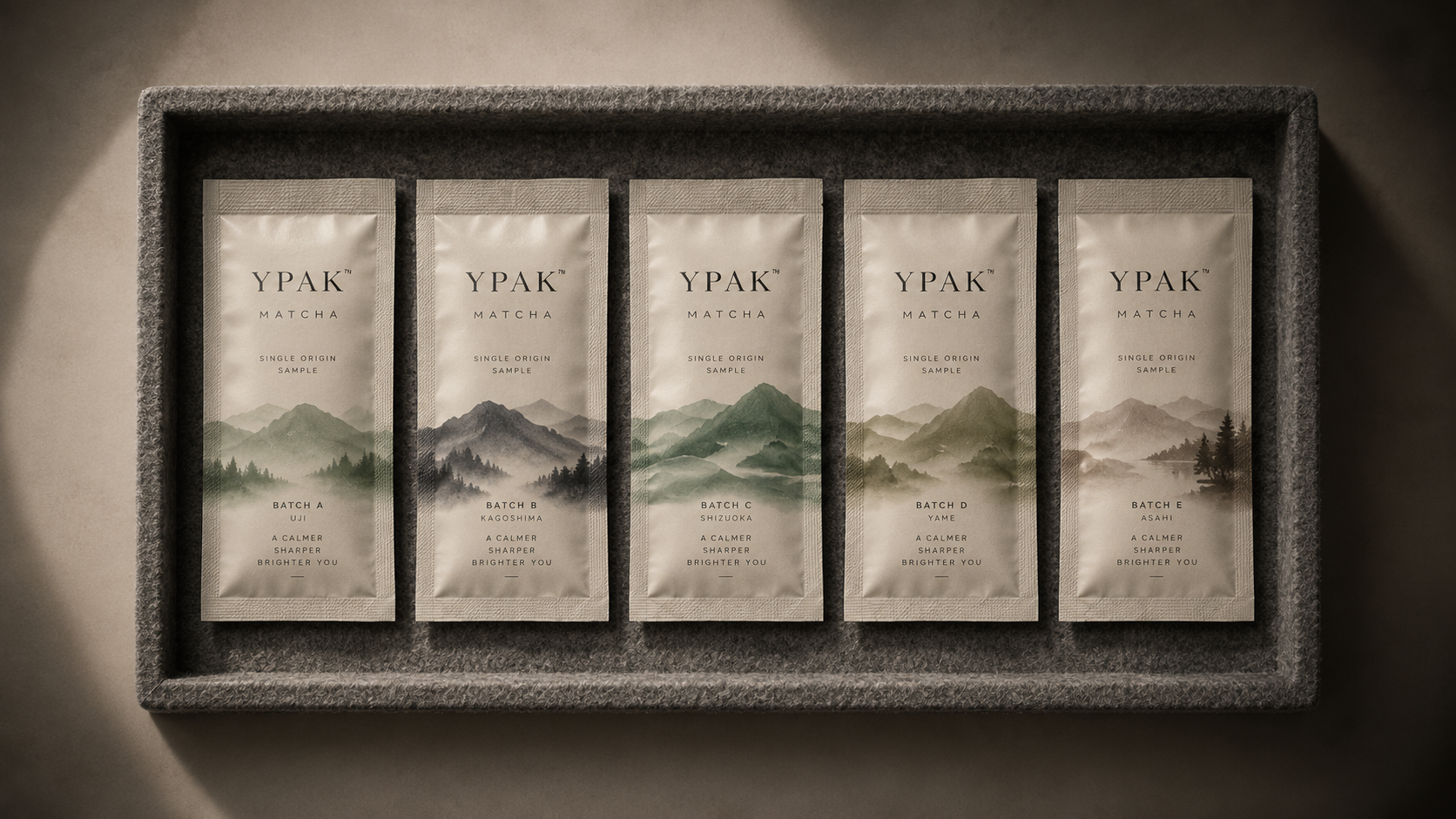
YPAK offers flat pouches as an option for single-serve and sample packaging. Custom bag formats, material options, design assistance, gravure and digital printing, lamination, slitting, bag production, and quality control between incoming material and finished items are also detailed on its website. These capabilities provide an effective path for creating a test sample packet, although filling, dosing, food-contact and market needs nonetheless need to be validated by the brand and its contract packer.
Define the Decision Before Specifying the Packet.
Begin with the decision that the trial needs to support. An e-commerce insert and a distributor presentation do not need the same pack life and artwork detail or secondary packaging. The lightest specification, which gives reliable evidence and does not promise more than the trial can establish, is the best.
Write a One-Sentence Sample Objective
● Recruit first-time users and evaluate preparation completion.
● Compare two matcha grades which were prepared using the same procedure.
● Pilot price, message or format prior to a retail launch.
● Create a controlled guide that can be used by buyers or food-service teams.
Separate the Test Dose From the Future Retail Dose.
The preparation under test should not be limited by an arbitrary small net weight, but by the sample dose it provides. Pure matcha, sweetened blends and latte powders differ in density, serving logic and flow. Note the mass required along with the desired amount of water or milk to accurately rate how the product is experienced rather than the package.
Assure the Dose Basis.
● Recipe and preparation vessel used during the trial.
● Target mass, permissible range of variation and predicted bulk-density range.
● Whether one packet is required to make a single preparation.
● Residual powder left after normal emptying by the user.
Start With an Officially Supported Flat-Pouch Structure.
In the case of a YPAK-grounded project, a flat pouch makes the most sense because the company clearly identifies the format for samples and single servings. A plain heat-sealed pouch with no zipper is typically easier to evaluate than a miniature bag loaded with any feature. The completed drawing must identify seals, space to be used and direction of opening instead of the broad name “sample packet”.
Keep the First Structure Controlled.
● Flat, non-gusseted body that has a specified finished length and width.
● Choose a food-contact inner layer for the actual powder formula.
● Heat-welded edges with sufficient grip area for opening.
● No valve, zipper or spout unless it is explicitly needed by a proven use case.
Construct Dimensions by Powder Volume and Application.
Packets cannot be determined by net weight alone. The design must accommodate the maximum amount of powder, seal allowances, headspace, and coding and a clean opening. A packet used as a box insert could be smaller, whereas an event sample might require additional grip space and clearer instructions on preparation. Test the minimum version that can be worked with and one wider fallback instead of giving the nod to a single drawing before it is ready.
Note down the Dimensional Stack.
● Maximum powder volume at the minimum expected bulk density.
● Usable internal area after all seals are removed.
● Top allowance for sealing, coding and consumer grip.
● Finished size constraints based on the sample kit or mailer.
Choose a Material, Not a Marketing Label.
YPAK enumerates the varieties of laminates including conventional laminates, recyclable and compostable laminates. The mentioned categories are a good place to start, yet a sample program must still include barrier, sealing and machinability evidence of the desired construction. Weak protection is not necessarily warranted by a brief campaign since matcha may shift in color and aroma before it is opened by the user.
Compare Candidate Structures With the Same Evidence.
● Oxygen and moisture barrier at mentioned test conditions.
● Light protection offered by the entire laminated print.
● Sealing range and powder resistance of seal region.
● Printability, stiffness and tear behavior after conversion.
Design Artwork to Create Learning.
The test must be understandable and traceable in the sample artwork. The user requires product identity, direction of preparation and any other necessary information and the project team requires a method to relate feedback to the appropriate formula, artwork and the packet version. Big proofs are able to conceal issues on a small pouch and as such, it is always a good idea to look at it at finished size.
Reserve Space in Priority Order.
● Name of the product and the action that the user needs to do.
● Net quantity and required market information.
● Lot, version or campaign code for feedback analysis.
● Contact or response path that can be read after sealing.
Match the Printing Route With Program Maturity.
YPAK explains the process of gravure, as well as digital printing, in its production process. A sample project ought to talk about printing path after the number of versions, the anticipated quantity and possibility of artwork changes are known. This is aimed not at saying one method better than another; it is to prevent investing mature-production equipment in an idea which is still being edited.
Review the Proofs Before Conversion.
● Dieline proof for dimensions, seals and safe print areas.
● Finished-size copy proof for legibility and hierarchy.
● Printed-film proof for color, finish and registration.
● Converted packet proof for cut position and code readability.
Treat Filling as a Separate Qualification.
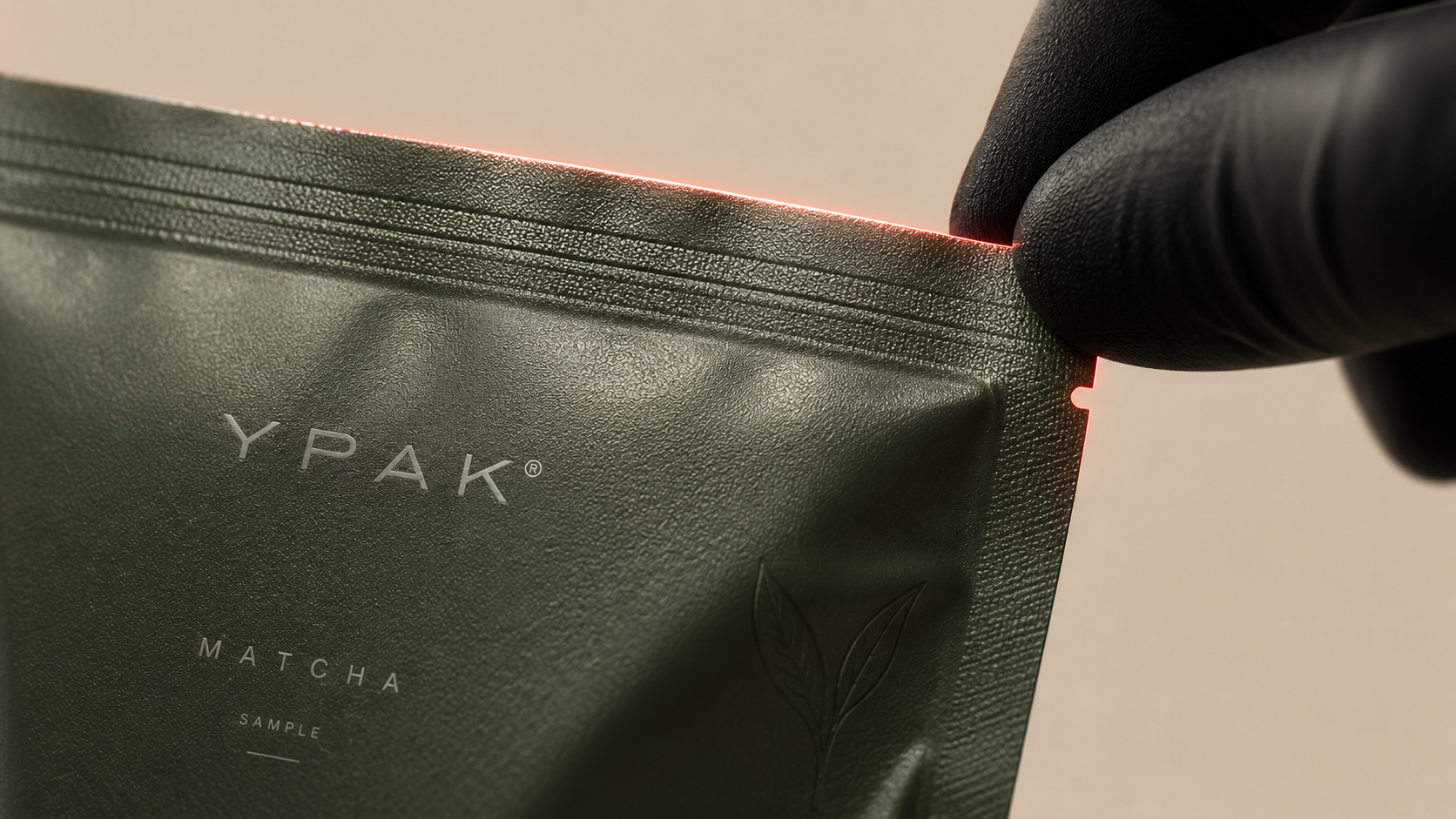
YPAK produces and converts packaging and the chosen packer should prove that matcha can be weighed and closed in the proposed packet. Do not hide these responsibilities. Even the technically sound pouch may fail because the nozzle is too large, powder becomes airborne, or sealing jaws close through contaminated film.
Conduct a Packer Trial With Production-Representative Conditions.
● Use the actual formula and anticipated environmental controls.
● Record dose variation at startup, stable speed and restart.
● Examine powder paths around all permanent seals.
● Retain filled samples including machine settings and film lot identity.
Use an Evidence Gate Before Expanding the Program
A sample packet must proceed only when evidence supports investment at the next level. Early concept learning is separated into packaging approval and commercial transfer through these stages, so appealing packaging mockups are not confused with approved production.
Use Four Evidence Gates.
● Concept gate: verify the dose, preparation and finished-size mockup make the sample experience understandable.
● Filled-trial gate: utilize dose data, seal checks and opening observations with the aim of demonstrating that the packer can run the suggested structure.
● Campaign gate: before releasing samples into the target channel, artwork, traceability and distribution testing must be approved.
● Scale-transfer gate: lock the specification and change record in order to maintain the conditions already proven in the next order.
Set Shelf-Life Claims to the Trial Reality.
A sample can also go through the warehouses, event kits or parcel networks, before being opened. Determine the maximum realistic time and the harshest realistic distribution condition, and then pick tests that indicate that exposure. Do not copy the future retail shelf life onto a sample packet without evidence for its actual film, seals and packout.
Create a Retention Plan
● Store controls and distribution-condition samples from a single lot.
● Check color, aroma, caking and preparation performance over time.
● Check seal integrity after compression and transport simulation.
● Record the point at which the sample is not representative anymore.
Relate Quality Control to the Learning Record.
YPAK explains testing of raw materials, inspection during production and inspection of finished products. The logic of a sample project can be the same three-step logic. The specification is safeguarded by incoming film evidence, the consistency of conversion is safeguarded by in-process checks and the final checks confirm that the packets sent to the campaign are correct when compared to the approved reference.
Keep a Minimal Quality File.
● Supplier lot, approved appearance standard and the material structure.
● Finished dimensions, seal checks and print-registration checks.
● Acceptance and escalation rules on classification of defects.
● Representative samples from the beginning, middle and end of the run.
Plan the Transition From Sample to Commercial Pack.
Such success does not imply growing the order without review. Sample results may change the dose, instructions, material, artwork or channel. Fix what was proven in the trial, list what is yet to be confirmed, and make the choice of whether the next package shall be a flat pouch or another format supported by YPAK. This maintains learning rather than carrying tentative assumptions into production.
Carry out a Transfer Review.
● User feedback associated with the appropriate version of the packet and formula.
● Packer results of dosing, dust, sealing and line speed.
● Supplier discoveries on printing, lamination, slitting and bag making.
● Approved changes, owners and evidence required prior to the subsequent order.
Conclusion
Matcha sample packets create value when they are constructed as a controlled experiment and not miniature promotional bags. Define the decision, determine the dose from the preparation, use a supported flat-pouch structure, compare materials with performance evidence, qualify filling separately and retain traceable samples. The customization, printing, lamination, slitting, bag-making and quality-control structure at YPAK would be able to aid this process on condition that the tasks of the brand, suppliers, and packers are well defined.
FAQ
Which format should matcha sample packets be?
A flat pouch can be considered a viable starting point since YPAK identifies the format for single-serve and sample packaging. The ultimate sizes are still subject to the volume of powder, seals and condition of use.
Should a sample have the same film as the retail pack?
Not automatically. Match the structure to the exposure period and learning goal of the sample and reevaluate that structure for the retail program.
Is it possible to fill matcha powder in the packets at YPAK?
Packaging design and conversion are explained on the website. Filling should not be assumed based on the pouch specification - it is necessary to confirm with the chosen contract packer.
Which data should be retained from a sample run?
Retain material and artwork versions, conversion checks, filling data, seal observations and comments associated with the appropriate lot.
Post time: Sep-11-2026


