


Why Matcha Hates Oxygen: How to Choose the Right Packaging for Matcha Freshness
Matcha is a product that places extremely high demands on packaging. While many brands focus on the origin, grade, and grinding process of their matcha, they often overlook another equally important factor—packaging. In reality, even the highest-quality matcha can gradually lose its original quality during storage, transportation, and retail distribution if the packaging fails to provide adequate protection.
Many brands have experienced the same challenge:
The matcha leaves the production line with a vibrant green color and rich aroma, but after several months of storage, the color begins to fade, the aroma weakens, and consumers perceive the product as less fresh. While factors such as light, moisture, and temperature can contribute to quality degradation, oxygen is often the most critical factor affecting matcha freshness.
Why Does Oxygen Affect Matcha Quality?

Matcha’s vibrant green color, distinctive umami taste, and fresh aroma come from naturally occurring compounds such as chlorophyll, catechins, amino acids, and aromatic compounds. These components are also responsible for the value and quality of matcha.
When oxygen enters the package, it gradually reacts with these compounds through oxidation. As oxidation progresses, matcha begins to experience changes in color, aroma, and flavor. The most noticeable change for consumers is often the color. The bright green appearance gradually shifts to dark green, olive green, or even yellow-green. Behind this visual change is the ongoing degradation of the product's active compounds.
For premium matcha brands, this not only affects product quality but can also impact consumers’ perception of brand professionalism and product value. Therefore, the real challenge is not whether the package can hold the product, but whether it can effectively prevent oxygen from entering.



Why Can't Ordinary Packaging Meet Matcha's Requirements?
Many people assume that as long as a package is sealed, the product inside will remain protected. In reality, sealing does not necessarily mean barrier protection.
Even when a package is properly sealed, oxygen can still slowly penetrate through the packaging material if the material itself does not provide sufficient oxygen barrier performance.
In the packaging industry, Oxygen Transmission Rate (OTR) is one of the most important indicators used to measure oxygen barrier performance. Simply put, the lower the OTR value, the more difficult it is for oxygen to pass through the material.
For a highly sensitive product like matcha, the oxygen barrier performance of the packaging material directly affects how long the product can maintain its freshness.
Therefore, when selecting matcha packaging, the first consideration should not be color, printing effects, or pouch style. Instead, the primary focus should be whether the packaging structure provides sufficient barrier protection.
Which Packaging Structures Are Best for Matcha?
Today, three packaging structures are widely used in the matcha industry.

The first is the MOPP / VMPET / PE structure.
This is one of the most commonly used solutions among matcha brands.
The VMPET metallized barrier layer helps reduce the impact of oxygen and light on the product while providing a strong balance between freshness protection, packaging cost, and brand presentation.
For most retail matcha products, this structure offers sufficient protection throughout the supply chain.
The second option is the MOPP / AL / PE structure.
AL refers to an aluminum foil layer.
Compared with metallized films, aluminum foil provides superior oxygen barrier and light-blocking performance. As a result, this structure is often preferred for ceremonial-grade matcha, premium gift collections, and products requiring a longer shelf life.

The third option is recyclable high-barrier packaging structures, such as PE / EVOH / PE or MDO-PE / EVOH / PE.
As sustainability becomes increasingly important in European and North American markets, these structures are gaining popularity among matcha brands.
EVOH is widely recognized for its excellent oxygen barrier properties while supporting the transition toward recyclable mono-material packaging solutions.
For brands seeking to balance product protection with sustainability goals, these structures offer a promising solution.
How Should Brands Choose Packaging Based on Product Positioning?

There is no single packaging solution that is universally the best.
The right packaging should align with the positioning of the product.
For brands targeting the mass retail market, where cost control and product protection must be balanced, high-barrier laminated structures are often sufficient.
For premium brands selling high-grade matcha products, barrier performance should be prioritized to ensure maximum product protection.
For brands that emphasize sustainability as part of their core value proposition, recyclable high-barrier packaging can help meet both consumer expectations and market requirements.
In other words, selecting a packaging structure is ultimately about finding the right balance between product protection, brand positioning, and market demand.
Packaging Protects More Than Just Matcha
Consumers cannot see the oxidation process happening inside the package.
What they do see is the final condition of the product.
- Is the color still vibrant?
- Does the aroma remain fresh?
- Is the flavor consistent?
Although these questions seem to be related to the product itself, they are closely connected to the packaging.
Packaging protects more than matcha.
- It protects the quality experience promised by the brand.
- It protects consumer trust.
- It protects the long-term value of the brand in the marketplace.
Conclusion
Matcha’s greatest enemy is not time—it is oxygen.
Once oxygen enters the package, product quality begins to change.
For matcha brands, packaging should not be evaluated solely on appearance. The real measure of effective packaging is its ability to slow oxidation, preserve freshness, and maintain product stability throughout the supply chain.
Whether using traditional high-barrier structures, aluminum foil structures, or next-generation recyclable high-barrier packaging, the ultimate goal remains the same: ensuring that matcha reaches consumers in its best possible condition.
Because for premium matcha, freshness is not a marketing claim.
It is a value that consumers can genuinely experience.
CTA
Looking for Custom Matcha Packaging?
Whether you're launching a new matcha brand or upgrading your existing packaging, choosing the right structure is essential for maintaining freshness, protecting flavor, and enhancing shelf appeal.
At YPAK, we provide custom matcha packaging solutions including:
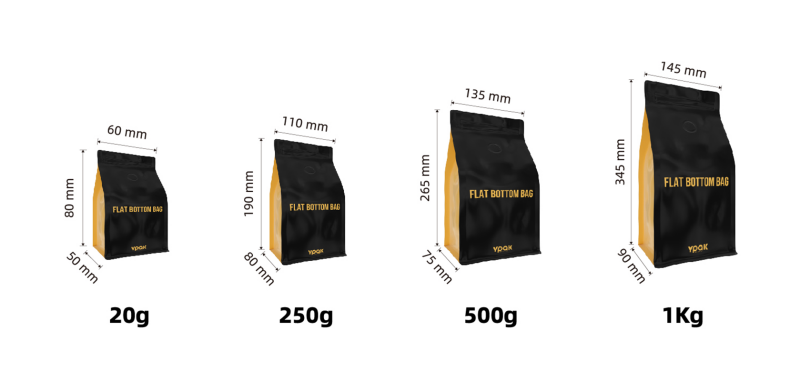
- Flat Bottom Matcha Bags
- Stand Up Pouches
- High Barrier Packaging
- Recyclable Matcha Packaging
- Digital Printing & Low MOQ Solutions
Contact our team today to discuss your project and find the best packaging solution for your brand.
Frequently Asked Questions (FAQ)
Matcha contains chlorophyll, which is responsible for its vibrant green appearance. When oxygen enters the package, oxidation gradually breaks down chlorophyll, causing the powder to turn darker or yellowish over time.
For most matcha products, high-barrier structures such as MOPP / VMPET / PE provide an excellent balance between freshness protection, appearance, and cost. For premium ceremonial-grade matcha, MOPP / AL / PE offers even stronger oxygen and light barrier properties.
Oxygen is one of the main causes of flavor loss, aroma degradation, and color changes in matcha. High-barrier packaging helps reduce oxygen transmission, preserving product quality and extending shelf life.
Yes. Modern recyclable structures such as PE / EVOH / PE and MDO-PE / EVOH / PE can provide strong oxygen barrier performance while supporting sustainability goals, making them increasingly popular in European and North American markets.
Flat bottom bags are often preferred by premium matcha brands because they offer excellent shelf presence and a larger printable surface. Stand-up pouches are also a popular option for cost-sensitive and smaller-volume products.
The shelf life depends on the packaging structure, storage conditions, and product quality. High-barrier packaging can significantly reduce oxidation and help maintain freshness for an extended period compared to standard packaging materials.
The choice depends on your market and brand positioning. If sustainability is a key selling point, recyclable structures may be the best option. If maximum product protection is the priority, traditional high-barrier structures may offer stronger performance.
Consider the following factors:
- Product grade
- Shelf-life requirements
- Sales channels
- Sustainability goals
- Brand positioning
- Budget
A professional packaging manufacturer can help evaluate these factors and recommend the most suitable packaging structure.
Post time: Jun-12-2026


