


Child Resistant Mylar Bags Material Structure and Conversion Guide
Use a Material Bill in place of the Word Mylar
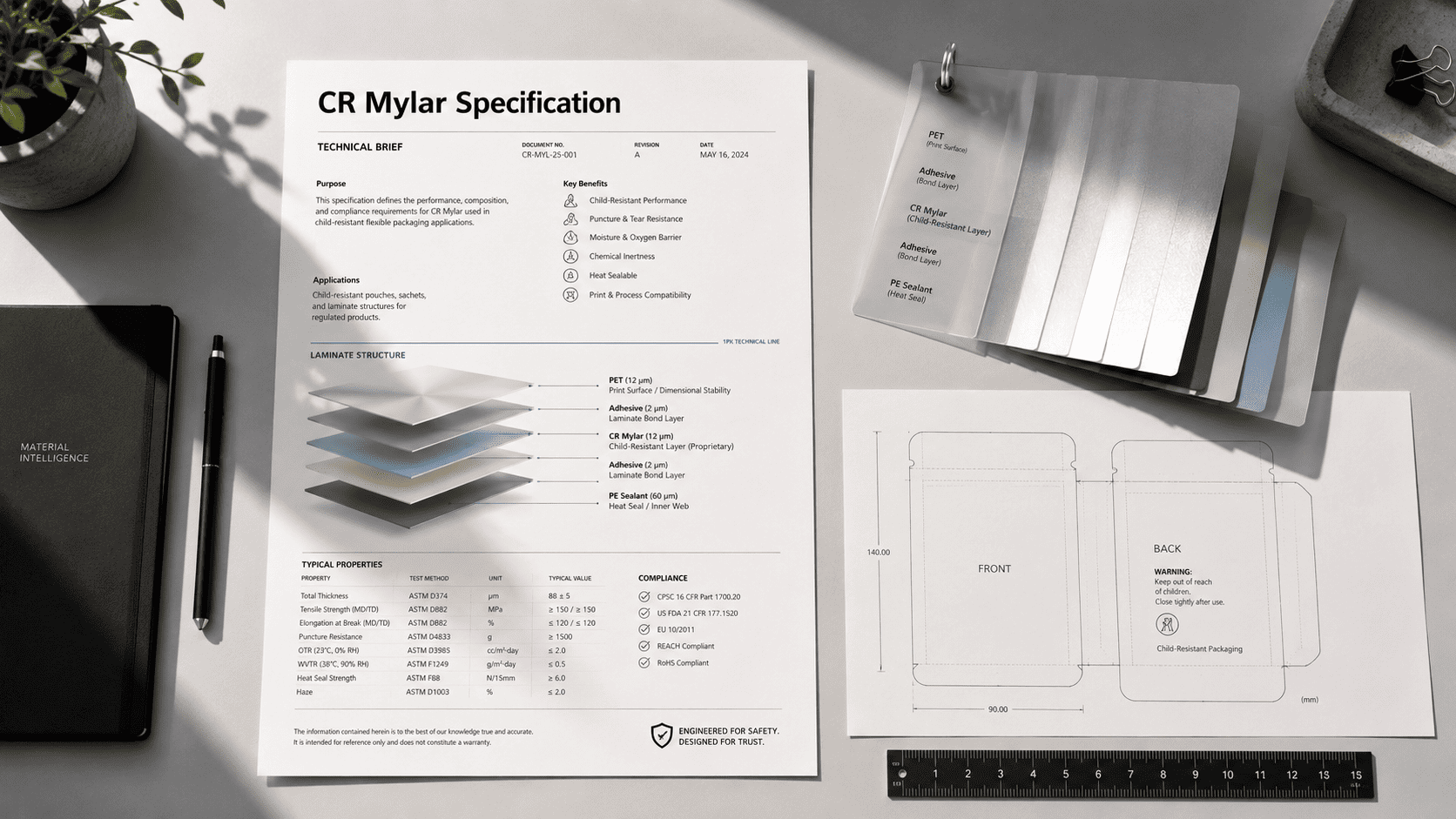
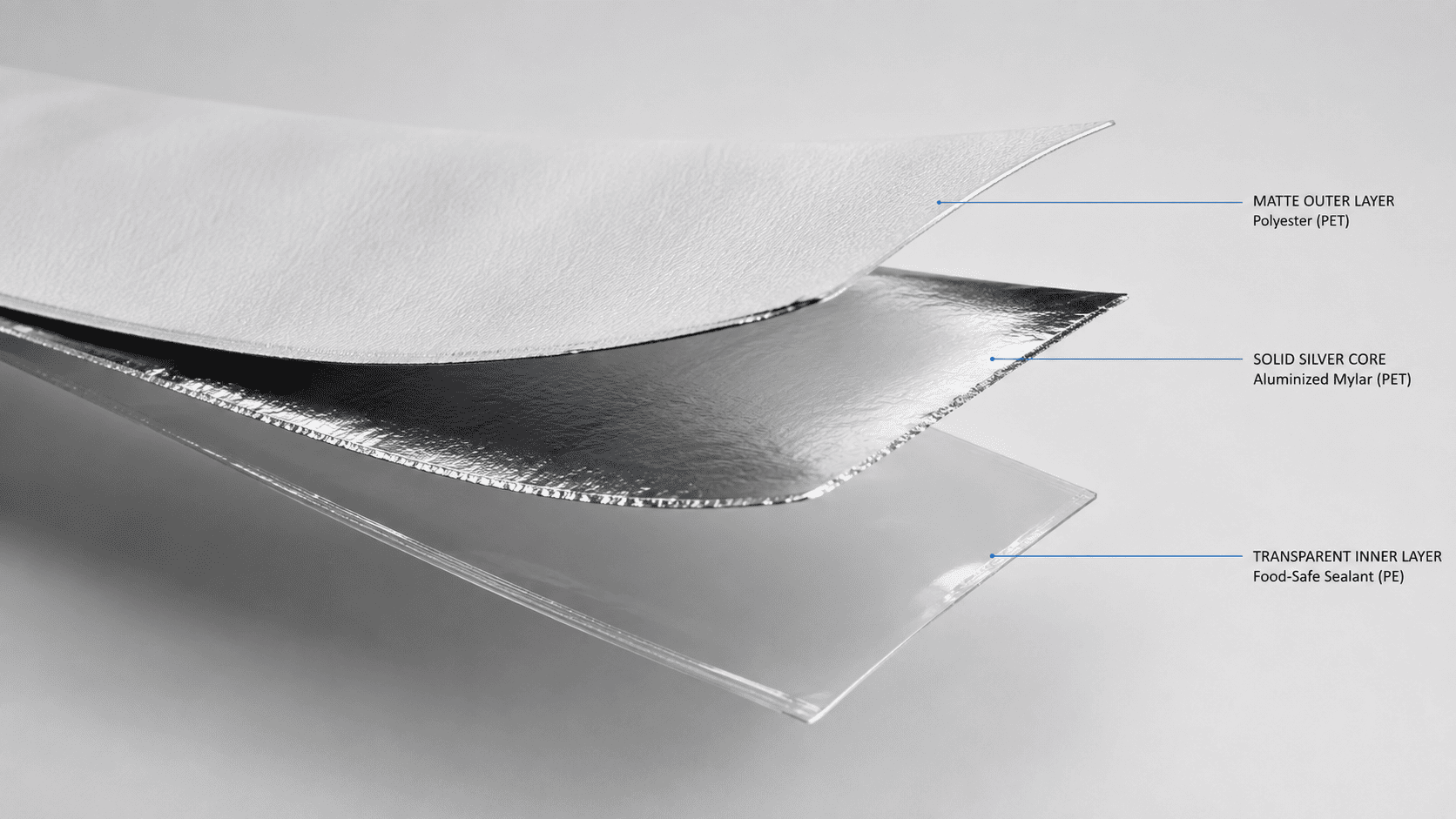
The names of the individual webs employed in the bag eventually made should be listed. The print and resists handling are done on the outer layer. Middle web can be used to give stiffness, barrier to be opaque or gaseous. The inner sealant covers the product, and creates the heat seals. The layers are bonded together using adhesives which need to be suitable to the conversion and use.
List the functional layers
Have the supplier identify the material, thickness and purpose of each of the layers. The overall thickness is not sufficient: even two laminates of the same gauge may vary widely in seal range, puncture response, retention of aroma and protection of light.
- Print web in reverse print.
- A metal layer that has been deposited or coated around the web of barrier.
- The curing route and adhesive route.
- Product‑contact sealant
- Measurement of all the web and total laminate.
- Proclaimed oxygen and water‑vapour transmission information.
Establish Targets of Barriers From the Failure Mode of the Packed Product
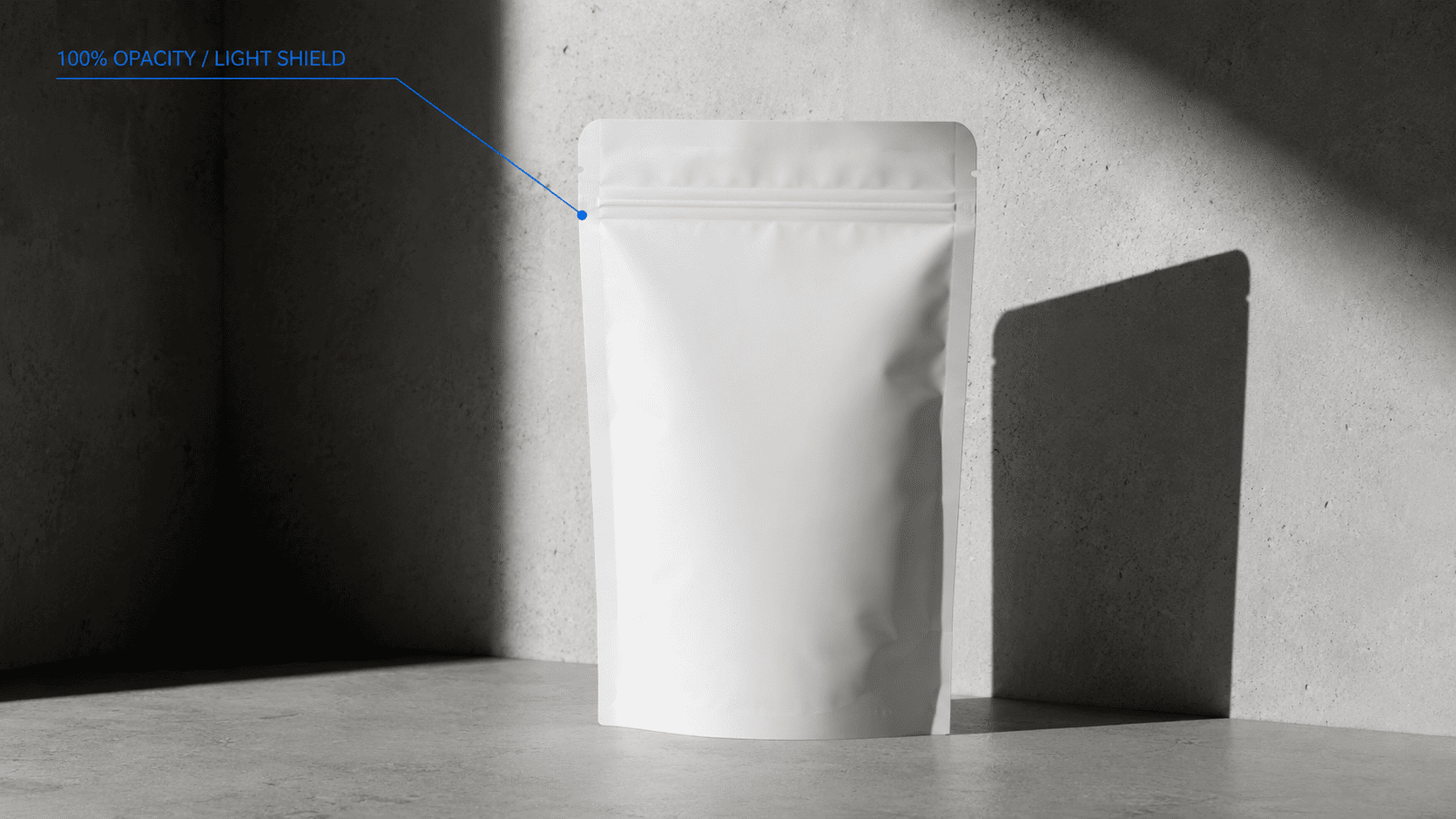
The optimal structure will be based on what will render the packed product undesirable. Dry flower can become odorless or become moist. Gummies can be oily, sticky or change texture. Powders may clump. A dark bag can keep the light off up to a point yet offer no hassle in the form of securing appropriate oxygen or moisture protection should we have chosen to use its laminate and seals just by sight.
Determine the exposures to storage
The interpretation of barrier data should be based on the target shelf life, climate, bag surface area and remaining headspace. No leakage on zipper ends, the damaged seals or leakages made during folding and shipping of the pouch are excluded in a flat‑film transmission value.
Differentiate metalized film and aluminum foil
Other purchasing alternatives are metalized PET and aluminum foil. Metalized PET has a deposited metallic layer that makes it appear opaque and allow better barricading by having a relatively easy surface to handle. Foil is an independent metal mesh that cannot offer the most effective guidance, but might become inflexible and can fracture due to flexing. Without taking conversion and distribution into account, neither should be chosen.
| Material direction | when the brief is the order of the day. | Conversion question |
| Clear PET-based laminate | Product visibility or moderate protection. | Meets light and gas targets? |
| Metalized PET laminate | Transparency, printability and increased barrier. | After conversion is deposition continuous? |
| Foil laminate | Direction: High light and gas barrier. | Will folds/handling develop flex cracks? |
| PE mono-material direction | A development path based on recycling. | Is it possible to meet barrier, seal and zipper targets? |
Name the Product‑Contact Sealant
The inner layer does not just come into contact with the contents. It should be closed inside the temperature, pressure and dwell time bandwidth of co‑packer, capable of resisting product oil or fine particles and cement along the zipper profile. A sealant that is used in a dry product must not necessarily be used again on a warm‑filled or an oily
Trace out the operating heat‑seal
Order real packing line trial packets. Set lowest and highest limits to produce a satisfactory seal without distortion, channel leakages or loss or damage around the zipper. Note down the settings of the approved bag specification.
Correctly Match Laminate Stiffness to the CR Zipper
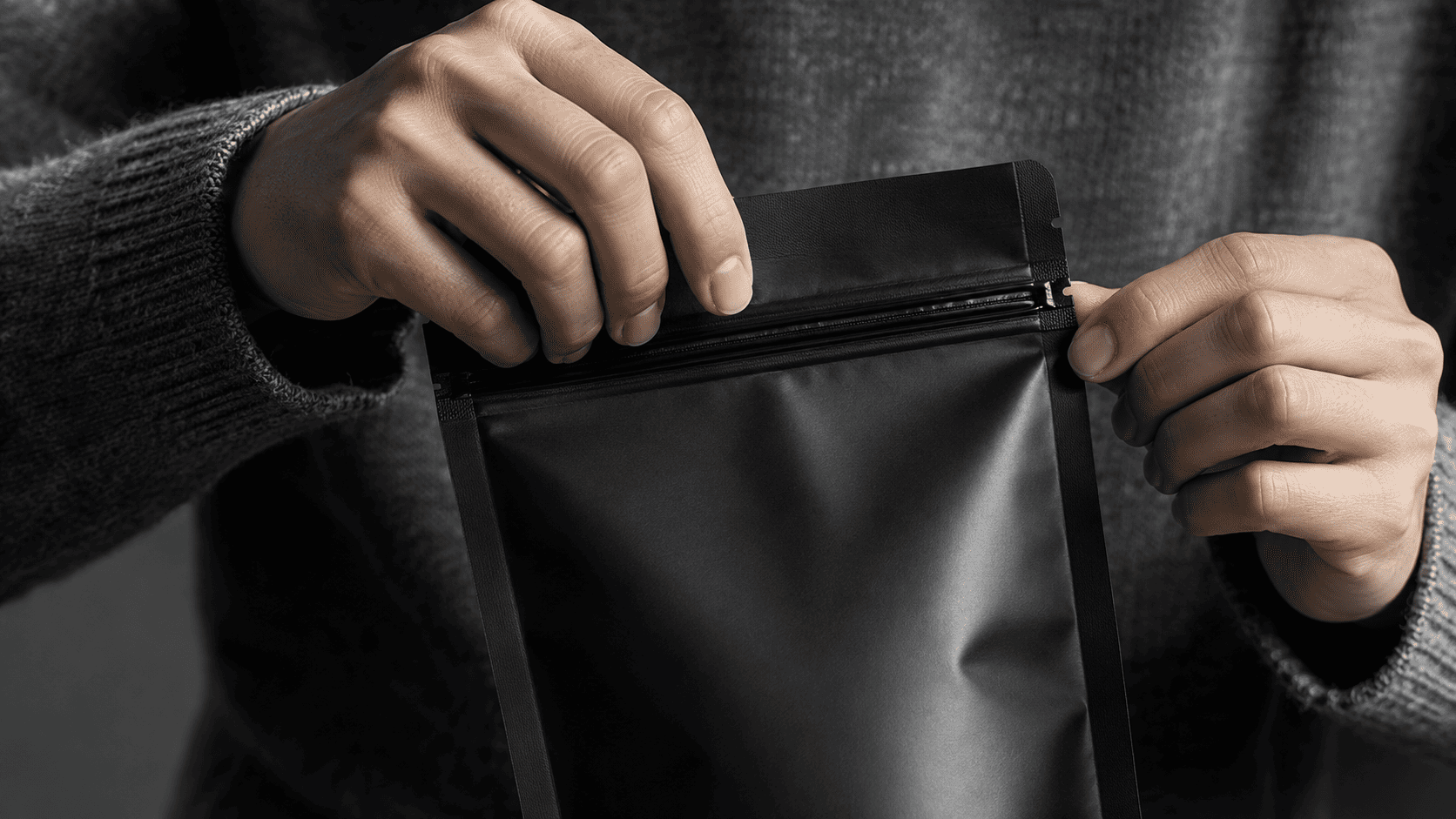
One of the elements of a converted package is a child‑resistant zipper. The laminate around has an impact on the way the adults handle the opening, bending and separating it. Excessive stiffness might cause the action assigned to it to be clumsy whereas a very loose film may flatten around the zipper. Leverage is also dependent on the bag width and distance above the closure.
Authorise the zipper in the desired size
Never transfer the permission on one bag size to another. The broadening of the mouth, the increased fill or altering the gusset modifies the means of the force approaching the closure. Final laminate, zipper, seal allowances and print instructions on opening should be used by the converted sample.
Retain Both Permanent Sealing and Reclosing
The product is sealed against heat, and this is the top protecting the unopened product. Once that seal is opened, the zipper that is child‑resistant restricts access. The tear strip, cut line, top allowance and the position of the zipper should be specified by buyers to avoid damaging operating directions and having less than enough grip focusing on the removal of the permanent seal.
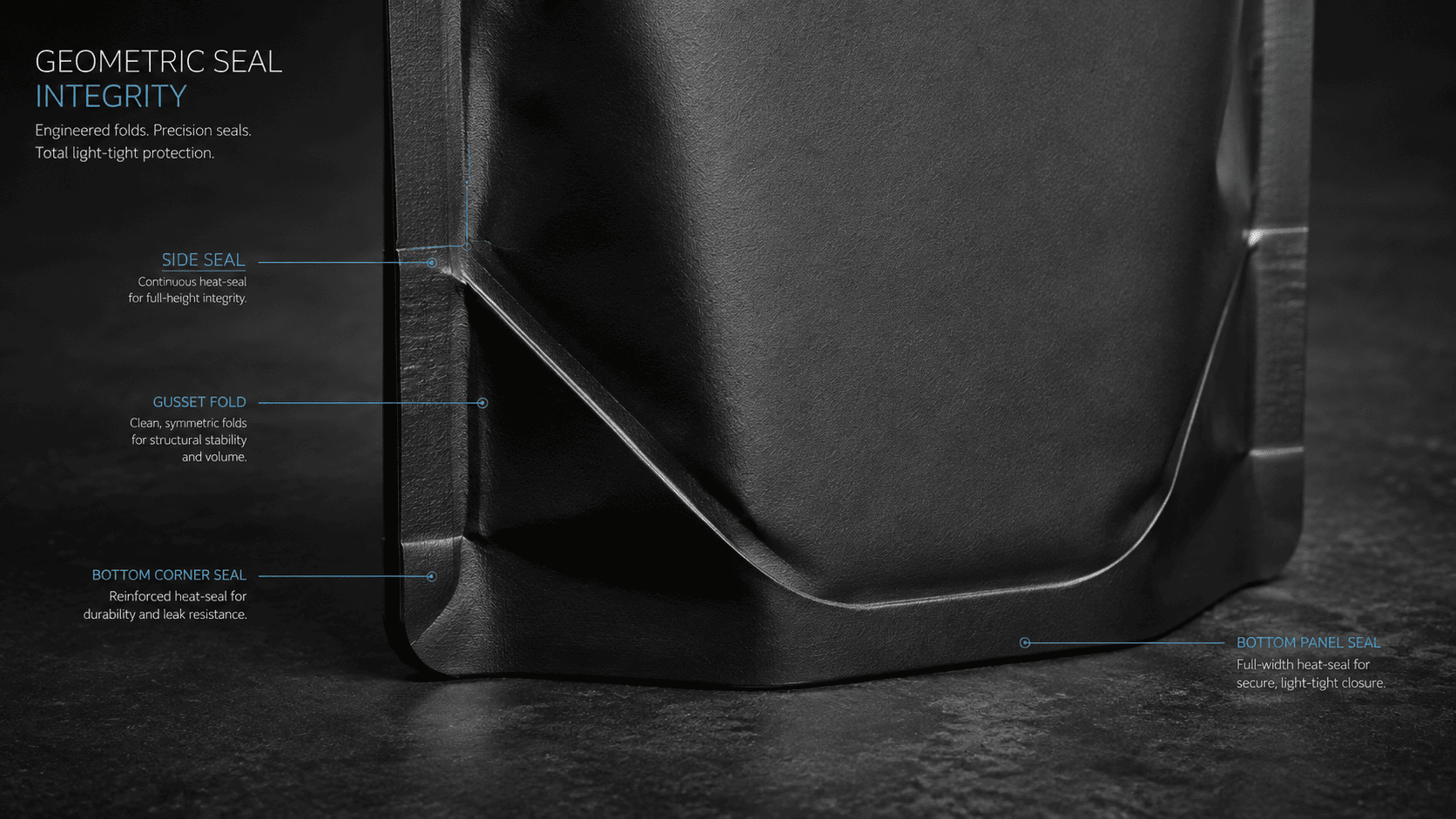
- Check clean zipper and heat‑seal areas.
- Adjust the distance between the top seal and zipper.
- Removal of tear‑strip on a filled pouch.
- Make sure that the zipper fully closes after manipulation.
- Check zipper ends and transition of seals.
- Repeat opening routines after transport conditioning.
Windows = Laminate Change
Part of a solid structure is substituted with a see‑through web. It can enhance the visibility of the product, as well as, it alters light exposure, could change oxygen or transmission of moisture. A material brief should not be added to a workspace as an artwork effect but create a window the appropriate size and position.
Keep out windows to sensitive areas
Do not use a window on zipper ends, gusset folds, corners under high stress, warnings or lot‑codes. Ensure that the clear area is appropriately product‑contact and its performance is part of shelf‑life testing.
Design Printing Around a Laminate
Artworks do not act the same way on clear, white, metalized and foil‑backed structures. Colour may require white ink to regulate the ink levels. There must be sufficient contrast on barcodes. Soft touch, gloss and Matte finishes have the ability to alter handling and appearance, but not to enhance barrier.
Take the correct evidence in every decision
A digital colour proof gives an appraisal of artwork. A computer printed film preview is an assessment of colour on the selected web. A pouch which has been converted tests zipper placement, the creation of gussets, window registration, seals and visibility of instruction. One of the proofs should not be encompassed in the approval of all three decisions by the buyers.
Construct an exemplar Full‑Pouch Material Experiment
It is a trial that must answer material questions as opposed to the demonstration of product holding capacity of a bag. Use the fill weight to be used and a method of packing. Take condition samples in appropriate temperature, humidity and distribution conditions and examine the product, laminate, seals and closure at specified time intervals.
- Aroma, colour, texture or clumping of the product.
- Oil transfer and compatibility with the inner sealant layer.
- Seal strength and channel marks.
- Material damage: puncture, scuffing and flex.
- Zipper alignment and repeated closure engagement.
- Legibility of print and instructions following handling.
Material Control‑ Repeat orders
Another value of coefficient of friction or barrier, a seal initiation temperature can be used with a replacement film that is otherwise identical. An alternative adhesive cure may have an impact on odor or delamination. Repetitions like orders would then consider a controlled bill of materials as opposed to a generic Mylar description.
Develop a change trigger‑list
Need inspection upon an alteration in a layer or coating, adhesive, and sealant, zipper, gauge, and window or pouch dimensions. The review ought to determine the previous evidence that remains still relevant and the production or shelf‑life tests that need re‑testing.
Dispatch YPAK a Material‑Led RFQ
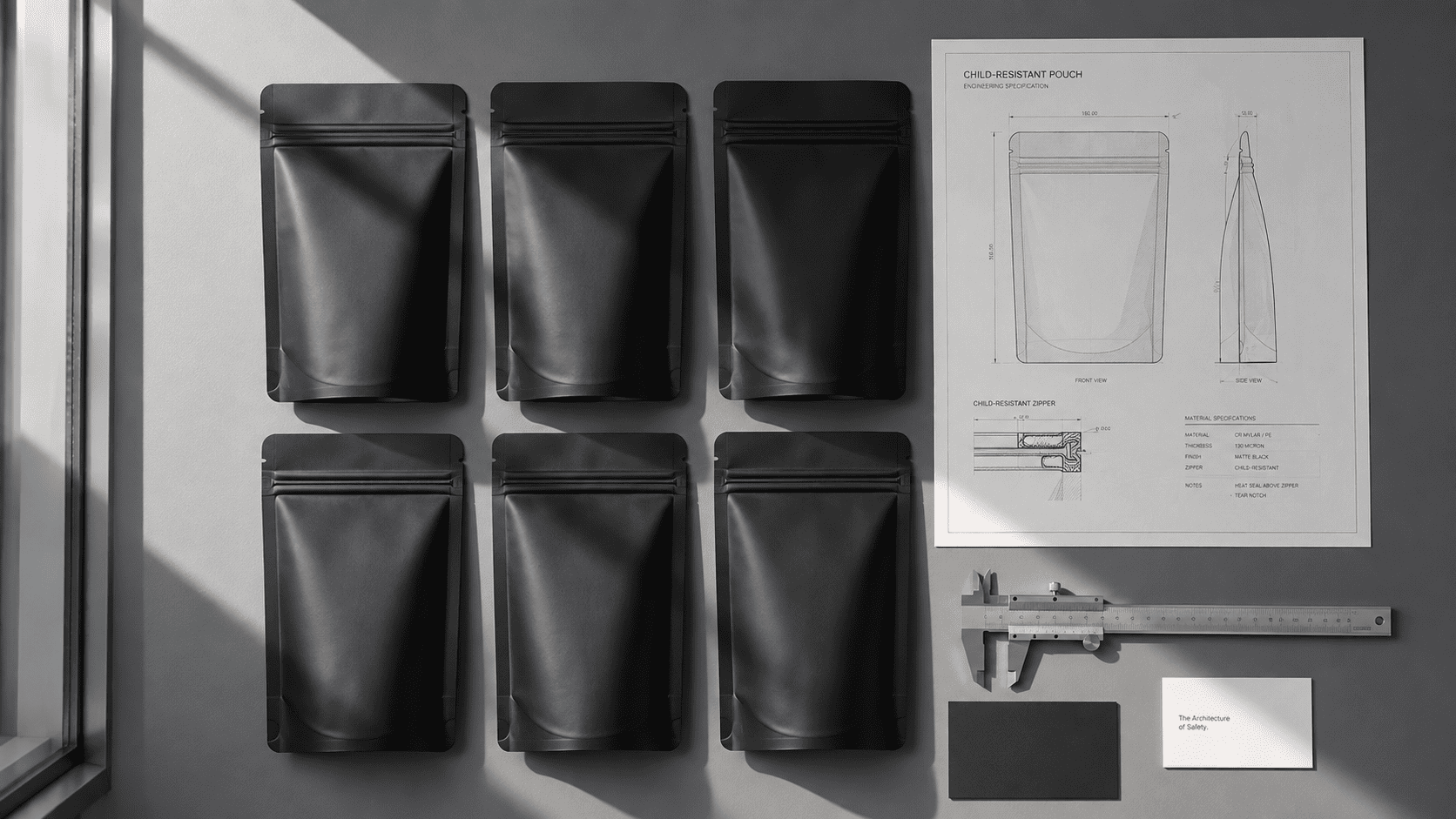
YPAK has its own site that displays customizable flat and stand‑up CBD packets, the opportunity to find a child‑resistant zipper and design digital or gravure printed elements to use them on a food, candy, or gummy base. An effective RFQ must be able to tie the following capabilities to the accurate product brief and not request a generic child resistant Mylar bag.
- Form of product, surface and fill weight.
- Target shelf life and climate of the distribution.
- Dimensions of needed flat or stand‑up pouches.
- Opacity and barrier objectives.
- Direction of preferred laminate, should it be assessed.
- Child‑resistant zipper and clear printed opening instructions.
- Printing technique, number and completion of artwork.
- Trial, documentation, quantity and delivery requirements.
Conclusion
A material‑bill and a converted‑pouch specification should be obtained to source child resistant Mylar bags. The laminate has to cope with the real risks of the deterioration of the product, the sealant should be run in the packing line and the film should be compatible with the chosen child‑resistant zipper. This material‑based solution isolates quantifiable performance and has the benefit of separating from the meticulous look and simplifies repeat orders to manage.
FAQ
Should Mylar be an entire laminate specification?
No. A buyer ought to demand all layers, gauge and purpose as well as the information about the barriers and product‑contact.
PET and metalized PET are identical?
No. The metal layer of metalized PET is deposited whereas foil is an independent metal web. There is also a difference in how flexible they are, their potential of barrier and conversion behaviour.
Will a CR zipper affect the barrier performance?
No. The laminate and heat seals have the highest protection of products and the zipper prevents reaccess of the product. Leakage about the closure remains to be assessed.
Is it possible to add a clear window after approval of material?
It must be considered a material change since it may change the exposure to light, exposure to oxygen and moisture and positioning of folds and seals.
What will be in the RFQ?
Include the product, fill, shelf‑life target, climate, dimensions, barrier requirements, closure, printing, trials, documentation, quantity and delivery plan.
Post time: Sep-04-2026


