


Name the Recycling Stream Prior to designing the Pouch.
The design-for-recycling direction is structured based on the particular streams of polymer and packaging. Single testing of natural and coloured PE flexible films, e.g., can be tested. Providing a statement to say that a pouch can be recycled without indicating the target stream and market, what is left yet to be answered is the engineering question.
● Find out the main polymer group of the bendy structure.
● Attest to be either transparent, natural, white or coloured pouch.
● Smallest size of checks and sortability in target system.
● Identify household/commercial destination market collection.
● Obtain the effective version of the guideline.
Distinguish Mono-Material Design From Single-Layer Film
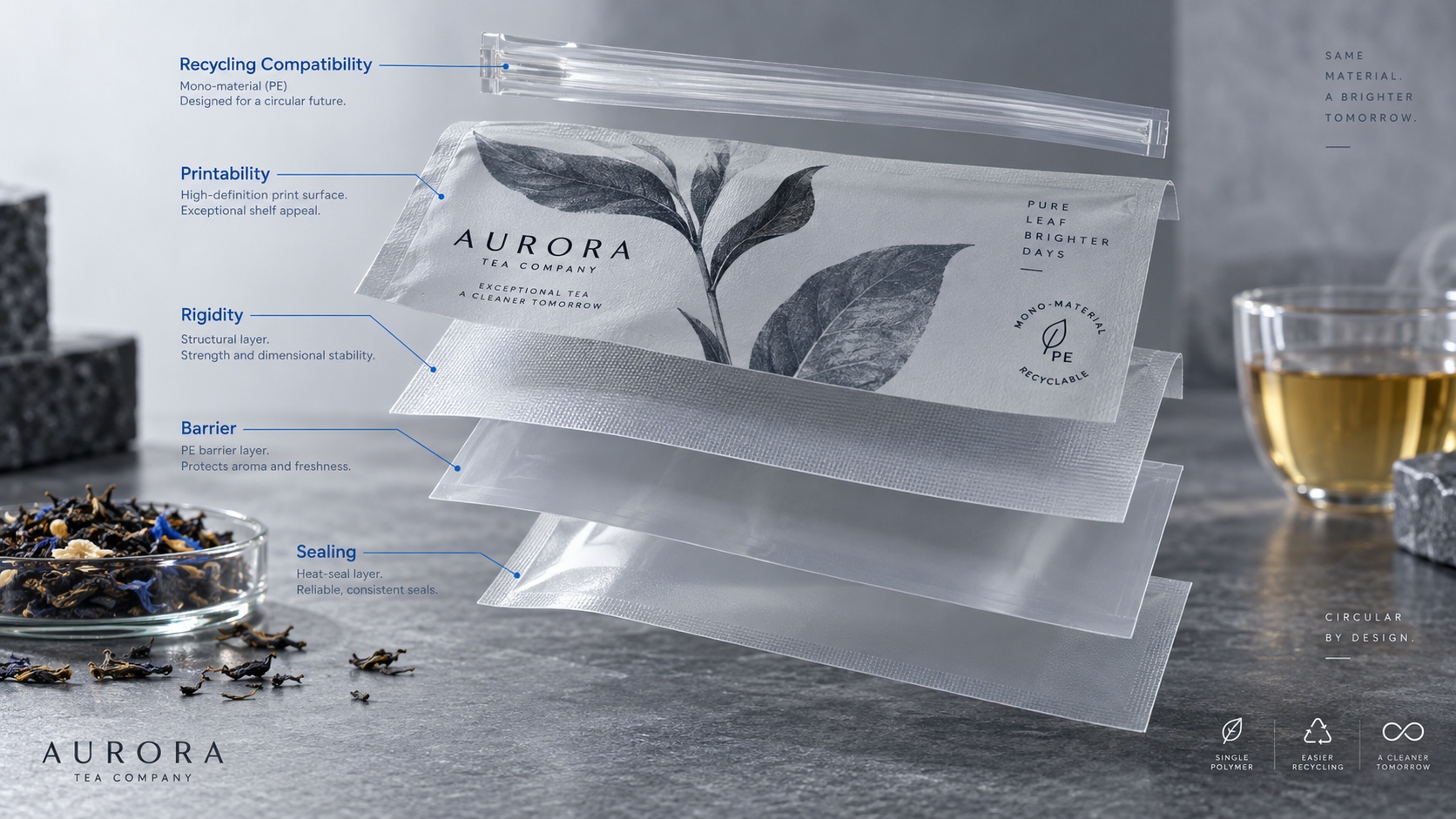
A flexible pouch to be recycled can still apply various layers as long as the layers are constructed of a total polymer family or suits the fastidious guideline requirements. Layers are capable of offering printability, rigidity, barrier and sealing. Consideration of engineering goal as one that is compatible with target process of recycling, but not a process involving removal of all layers.
Ask to have a full constructions but not a trade name. Inspect the role, content and thickness of all the layers, even tie or barrier layers. Whereas this is because if there are features not published in any guidance then there might be the need to test or to evaluate the projects.
Engineer Barrier Without Losing the Recovery Route
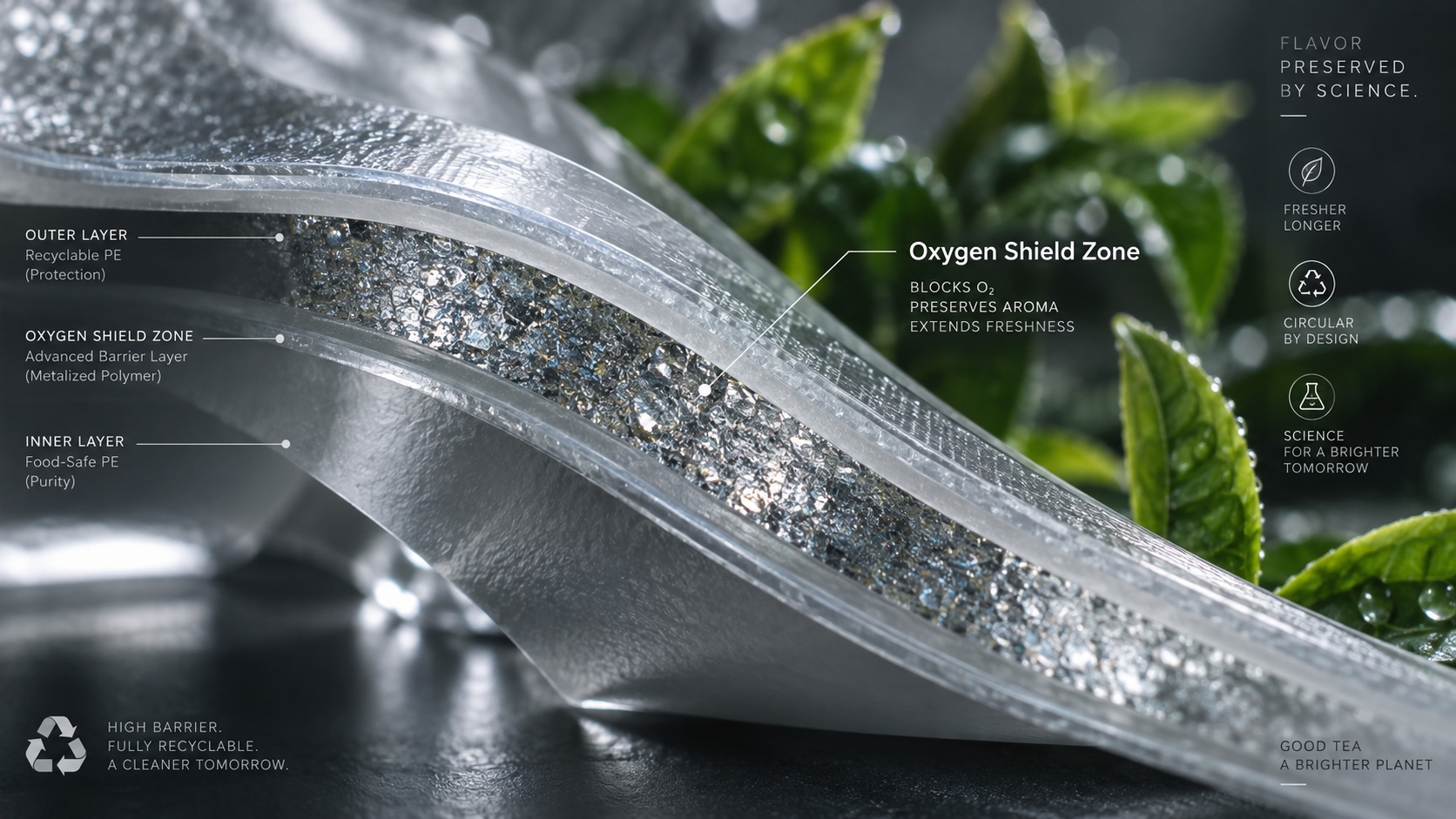
Tea may be moisture-deficient, lacking in oxygen, light or aroma cover. Barrier technologies can only work in specific situations; the rest can result in reducing the quality of the recyclate or be rejected by one of the target streams. Not to choose out of thinness a barrier.
| Barrier question | Engineering record |
|---|---|
| Product requirement | Target performance, test conditions and shelf-life scenario. |
| Barrier component | Material (named), site and proportion in the building. |
| Guideline status | Preferred, limited or non-characteristic of the stream selected. |
| Validation | Full-pouch/product testing and film data. |
| Change control | The presence of conditions that need to be re-assessed in the event of change in layers or thickness. |
The Zipper as a part of the Material System.
Depending upon the construct, a zipper can render the pouch discernible upon opening but one thing that matters in the entire construct is the polymer, the profile, attachment and weight of the polymerized product. Inquire about whether the closure is to be recycled into the same stream and the introduction of any incompatible material. Reclosing of the test with real tea.
The seal permanently and the tear should also be able to work without additional components. Where one closure is much more protective of the product or will entail a reduction in waste, note that functionality with the recyclability review.
Do Not Let Decoration Break the Design-for-Recycling Strategy
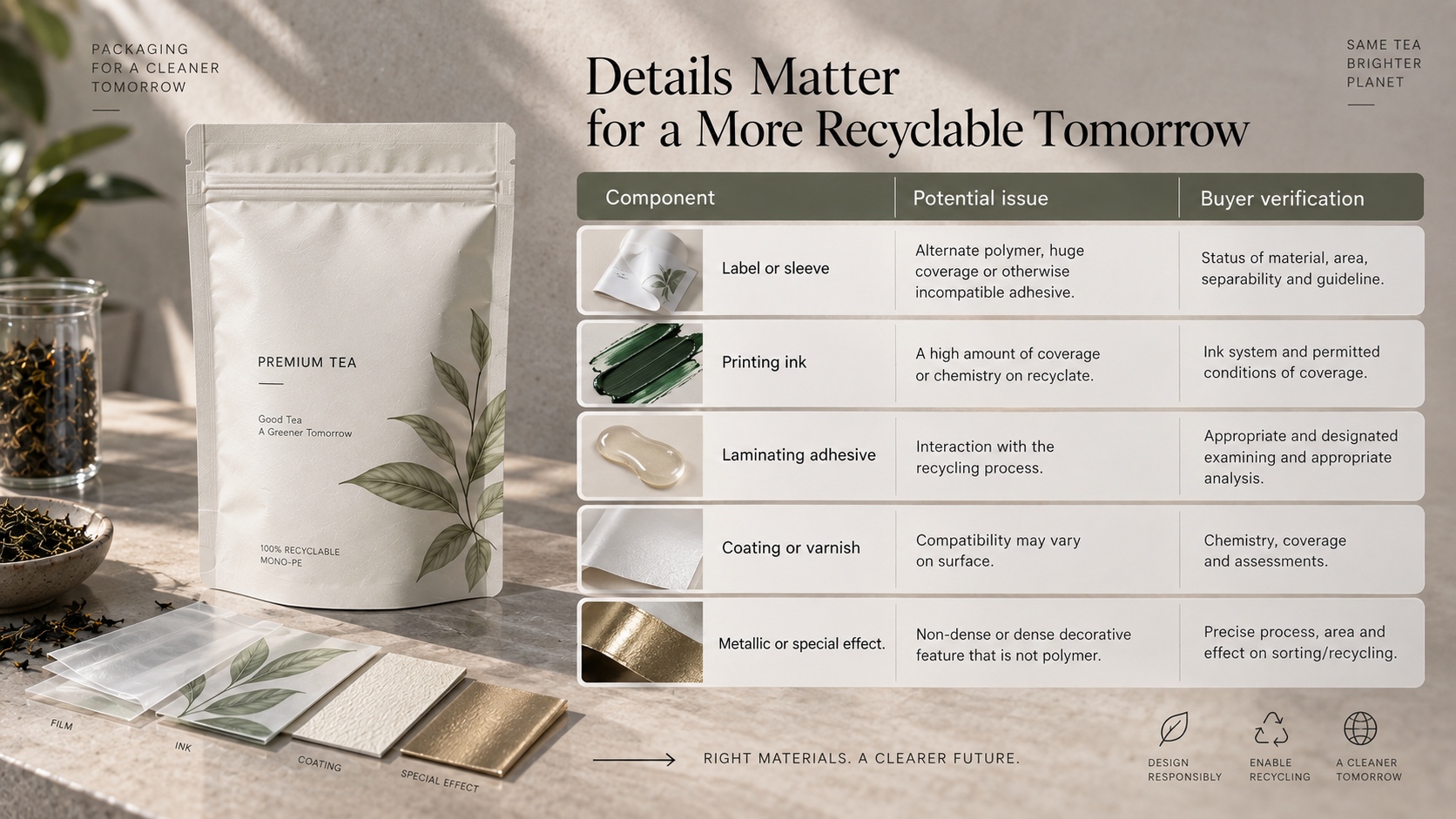
| Component | Potential issue | Buyer verification |
|---|---|---|
| Label or sleeve | Alternate polymer, huge coverage or otherwise incompatible adhesive. | Status of material, area, separability and guideline. |
| Printing ink | A high amount of coverage or chemistry on recyclate. | Ink system and permitted conditions of coverage. |
| Laminating adhesive | Interaction with the recycling process | Appropriate and designated examining and appropriate analysis. |
| Coating or varnish | Compatibility may vary on surface. | Chemistry, coverage and assessments. |
| Metallic or special effect. | Non-dense or dense decorative feature that is not polymer. | Precise process, area and effect on sorting/recycling. |
The inputs related to colour and Sortability are related to engineering.
The value and sorting of the material recycled as well as the value of the utilised recycled material may be dependent on colour. Dark or even carbon-black effects will most likely be problematic in some systems when detected. Even small and bendable objects might not behave as per collection and sorting. Apply application advice depending on the target stream and target market as opposed to generic visual direction.
The coverage, transparency and structural colour are also assessed, thus where brand colour is crucial, search into this drive. Document the compromise instead of defining all the things as a recyclable way.

Keep Recycled Content Separate From Recyclability
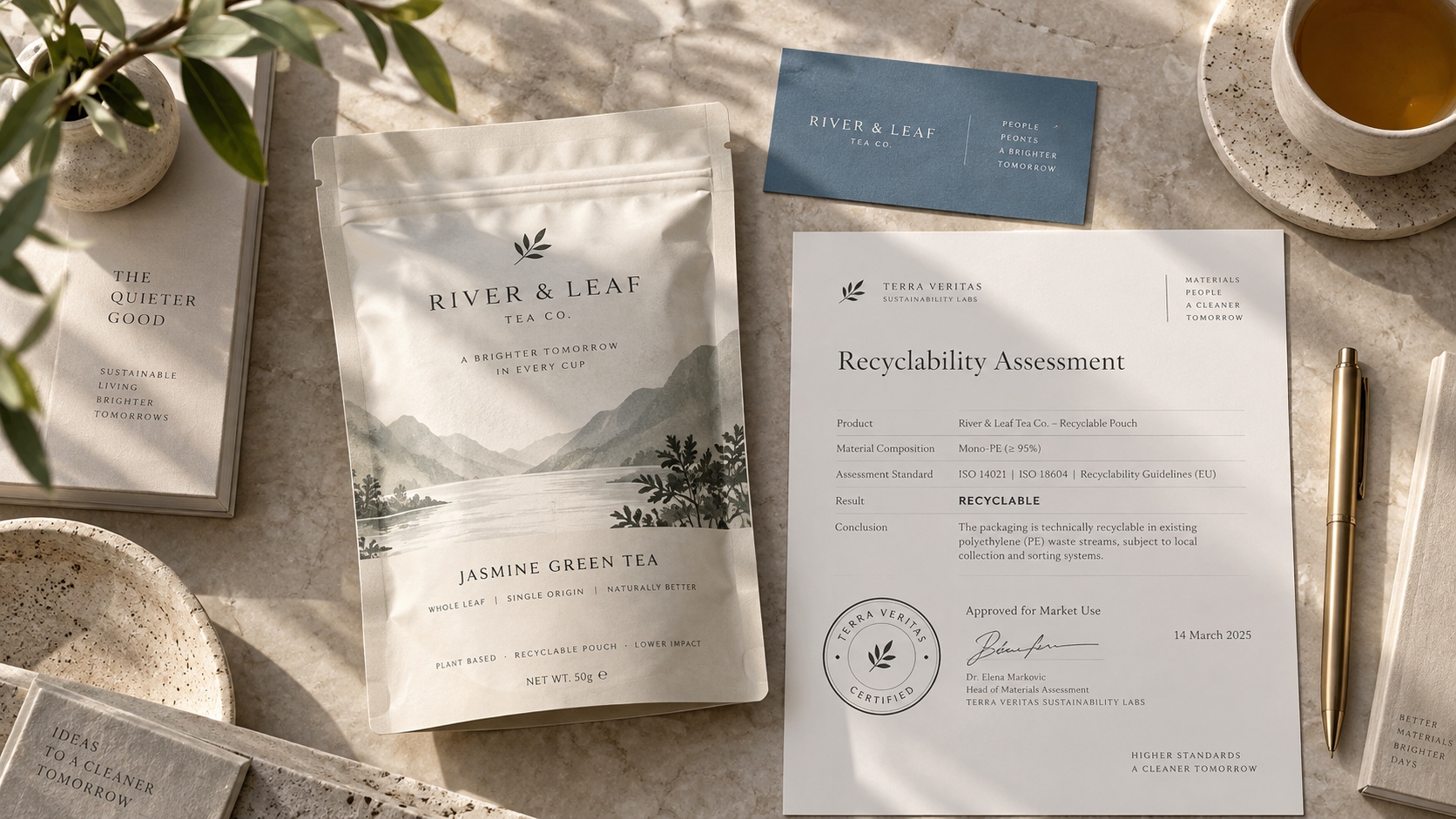
PCR refers to material which has been used up in consumer use cycle and recovered. Recyclability is a description of how the completed package can be received to undergo a proper process of recycling given a set of predetermined circumstances. The other attribute can be a pouch while one of the attributes is missing.
In the event of the PCR being proposed, verify the percentage, part, supply documentation, processing impact and food-contact requirements. Then do the design-for-recycling evaluation independently.
Develop a Recyclability Evidence Pack.
● Record the weight and entire bill of materials of pouch made.
● Choose the market and flexibility-film recycling principle.
● Evaluate each layer, closure, ink, adhesive, label and special feature.
● Get test, evaluation or certification evidence when there is a need to obtain it.
● Check production specifications and filled-pouch.
● Tolerate acceptable consumer sales language to every market.
The measured design should be upheld by the control in production. Indicate allowable material grades, ratios of layers, colour, closures, adhesive and coverage of prints; and associate purchase order and quality record to the specification. The apparent functionally identical supplier replacement can behave differently in sorting or recycling. This will mean that the change has to be notified and reviewed technically prior to reaching printed production.
The area of the art that falls under the design teams should not be excessively small to have instructions that are proven to be sellable. A removable label or nation-specific back panel may be more accurate in the event that two or more countries share a pouch, than a common symbol. However, the label per se becomes included into the recyclability test. Centralization of technical and communication decision instead of resolving at the various departments.
Collect market data on the actual market. The consumer questions, the needs of the retailers, the acceptability of the collector and changes to the design can show that an instruction needs to be changed. Recyclability is not a once-determined adjective, but a long-standing relationship amid package definition, and a recovery system.
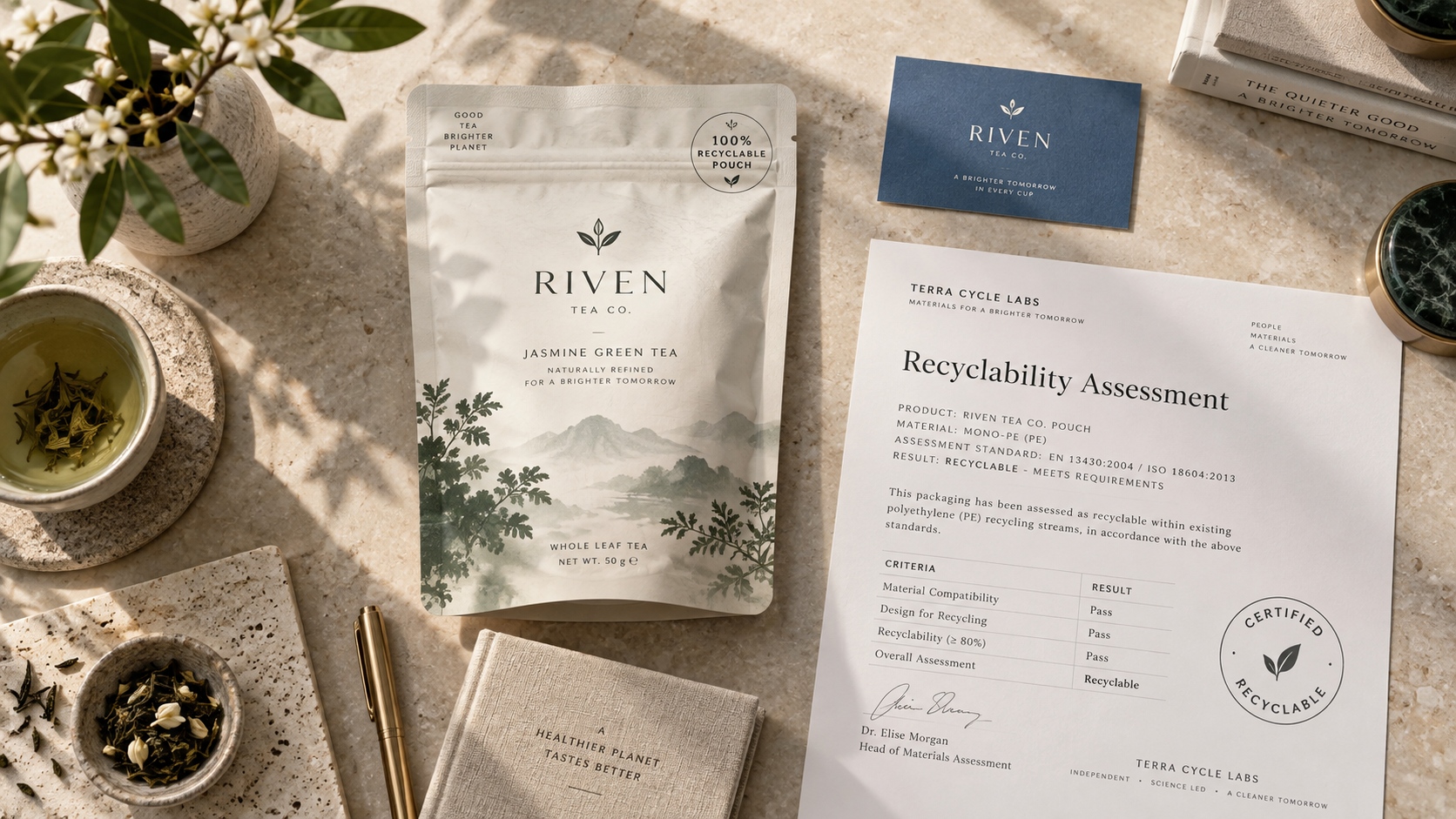
It can include a pilot run to showcase a few of the issues prior to full conversion. Check layer bond, incurve, seal look, zipper, fill and seal representative pouches and durability of print and behaviour of carton. Adjustments in the performance to solve those issues require to be reverted to the recyclability analysis; production troubleshooting can not quietly drop an unsuited material.
Recyclable Tea Packaging Questions

Does mono-material consist of one film-layer? No. A functional polymer system may be comprised of many layers of functionality in a compatible system. The entire construction is yet to be evaluated.
Is it possible to have a paper layer added to a plastic pouch that can be recycled? You must not think compatibility. Contaminated material, labels and layers will be verified with the intended stream of recycling.
Are recyclable pouch recycled everywhere? No. Collection, sorting, acceptance and processing is place dependent.
How and when is the design to be reviewed? Re-evaluate following material, thickness, colour, closure, ink, adhesive, label, size, supplier or target market.
Submit the Complete Pouch for Review
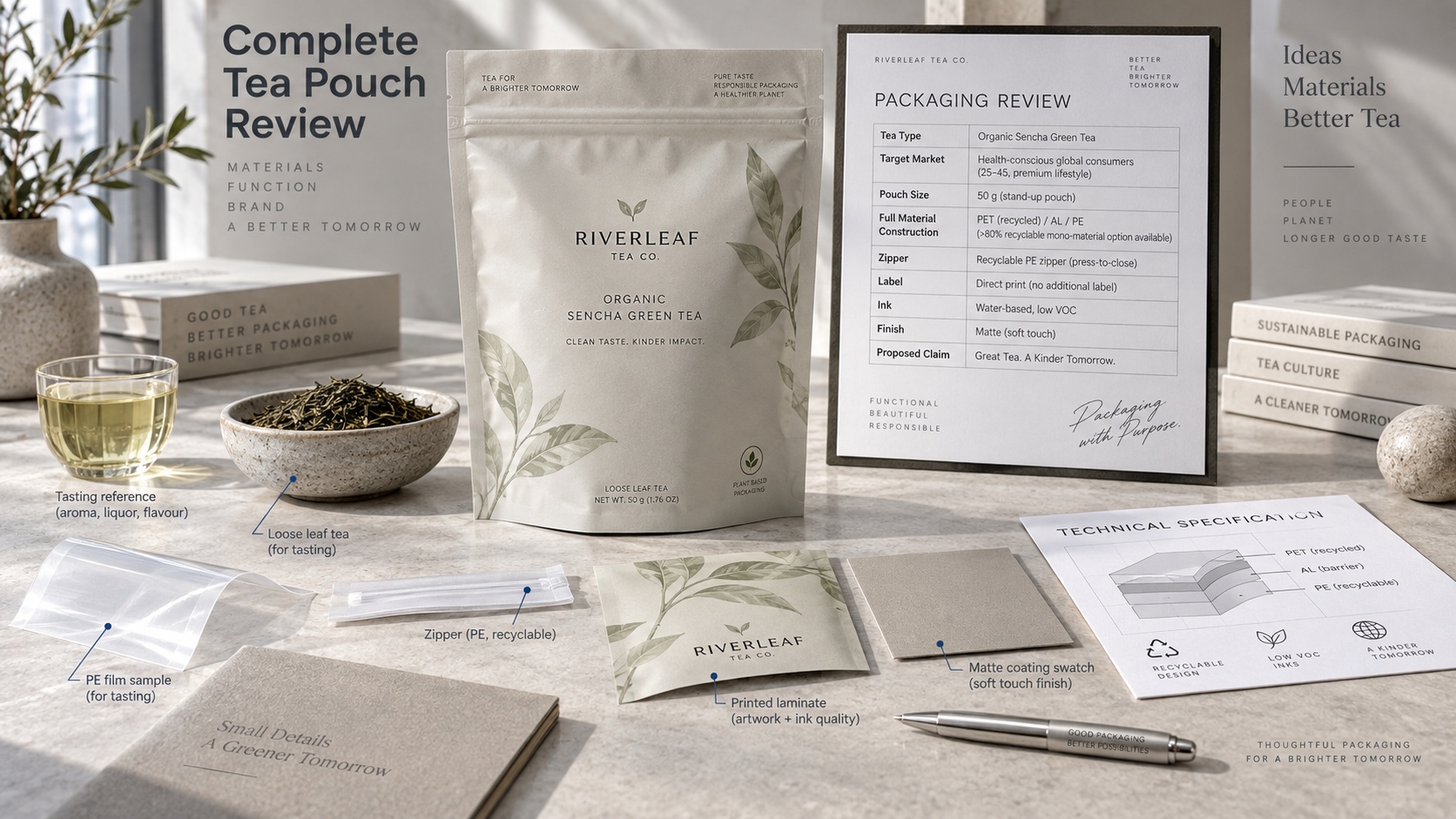
The design-recycling questionnaire would be started with the type of tea (performance required), the targeted markets, the pouch size, all material construction, zipper, label, inks, finishes and proposed claim. Do not send in a name of the main film only.
YPAK can discuss the material and pouch orders to be utilised in a project and the assertions of final recyclability have to be consistent with pertinent current demands, proof and market of destination testing and verification.
Post time: Sep-17-2026


