


There are two different systems of closure required to make a resealable matcha pouch work. The heat seal is permanent and preserves an unopened product whereas the zipper enables the consumer to close the pouch once it has been used. A zipper is not a substitute to the original seal or the barrier film and its usefulness is determined by the consistency of the zipper closing in the presence of fine matcha powder.
The purchasers of the packaging must have a pouch around the serving routine, frequency of opening and product behavior. The type of zippers, width of the bag, the amount of fill, the location of tears and access by hands determine whether the consumer is able to take out powder and close the pack without contamination. The use tests should be approved on filled‑pouches, not an empty sample that opens easily.
Determine How the Matcha Pouch will be utilized.
Start with the number and projected consumption time. A 30‑g ceremonial matcha pouch can be opened to a limited number of servings, whereas a cafe refill or food‑service pack can be opened many times over. Note the scoop, spoon/ pouring and location of storing the pouch after use.
Map Opening Routine.
In the closure brief, it is necessary to find out:
- · Weight filled and anticipated openings.
- · Instrument or device to take away the powder.
- · Minimum opening size and hand clearance.
- · Storing conditions in the post‑opening stage.
- · Acceptable amount of powder in the area of the zipper.
This information makes resealability a requirement that can be tested rather than a feature mentioned only as a marketing feature.
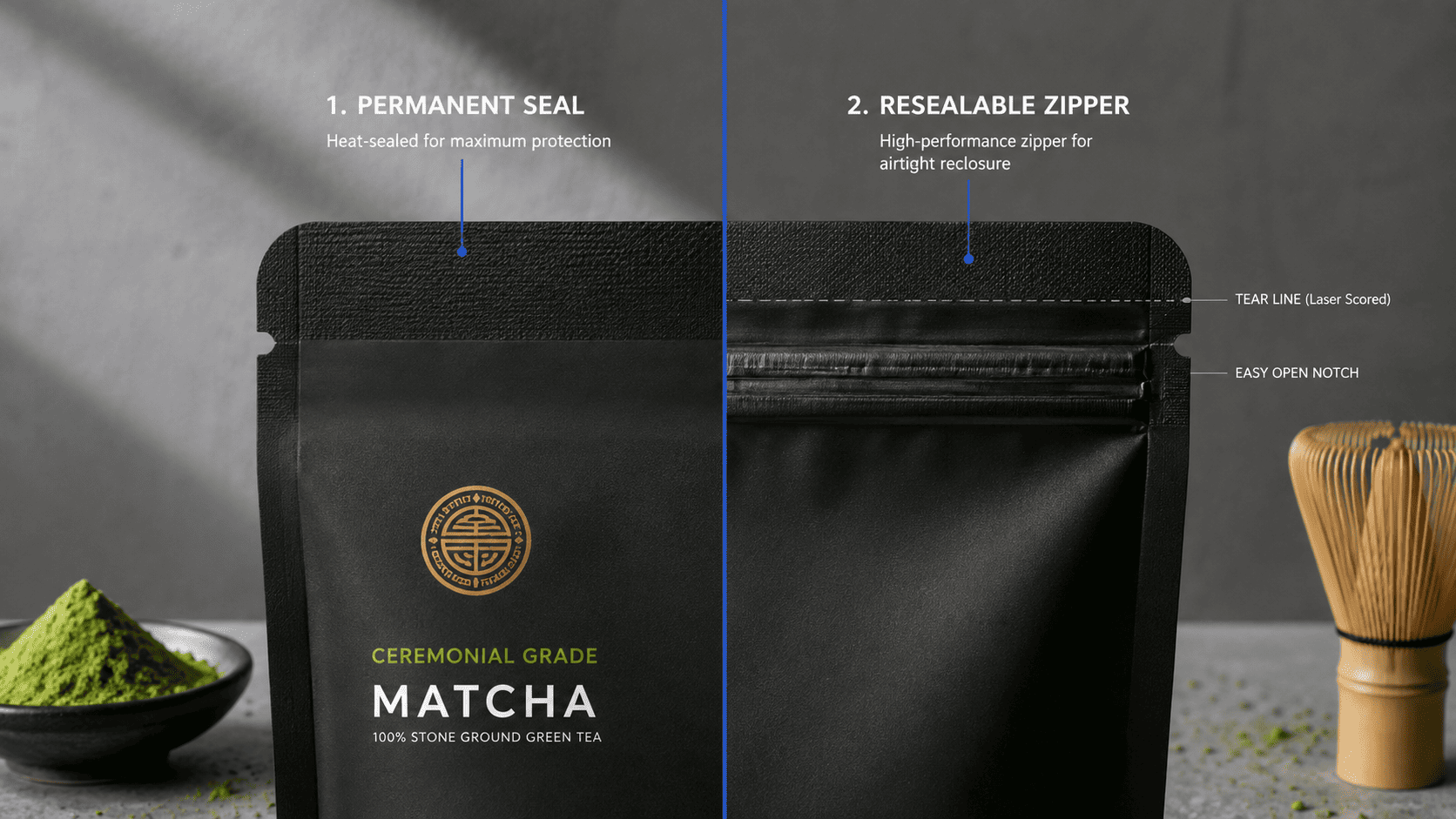
Separate the Permanent Seal From the Zipper.
The top seal is permanent to give tamper evidence and preserve the product prior to the consumer opening the pouch. An incision or laser mark is made under that seal to access. Repeated closing then is supported by the zipper, though this typically does not replicate the initial closed environment.
Both systems are to be independently approved. Seal strength and integrity utilize the unopened pack and zipper alignment, closing force and powder tolerance use after the pack has been opened. A zipper will not fix a dirty or leaking permanent seal.
Compare Resealable Closure Directions.
A buying point is given in the table. Accessibility and functionality will be based on pouch format, zipper design, material structure and converting equipment.
| Closure direction | Main advantage | Matcha‑powder risk | Suitable use |
| Standard press‑to‑close zipper | Unobtrusive and space saving. | The profiles may not be free of fine powder. | Reduced size retail packs with fewer open points. |
| Wider‑track zipper | Better feedback on alignment and close out. | Takes up more pouch‑top space. | Retail packages were re‑opened several times. |
| Side zipper | Preserves front‑panel presentation | Validation of access and filling route. | Chosen flat‑bottom or structured types. |
| No zipper or single‑use seal. | The portions are individually sealed. | Increased packaging in serving. | Samples, travel and single portions. |
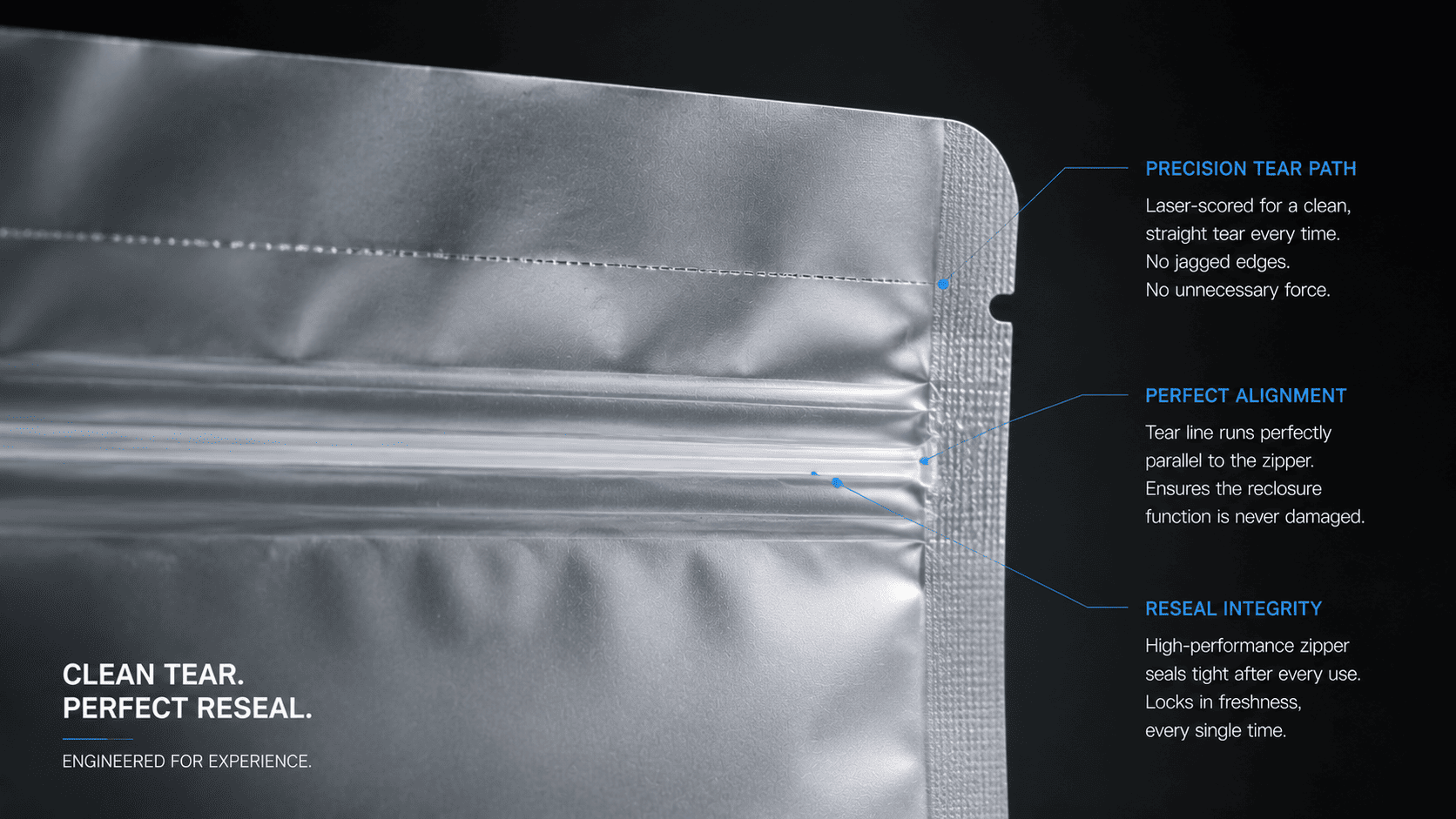
Test a Standard Press‑to‑Close Zipper.
The most common type of zipper is a press‑to‑close style, which is readily accessible and can fit in small retail pouches with a sizeable amount of openings. The consumer presses the two profiles to the width of the bag. Always keeping it in one line and a definite closing response will assist in showing that the pouch has been reclosing.
The powder may be left in the profiles and form an unfinished section. The extent of cleaning or tapping that is required in practice should be determined by testing. In case the zipper is hard to find or open, the consumers can just fold the pouch and circumvent the purpose.
Consider a Wider Track for Repeated Use.
A broader or more touchable zipper can offer more powerful finger control and a more pronounced closing reaction. It may be handy when packs are to be subjected to many visits, and when the customer wants to rip off the pouch in a cafe or in the kitchen.
Take into consideration the Space It Requires.
A bigger closure will take up more of the height of the pouch, and can alter the opening available. Check Relationship of top seal, tear line, zipper, scoop and fill level. The enhanced closure must not form an unsightly narrow gap that entraps powder.
Evaluate Side‑Zipper Placement as a Format Choice.
A side zipper has the ability to salvage the primary front‑panel space and establish an alternate opening process. It can be applied in a flat‑bottom or other structured pouches in case the brand desires a unique appearance. The converting and filling should be supportive to the chosen location.
Keep Matcha Powder Out of the Zipper Track.
Matcha is fine enough to cover surfaces and accrue in the closure profiles. The pouch geometry, positioning, fill level and scooping technique can cause powder to shift to the zipper. Strengthening of closures is not sufficient to eliminate this risk of contamination.
Develop a Powder‑Clearance Area.
Install the zipper well above the usual powder level and also allow ample room to allow the consumer to hold the pouch without compressing product upwards. Note dust on both profiles after use during trials. The test ought to be a normal handling and not carefully cleaned lab samples.
Place Tear Feature of Clean First Opening.
The tear notch or score is supposed to cut above the zipper and not cut through it and leave a small flap that will prevent access. The force should be easy to open and the permanent seal should stay intact during the distribution.
Examine the cut edge, tear direction and distance to the zipper on converted pouches. Any irregular tear can decrease the usable hole, expose sharp ends of the film or complicate the process of closing it again. The opening of instruction must be displayed in artwork without covering of important areas of production.
Size Pouch to Freshness after opening.
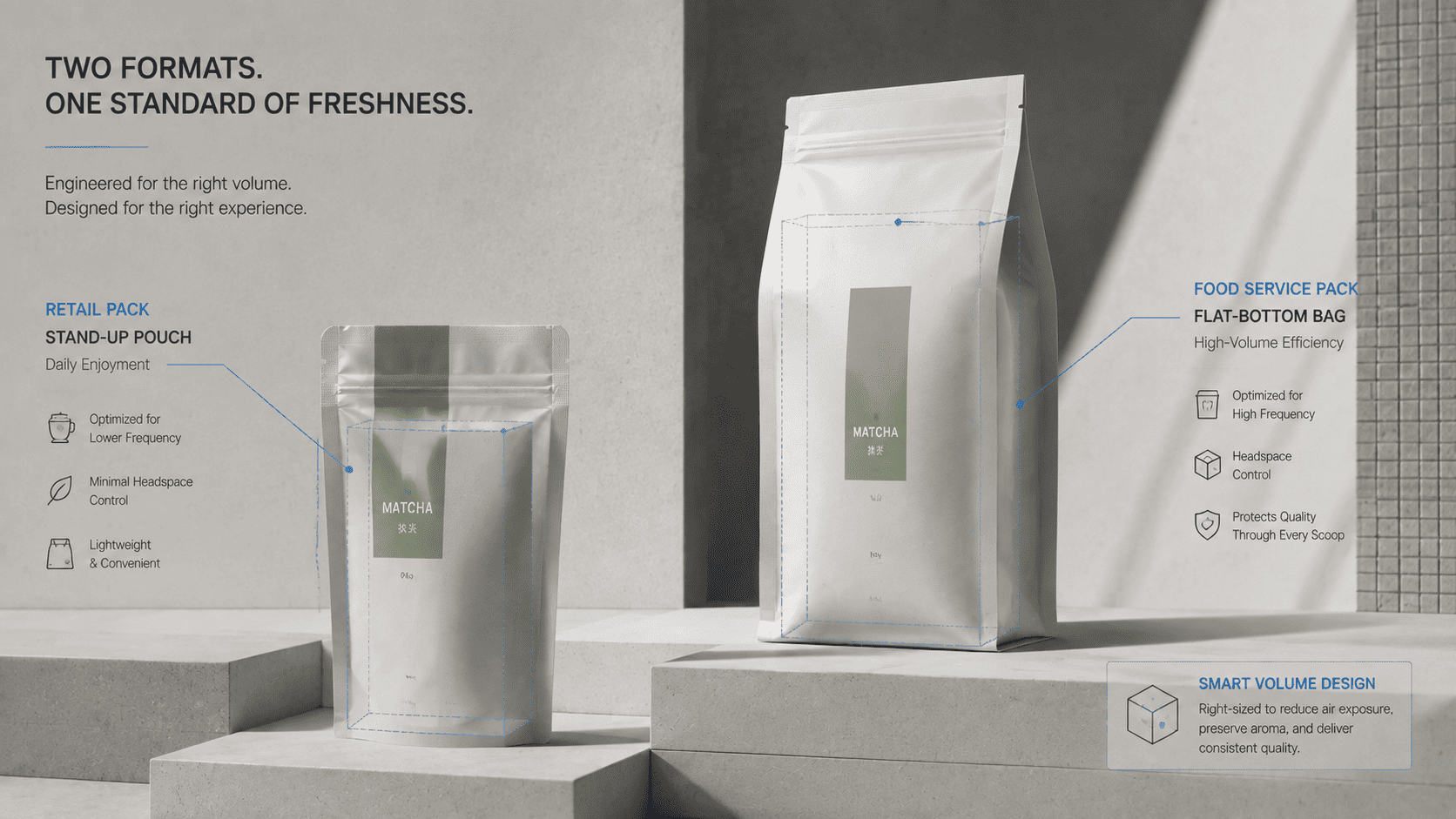
Bigger pouch can lower the unit packaging cost but can be open longer and have more space as matcha is used. Smaller packs reduce the lifespan of use and could decrease the amounts of zipper cycles. The right size will be determined by the rate of serving, the sales channel and reasonable change after opening.
Retail and Food‑Service Needs (Separate).
Compact storage and easy hand closing might be important to retail buyers, and a wide opening, scooping quickly and handling repeatedly to cafes. A single zipper and dimension cannot be accepted in both programs without trying all the routines.
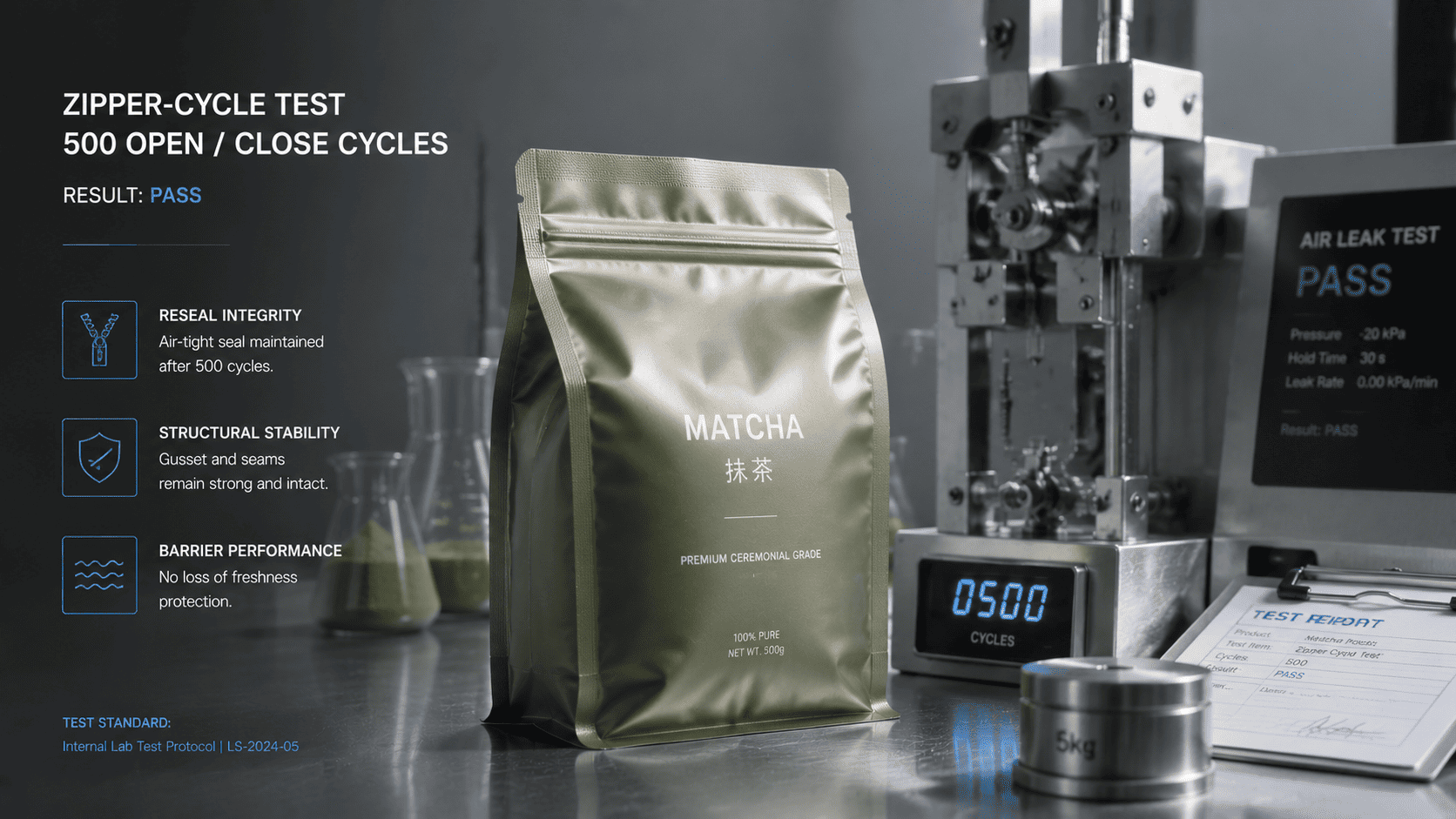
Test Reclosure by Repeating Cycles.
An effective test stuffs the production‑intent pouch with the actual matcha and has a prescribed opening process. Take off a realistic serving, zip up and store the pouch as desired. Repeat cycle as per the anticipated use.
Record Functional Evidence
The assessment can involve:
- · Time and force needed to align and close the zipper.
- · Any areas that can be seen or touched.
- · Powder in the profiles and area around.
- · Zipper and pouch alteration.
- · Color of the product, smell and clumping throughout the time of usage.
Apply this procedure to all samples in order to make a fair comparison of closure options. Equipment measurements may not indicate handling problems, so consumer‑use trials can be used to uncover these issues.
Check Zipper Attachment and Quality Conversion.
The zipper should be firmly fitted to the pouch and be aligned to the direction it is meant to be. Closure operation can be distorted, incompletely attached or overheated. Check finished pouches of representative production, start‑up and normal‑run samples.
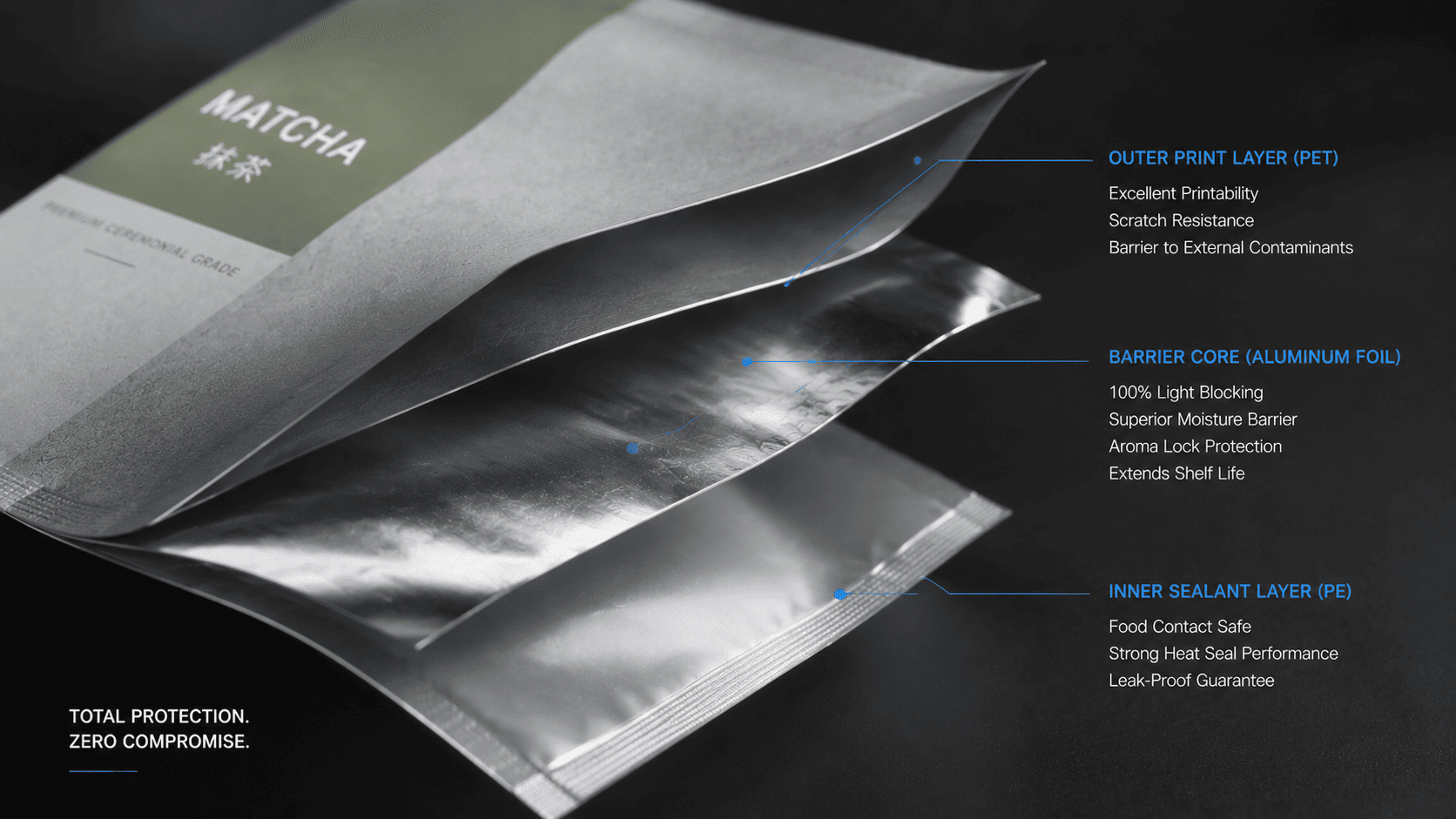
Relate Reclosure with the Barrier Structure.
Oxygen, transmission of moisture and light are still regulated by the walls of the pouch. A practical zipper enables it to be used after being opened but does not render a low‑barrier film matcha‑appropriate. Choose the laminate based on the target of unopened shelf‑life and examine the zipper based on the after‑opening routine.
Do not have an Unsupported Airtight Claim.
In case the marketing is done with airtight or freshness language, it should be backed by the entire package and the conditions mentioned. Resealable refers to the property of being able to reclose; it does not necessarily imply hermetic performance once all consumers have opened it.
Establish YPAK Format and Zipper Compatibility.
YPAK lists include stand‑up, flat‑bottom and flat‑pouch packaging of teas, and includes top, heat‑seal and side‑seal zipper instructions in its pouch line. The consumer must insist on the desired closure to be exactly of the right dimension, the material used, the method of filling and the amount of production instead of assuming that all zippers are compatible in all formats.
Approve Repeatable Resealable Specification.
Purchase specifications must be able to specify type of zipper to be used, supplier or approved reference, position, pouch size, tear, permanent seal and sample that has been accepted. State the use‑cycle test and under what conditions the test passed.
Retest when there is a change in the zipper, material, size, fill weight, tear shape or duration of powder use. Repetition of orders must replicate the acceptable closure response rather than use the word resealable in a quotation.
Conclusion
A good resealable matcha pouch is a combination of a permanent seal, which has not been broken and a zipper that can be closed many times even with fine powder. The decision to close should be made after the pouch size, frequency of routine and frequency of opening. The filled‑pouch cycle testing offers more evidence as compared to an empty sample and is useful in relating freshness performance and actual usage.
FAQ
Is there a permanent heat seal that is substituted by a zipper?
No. The unopened product is guarded by the permanent seal, whereas the zipper aids in the closing after the initial opening.
What is the reason why matcha will not allow a zipper to close?
The fines may accumulate in the zipper profiles and leave an unfinished part. Placement testing, clearance and repeated‑use testing is used to control the risk.
What type of zipper will work best on a matcha pouch?
The most appropriate one is based on the size of the pouch, the frequency of opening the pouch, the behavior of the powder and the way it can be handled by the consumer. Compare filled samples as opposed to selecting by name alone.
When opened, is a resealable matcha pouch airtight?
Not automatically. Resealable implies that it could be closed once more; airtight action needs independent testaments to the entire package and usage circumstances.
When to re‑test zipper performance?
Re‑test following modifications to the zipper, pouch fabric, size, weight of fill, tear feature or anticipated use routine.
Post time: Aug-26-2026


