


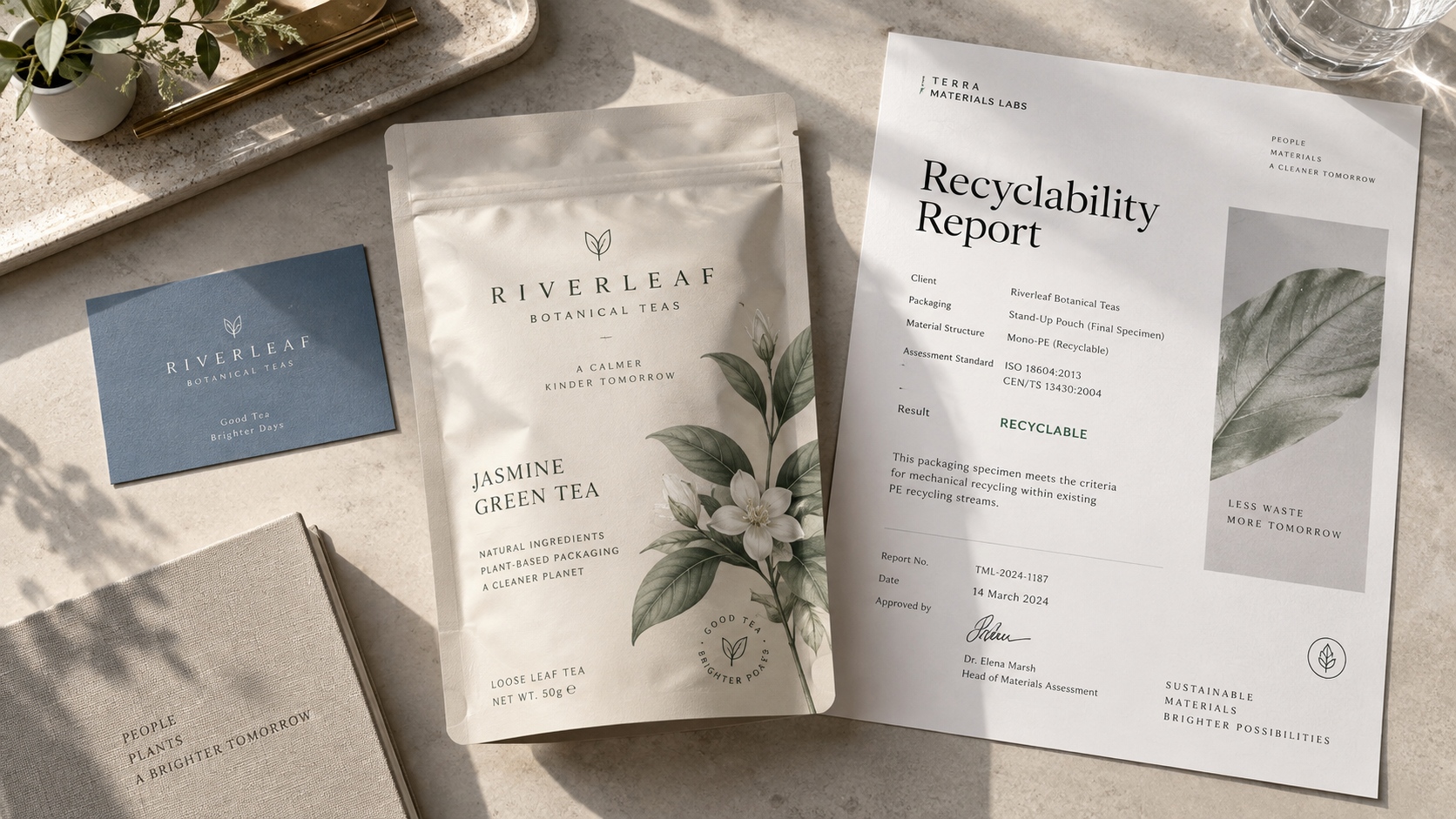
Before the Characterization of a Material that is selected, the Environmental Objective should be defined.
The brand might desire to contribute to less virgin fossil material, better recyclability, relation to organic recycling, less overall weight of the packaging, fewer components, or to better sourcing transparency. These are similar yet different objectives. Any pouch that has recycled content in it is not necessarily recyclable; a recyclable pouch may not have any recycled content; a compostable pouch must have a suitable composting pathway.
● Write the main goal in a single sentence which can be measured.
● Marks identifying the market destinations and the probable disposal routes.
● Make clear product protection and food-contact requirements.
● Establish what evidence will be used to buttress the desired statement.
● Trade-offs made by the team that will not be concealed during marketing.
Protect the Product and Pass the Gate.
Packaging of tea which leads to moisture absorption, loss of aroma, seal failures or wastage of the product do not attain a practical sustainability solution. Determine the type of tea, shelf and use life, sensitivity, pack size, frequency of opening, distribution and storage. Next, inquire which candidate structures will satisfy that requirement with minimum unnecessary complexity.
Test data and perform under specified conditions and test the entire pouch. Barrier films, seals, zippers, windows and converting: work in concert; there cannot be a material datasheet that can represent finished-pack performance.
Learn Which Material Route is Attempting to Do What.
| Route | Primary objective | Key dependency | Do not assume |
|---|---|---|---|
| Recyclable design | Fits in a specified recycling stream. | Collection, sorting and processing facilities. | Recycled everywhere – that recyclable design. |
| PCR content | Post consumer recycled feedstock has been used. | Authenticated information, appropriateness and relevancy. | Such recyclable content is recyclable. |
| Compostable | Organic recovery in the conditions. | Accepting facilities, certification and collection facilities. | That it should in nature be or home compost. |
| Conventional high barrier | Product protection with established structures | Responsible specification and waste route | It is always essential that additional layers be provided. |
Design the Market That Will Get the empty pack.
Technically, a material may be compatible with a recycling process, but without viable collection in a market of purchasers. The collection and acceptance of compostable packaging should also require an appropriate facility. Map on which household or commercial stream the pack will be sold, what instructions are acceptable.
Do not make suppliers statement a general disposal order. The recovery systems, labelling regulations and accepted materials in jurisdiction are subject to change. Confirm target market prior to finished artwork.
Evaluate the Whole Pouch, Not Only the Main Film
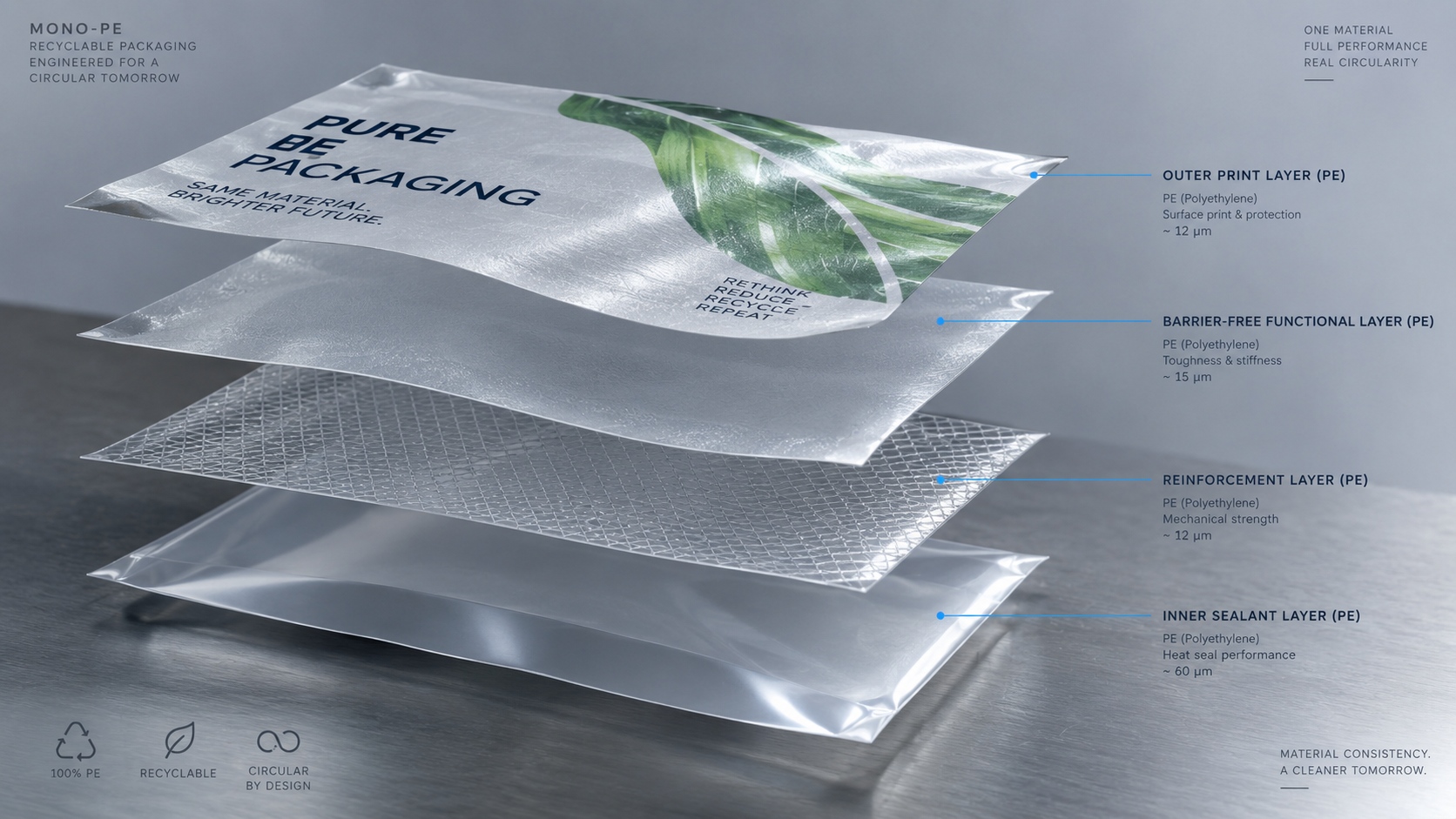
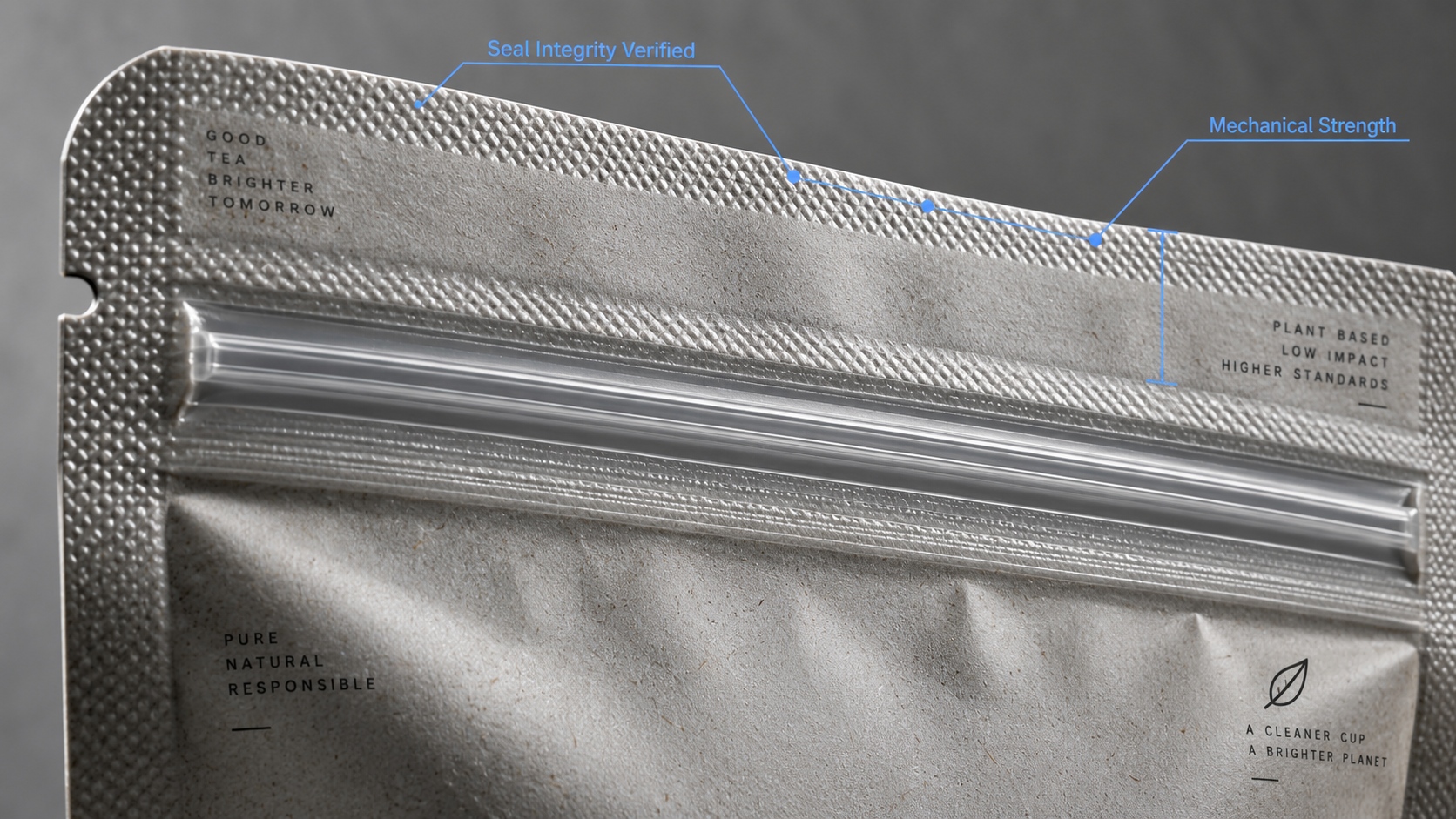
The route can be affected by zippers, valves, labels, windows, inks, adhesives, coatings and special finishes. A principal film which is termed as mono-material does not stabilize the compatibility of the completed pouch. Similarly, there is no unconditional establishment of certification on all complete constructions based on certified components.
| Component | Function | Sustainability review |
|---|---|---|
| Main film | Form, system and resistance to leaks. | Polymer family, layers, thickness and evidence. |
| Zipper or closure | Repeated use | Compatibility of materials and bonding. |
| Ink and coating | Branding and surface performance. | Coverage, limits of chemistry and assessment. |
| Label or sleeve | Information and decoration | Material, stickiness, size and detachability. |
| Window/special layer. | Visibility or barrier | Fit to the selected pathway. |
Follow Five-Gate Sustainable Packaging Decision Tree.
1. Establish tea defence and utilisation need.
2. Determine possible pouch design and requirements.
3. Collect and recover map in destination markets.
4. Compare the entire pouch to applicable design- or certification-advice.
5. Concur evidence, consumer directions and a quantifiable assertion.
Construct an Evidence File Pre Writing the Claim.
Retain the identified material specification, supplier statements, the scope of test or certification, list of components, target markets, artwork text and date reviewed. Whether or not the evidence will be applicable is a matter of the structure, supplier, the thickness, the closure, printing or market.
The evidence file must cover what supports and what does not support the packaging. This has the benefit of making the artwork review process quicker in the future and lowers the possibility of having the blanket statements surviving a technical change.
Allow Different Tea Products to Take Different Paths
One- serving refill, a retail loose-leaf inner package and a large food-service refill all have varying protection and component and disposal conditions. Forcing all SKUs into a common material story can lead to ill fit. Apply general principles of decision to the spectrum, but permit the structure approved and assertion to vary where evidence permits.
Portfolio reporting is able to monitor packaging weight, material story, recycled material where certified and market coverage without falsely claiming that a single label was measuring all the results.
An improvement is measurable with the aid of a baseline. Document the present mass of the pack, the quantity of the components contained, structure, failure of packs or complaints, distribution system and end of life contact. Compare proposed pack with the same functional requirement to the same baseline. In the absence of a yardstick, teams can have a new name of the material on their hands and fail to notice the additional labels or increased thickness in the outer packaging or reduced filling capacity.
Continuity planning should also be planned by the procurement. A sustainability path because based on a single unqualified substance or ingredient may generate substitutions that are evidence-based. Establish a list of approved suppliers or technical equivalents, requirements to give change notification, and make decisions on what should be retested. This is more so where environmental wording is printed on the pouch and cannot be changed once printed.
Establish a post launch owner. That individual must track the shifts in direction, demand of the destination market, supplier updates and working reports. Sustainability decisions maturity: a route of claim or recovery that might have been reasonable at the time the artwork was approved might have to be qualified by later. Review schedule prior to the reprint of a work of art work that any correction changes in the schedule are timely so that the current inventory does not push them out.
Sustainable Tea Packaging Questions
Does recyclable packaging always prove to be the most sustainable one? There is no universal answer. Establish product securities, cumulative material, cumulative infrastructure, recovery testing and nutritional results to the target market.
Is PCR ex-recyclable? No. The recycled content and the recyclability are dissimilar traits and each should have its evidence.
Can all teas be put in compostable packaging? Not automatically. It should address protection requirements and converting requirements and possess a respectable collection and composting route.
Is it possible to apply a single environmental claim across all the countries? Do not assume so. Definitions, evidence expectations, labels and collection systems vary by market.
Choose the Next Technical Review
In the event that the desired path is mechanical recycling, proceed with a design-to-recycle evaluation of the entire pouch. Assuming that the primary question is marketing language, audit the environmental claim and evidence. When compostability is under consideration, map the certification area, conditions of use, collecting and composting environment.
YPAK is in a position to peruse a project brief regarding type of tea, travel around, pouch, objective and necessities of a material. The ultimate suitability and claims are also receptive to project-related validation and market requirements.
Post time: Sep-19-2026


