


When a brand considers each new product as a discrete design, it becomes challenging to choose custom cannabis packaging. Flower, pre-rolls, gummies and other infused foods can coexist under the same name but each can pose varying challenges to aroma, puncture, grease, and moisture, control of opening and label space. The scalable program maintains a recognizable family but permits the specification of the package to vary at the point where the product needs the variation.
It is not either a finish board or a set of pouch colors which becomes the starting point. It is a product-family diagram that displays what requirements may or may not be shared, what needs to change and what decisions must be supported by evidence prior to production. This method provides the buyer with a better pathway between the brand structure and reproducible packaging.

Pre-map the Product Family and then design the Packs.
Name all proposed SKUs, product form, fill quantity, physical behavior, sales channel and market to which the SKU is to be sold. Only product grouping that can reasonably perform the same job as a packaging job. The same pouch structure, closure or size does not necessarily work with the range due to having the common brand name.
Find packaging job of each SKU
Flower cannot be too compressed in need of aroma and moisture containment. Pre-rolls bring about geometry and puncture issues. Coated candies and gummies might store oil, sugar or crumbs close to the seal. Even a pouch that is used again requires a practical access with the hand and a guaranteed readmission. These variations ought to be apparent even in the family plan prior to artwork.
Develop a Shareable Groundwork with Modifiable Variants.
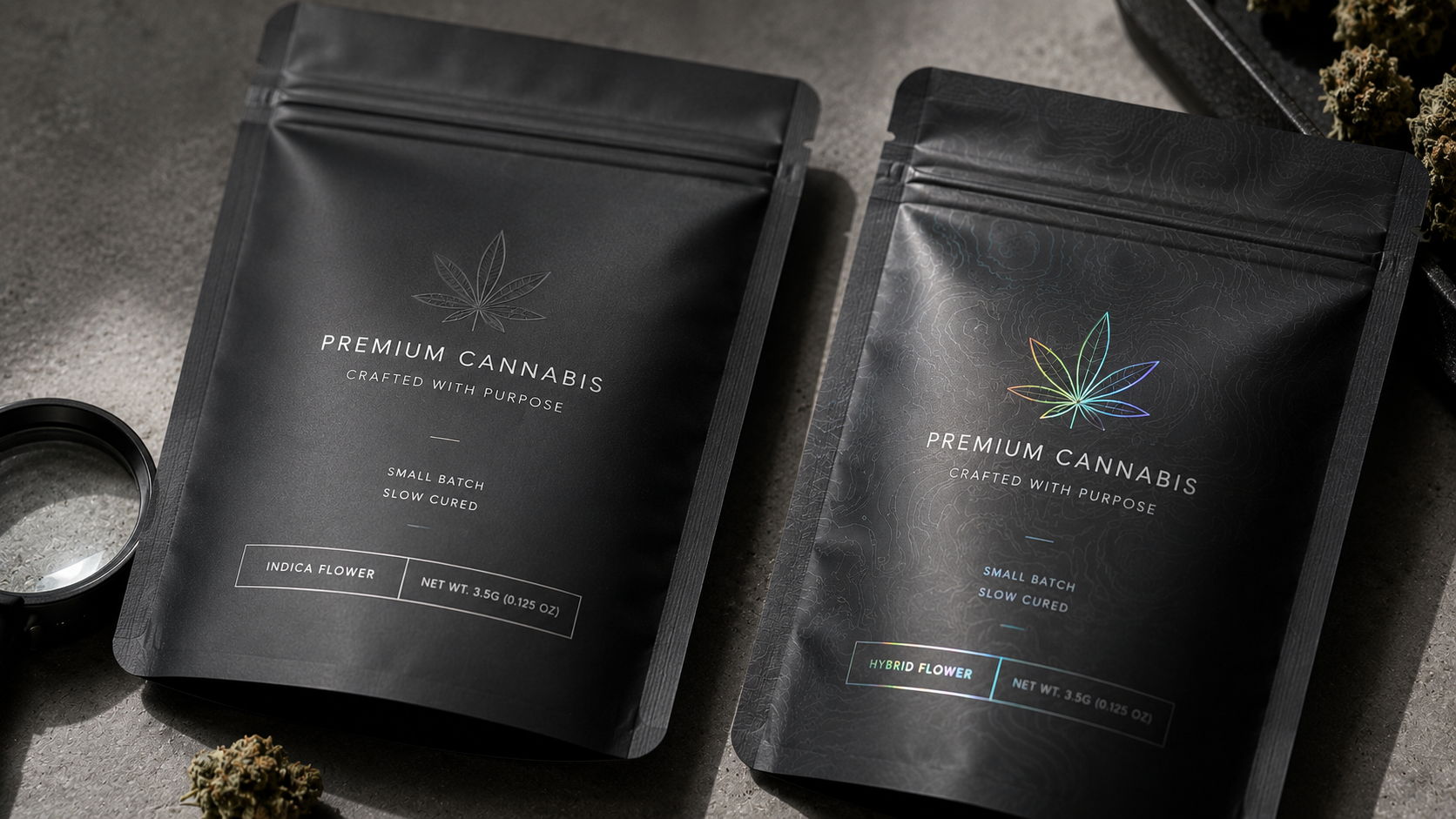
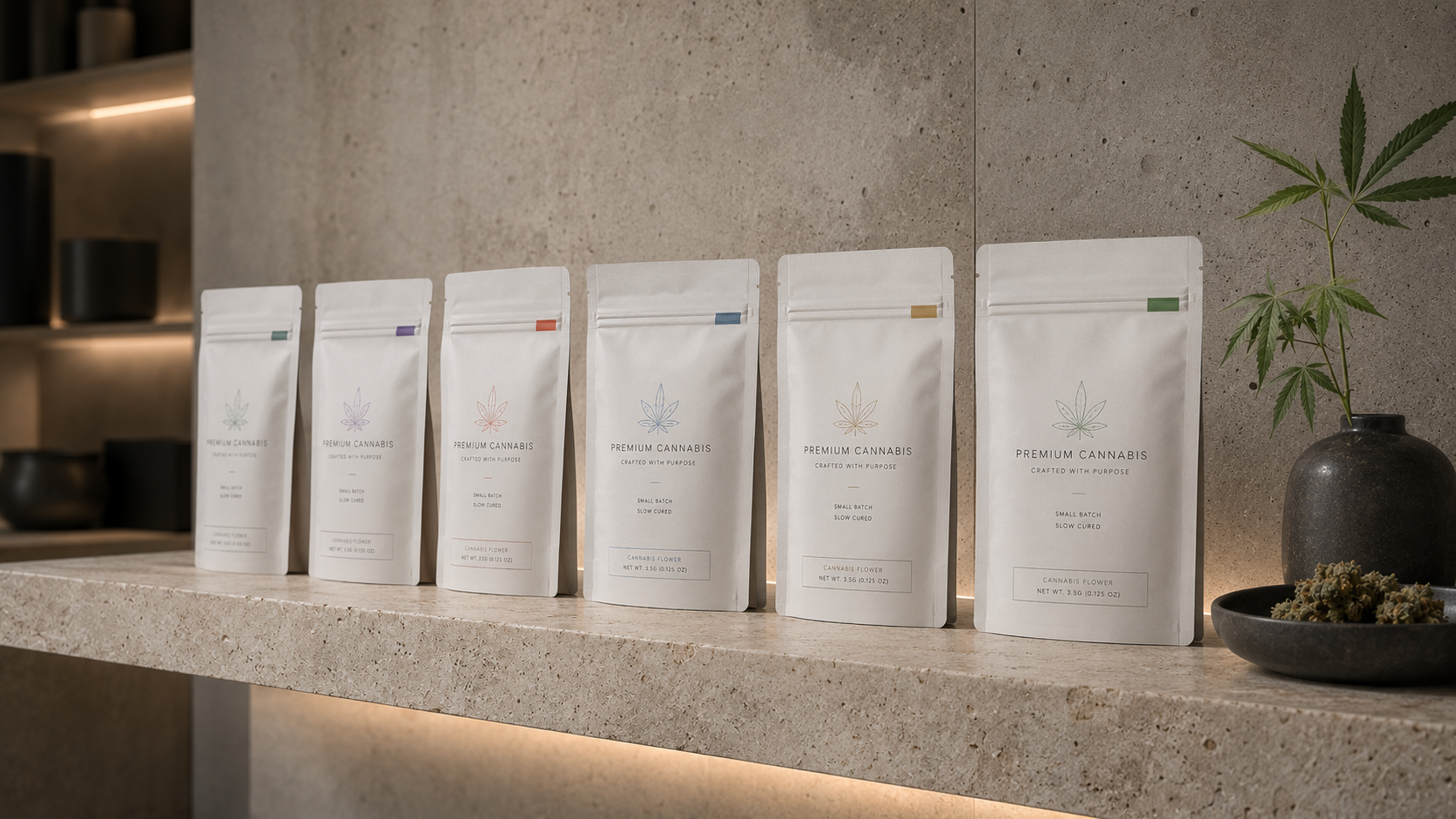
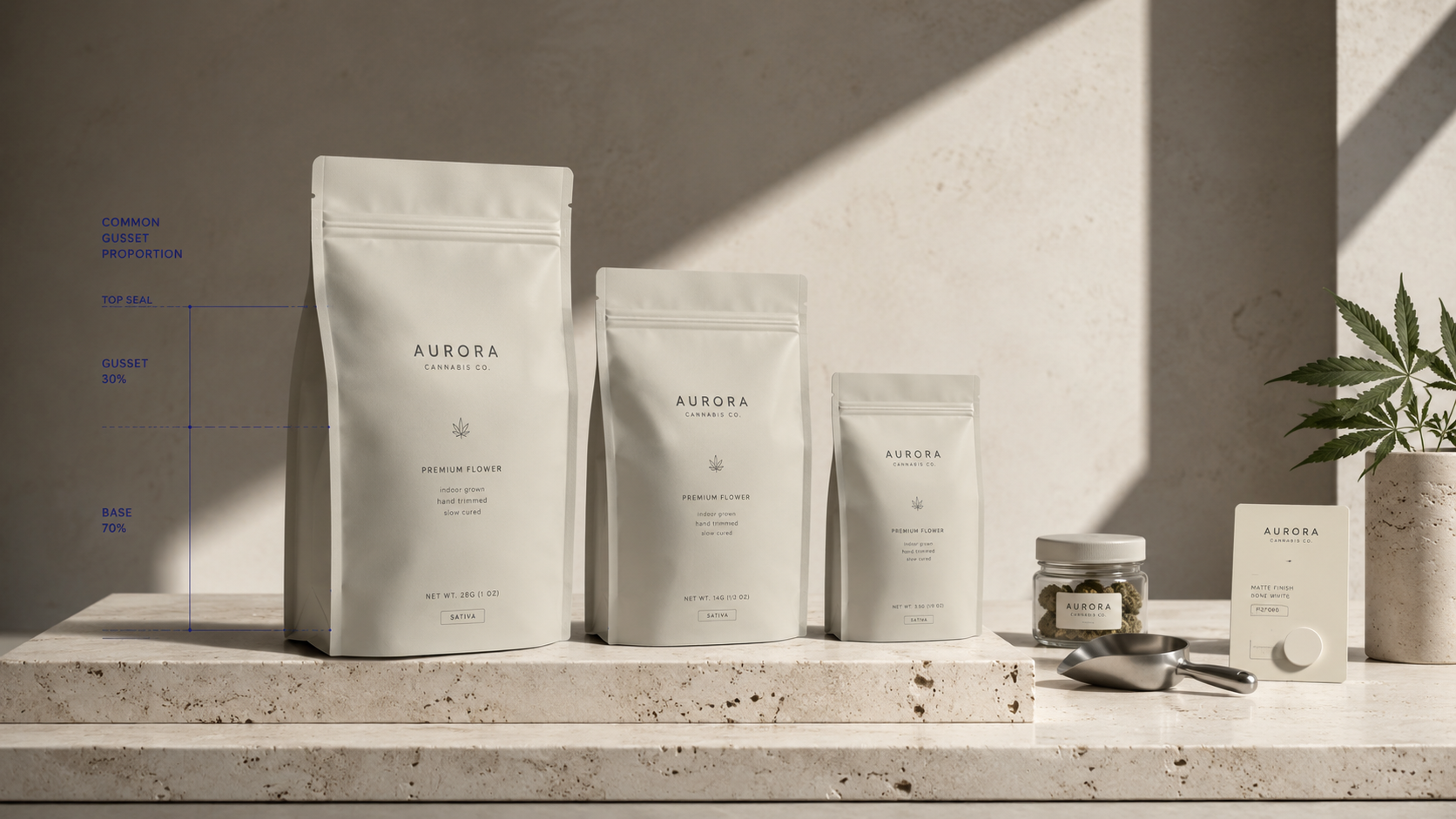
A packaging platform is a combination of those features that are shared by multiple products. It can consist of the general silhouette, position and the location of logos, informational areas and direction of opening. The aspects that are allowed to vary are, which are considered to be controlled variants, dimensions, laminate, closure, flavor color, count, and variable coding.
| Decision layer | Where applicable, usually shared. | Allowed to vary when needed | Release evidence |
| Brand system | Positioning of logos, type hierarchy, navigation. | Color, name of product, flavor indicator SKU. | Approved master layout |
| Pouch geometry | Direction and panel logic-Opening. | Width, height and gusset depth | Filled dimensional sample |
| Protection | Performance target for a product family | Opacity layer or puncture layer Laminate. | filled test Structure record Structure record |
| Access | Instructions to be opened and tamper cue. | Typical or restricted-access closure. | Applicable documents and closure sample. |
| Variable data | Scan orientation and coding zone. | Date content, batch content, barcode content or QR content. | Filled-pack scan record |
Avoid false standardization
The fact that two unlike products share a platform should not oblige them into a single construction. In case an oily edible needs a different sealant or a pre-roll needs extra puncture resistance, maintain visual relation and give different technical specification. The standardization can be applied only in the cases when it does not conceal the risky products.
Determine Customization Boundary.
According to YPAK, its cannabis bag products can be customized in terms of bag type, size, zipper, design and printing. The buyers are expected to determine the feature that will be part of a brand platform and features that will be part of a specific SKU. That boundary helps to avoid situations where a late change in visuals might change the dimensions unpredictably, the purchasing of materials or closing performance.
Lock prior to decoration
Before approving special finishes, confirm the pouch format, volume usable and seal area and access method. The selected construction can then be assessed by applying matte, gloss, metallic or holographic effects. Finishing Fine copy, warnings and codes should not be lost because of the resulting surface.
Map Product Risk onto a Pack Architecture.
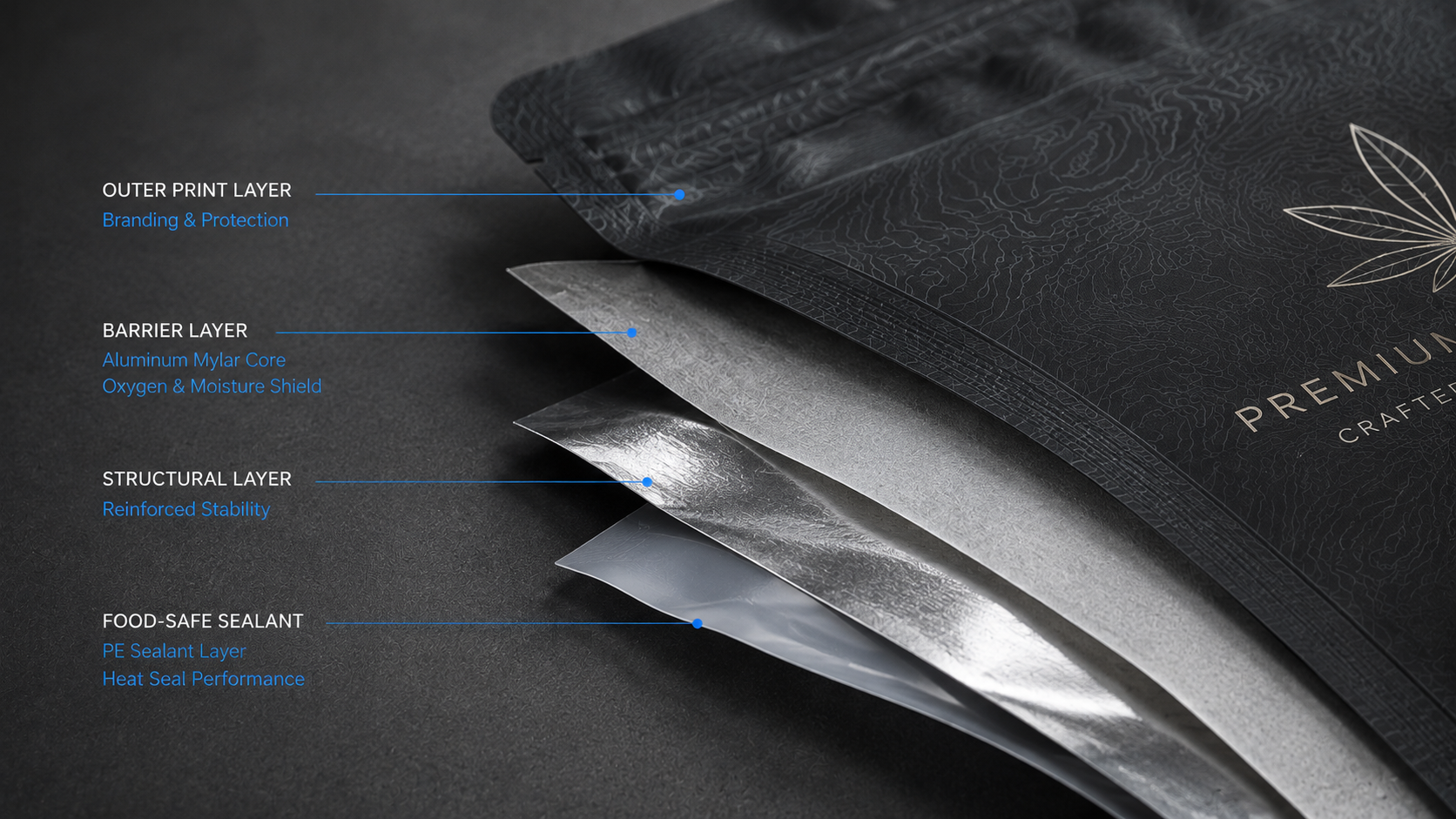
Use of protection should be defined according to an exposure route in place of an overall material name. Not all of products are sensitive to oxygen, water vapor, light, odor transfer, grease, sharp edges and seal contamination. The suggested structure must react to the dangers that are detected on that particular family or SKU.
Take the finished pouch as test unit
A laminate report will only describe a portion of the package. Another possible location is where a perimeter seal, folded corner, zipper interface or contaminated top leak. The converted and filled samples demonstrate behavior that can not be determined by data on flat films or even a digital image.
Design the Information System with Real Panels.
When a pouch is filled, opened and sealed the available copy area is varied. Construct the information structure to the last dieline with room left to display the product identity, statements needed in the market, ingredients or where to serve, opening directions and variable data.
Individual fixed data, SKU data and production data
Information that never changes is contained in the master layout. SKU varies with each product or flavor. Modifications in production data are by batch or date. Having such layers apart limit errors in artworks and simplifies determination of what part needs a new print file instead of a new package specification.
● Avoid keeping barcodes and QR codes in gusset folds, seals and high-curvature regions.
● Apply an equal documented zone (batch or date) to similar SKUs
● Check contrast and small text on finish of final size chosen.
● Scan prepared pouches, and after standard handling.
Consider Access Control as a Decision in the Market.
A conventional zipper, a tamper-evident aspect, and a childproofing device serve various purposes. The mix necessary is dependent on the product they are packaging and the targeted market. The responsible brand must verify the rule as it pertains and seek information to support the entire proposed package.
Preserve adult usability
Where there is a controlled-access closure to be used, test it using the actual pouch size and fill. When the bag is small or is either full or coated with a stiff finish, the grip area, opening force, instructions, and repeated use may vary. A filled-pack review is not to be substituted with compliance language.
Determine Evidence supporting Each Design Choice.
Not a collection of attractive samples but an approval record is required to a scaled product family. Accept any significant decision, and connect it to the evidence employed to publish.
● Product profile: typical fill, storage condition and shelf-life goal.
● Form: proposed laminate, proposed use of contact and supporting documents.
● Geometry: blank filled to the desired sample quantity.
● Access: seal cleanliness and repeated-use observation, closure operation.
● Graphics: dieline approved, print reference and variable data position.
● Logistics: the pack-out, the case fit and the representative handling turn out.
Support the Family in Three Loops.
Rather than trying a single attempt at approval, separate validation into loops. This simplifies the locating of a failure source and avoids changing artwork unnecessarily.
Product loop
Fill blank converted pouches with the product of interest. Compression, puncture, grease, seal contamination and access. Failure in this stage of the package implies failure to have its format and construction in place prior to investing in the graphics.
Information loop
Transfer the approved dieline to the last hierarchy. Check mandatory copy, opening guidance, barcode position and variable coding. Check all SKUs in relation to the artwork matrix in such a way that there can be no exchange of data and product identity can be determined accidentally.
Production loop
Check the result, printed, converted, and packed, to the approved reference. Record tolerances, carton quantity and inspection requirements, for packing orientations. The release record must be able to point to the required version of the specification and artwork employed to make bulk.
design an Artwork Matrix on the Range.
One perspective of all SKUs and avoiding uncontrolled files being named as the approval system is provided by an artwork matrix. contain SKU name, pouch specification, dimensions, barcode, variable-data rule, artwork version, quantity and approval status.
Shared elements should also be flagged in the matrix. In case of warning block or opening instruction modification, the team can observe all the designs which are altered. In case of just a colored modification of the flavor, technical approval of the constructions might not be affected.
One Controlled Specification per Construction.
Many artworks might be a part of a range and few technical constructions. A controlled record, issue one, of each construction, of material, dimensions, closure, seal area, tolerances, print process, finish and packing method. Associate each SKU to appropriate record.
Make reorders evidence-based
Cross-examine the current request to the discharged construction and artwork matrix before issuing an order again. Endorse modifications in material, closure, market information, dimensions or pack-out. When an underlying specification exists, appearance should not be copied by a previous pouch.
Get ready a Product-Family Brief in the case of YPAK.
The common platform and exceptions are presented in a useful brief. It will enable YPAK to suggest a customizable pouch with no presumption that every SKU is to be developed entirely independently.
● A SKU list organized based on the behavior of the product, not just a flavor select.
● Exemplary products, fill masses and targeted shelf-life circumstances.
● The common brand factors and the variables acceptable in each SKU.
● Pouch formats and access controls and destination markets required.
● Artwork code, coding procedure, pack-out and authorization.
Conclusion
Individualized cannabis wrapping is more suitable to scale with the brand handling a product family rather than single pouch design. Map product behavior, provide a shared platform, allow variants of technical behavior to be controlled, and evidence every decision. The individualization of bag type, size, zipper, design and printing by YPAK can help reinforce such a structure in the sense that each SKU subject of approach is associated with a validated record of construction and artwork.
FAQ
Is it possible to use the same pouch structure with each SKU of cannabis?
Not automatically. The visual architecture may be shared by products but with varied requirements of barriers, sealants, dimensions or closures. Divide them into groups after evaluating physical behavior and market needs.
What does a packaging platform mean?
The set of common elements through a product family, including silhouette, direction of opening, information hierarchy and location of brand, with rules that have allowed variants are controlled and defined.
What must a brand do to a variety of works of arts?
Upkeep a work of arts container among every SKU and the barcode, variable data, file version, quantity, approval status and technical pouch specification.
What to test prior to launching the product family?
Test representative: Fill capacity, seals, protection, access, and case fit pouches; check printed information, codes, artwork versions and the final production reference.
Post time: Aug-31-2026


