


Single Serve Matcha Packets‑Size, Film and Filling Recommendations
Single Serve Matcha Packets: Size, Film and Filling Recommendations
Single serve matcha packets put one portion of powder in a small, closed pouch. They have the ability to support samples, travel items, cafeteria service and retail multipacks without requiring the consumer to cut off a bigger bag. The miniature size is easy to carry, yet it does not allow much space for filling variations, seal contamination, or ambiguous instructions on the packaging.
The packet should be developed around the actual dose, the density of the powder, the barrier need and filling procedure. Customers cannot just choose the dimensions based on the net weight. A credible specification relates packet shape, the usable internal space, film structure, tear opening, artwork and secondary packaging prior to the start of production.
Determine the Job of the Single Portion
Start by indicating where and how the product will be used. A packet for a cafe counter can be opened right away, whereas a packet sent to a customer can undergo longer storage and handling. The target preparation also changes the dose and the amount of information to be provided on the pack.
Document the Serving Brief.
- Matcha type and target weight per pack.
- Method of preparation and amount of liquid to be used.
- Sample used at retail, travel packs, cafe portion or subscriptions.
- Anticipated shelf life and distribution conditions.
Choose a Packet Format That Is Suitable for the Use
YPAK recognizes the small portable packages that can contain one serving of tea as flat pouches. Single serve matcha packets can thus be a viable beginning with a three‑side‑seal flat pouch. The final packet can be supplied premade or made out of rollstock, depending on the equipment used to pack its contents and the order program.
Compare Main Format Options.
- Pre‑assembled flat pouch to either be filled manually or semi‑automatically.
- Rollstock sachet to allow continuous form‑fill‑seal.
- Narrow packet when the dose and filler is capable of accommodating a narrow opening.
- Wider packet when convenient dosing and opening are priorities.
Size the Packet by Dose and Bulk Density
During handling, matcha can be aerated, and settle after filling. The same weight of two powders might not have the same volume, particularly when pure matcha is used in comparison with sweetened blends. The maximum volume should be incorporated in the packet without powder in the seal section.
Run a Dimensional Trial
- Test minimum and maximum bulk density.
- Measure the usable width within the side seals.
- Leave top clearance during dosing and heat sealing.
- Examine the settled packet thickness and appearance.
A large sachet will consume more film and may result in a small dosage appearing lost. A small sachet can fill slowly, and seals can be contaminated and the packet hard to open in a non‑messy way.
Specify Film Around Matcha Protection
The low surface area in a packet does not eliminate the necessity of barrier protection. Matcha remains sensitive to oxygen, moisture, light and heat. The required film should be selected for the target shelf life, the distribution environment and any additional carton or outer pouch used around the individual units.
Request the Complete Film Structure
- Printable exterior web and finish of choice.
- Oxygen, moisture and light‑barrier layer.
- Food‑contact sealant and total thickness.
- Test conditions and relevant transmission data.
YPAK exhibits conventional, recyclable and compostable material options. It is important that buyers consider the total packet structure and do not believe that kraft appearance, metallic color or a sustainability label determines the performance that is required.
Match the Sealant to Powder Filling
The inner layer touches the matcha and creates the permanent seals. The fine dust may get in the sealing area and form weak channels. The supplier and packer ought to settle on a sealant that runs within the available temperature, pressure and dwell‑time range.
Control Seal Contamination
- Place the dose centrally and away from side and top seals.
- Apply dust‑extraction or seal‑zone cleaning where necessary.
- Note the accepted heat‑seal operating window.
- Inspect wrinkles, channels, peel strength and leakage.
Select the Filling Route Before Final Dimensions
Packet geometry is based on the machine that feeds the film or pouch, doses the powder and forms the seals. YPAK exhibits bag forming, lamination and custom printing production capacity, but the buyer will still have to test the selected packet on the actual filling line.
Compare Filling Approaches
| Filling route | Typical strength | Main validation question |
|---|---|---|
| Premade pouch | Easier to test and manage small programs. | Will the pouch open up and stay clean when dosing? |
| Rollstock sachet | Economical when it comes to high volume runs. | Do the forming and sealing settings correspond to the film? |
| Manual filling | Uncomplicated for early samples. | Is it possible to keep the weight and seal quality constant? |
Plan a Clean and Predictable Opening.
The vast majority of single‑portion packets do not require a zipper since they are consumed in their entirety after opening. They do require a tear notch or opening route that does not blow powder into the air or leave a small opening that holds product.
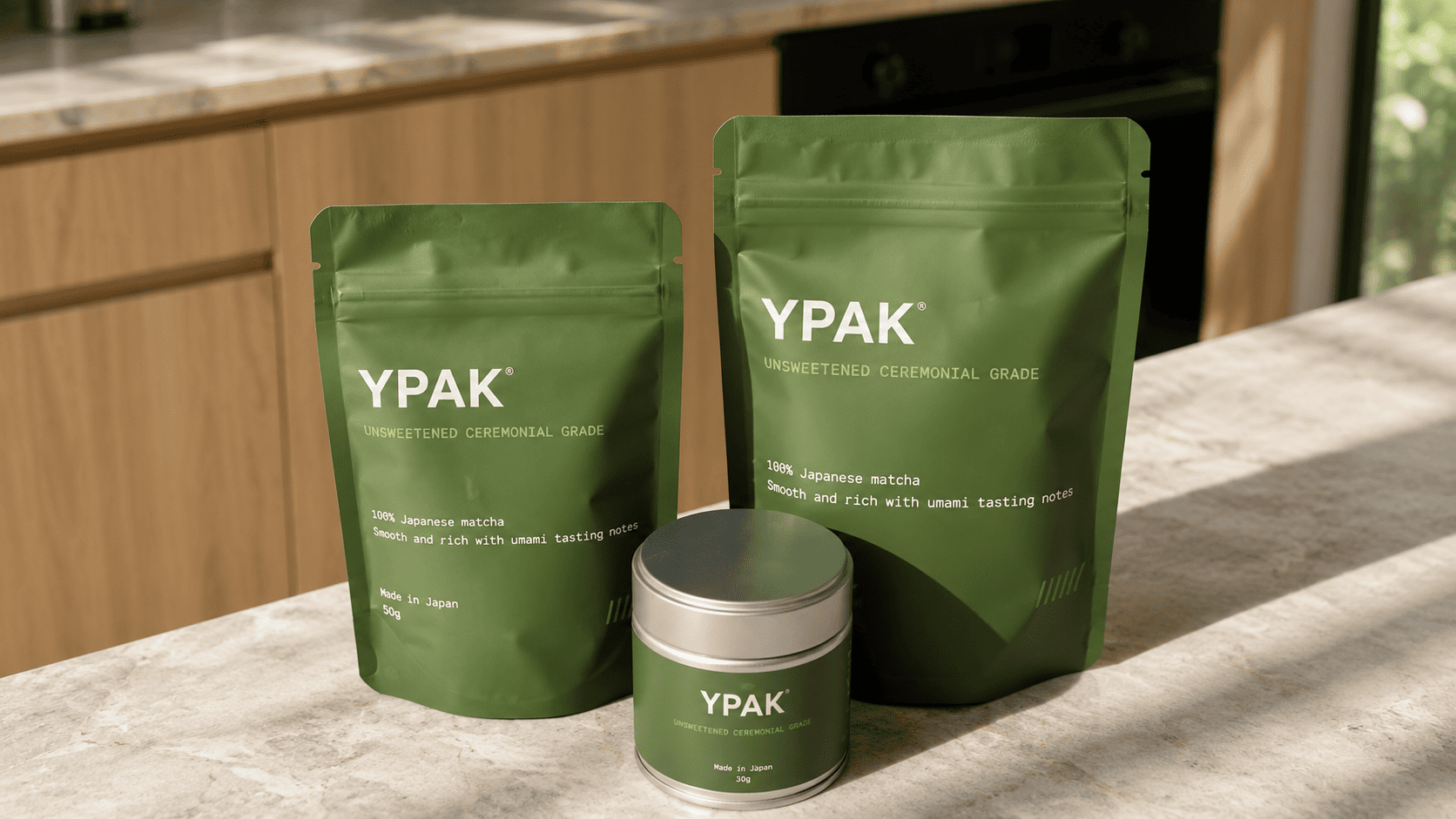
Approve Opening Performance
- Position the tear notch away from critical text and codes.
- Keep ample grip space above target tear line.
- Check the tear direction on the chosen film structure.
- Ensure that the consumer is able to empty the entire dose in a clean manner.
Create Artwork for a Small Printable Space
Single serve matcha packets could require product identity, flavor or grade, net weight, preparation instructions, lot coding and market‑specific information. The small panel needs to have a distinct hierarchy. Critical copy should not be within any seals, notches or variable‑code areas.
Apply Three Approval Stages.
- Digital artwork proof to control copy and versions.
- Printed‑film proof for color, contrast and fine text.
- Converted packet to check registration, tearing and code readability.
YPAK enumerates digital and gravure printing. The favored path must be based on quantity, number of designs, stability of artwork and repeat‑order forecast as opposed to the unit price.
Prepare the Secondary Pack and Distribution.
Single packets are frequently sold in cartons, bigger pouches or sample kits. Secondary packaging prevents the bending and abrasion of small sachets and offers more space to brand and to give instructions. The quantity of packets in each unit of retail should be established prior to the approval of the carton or outer pouch.
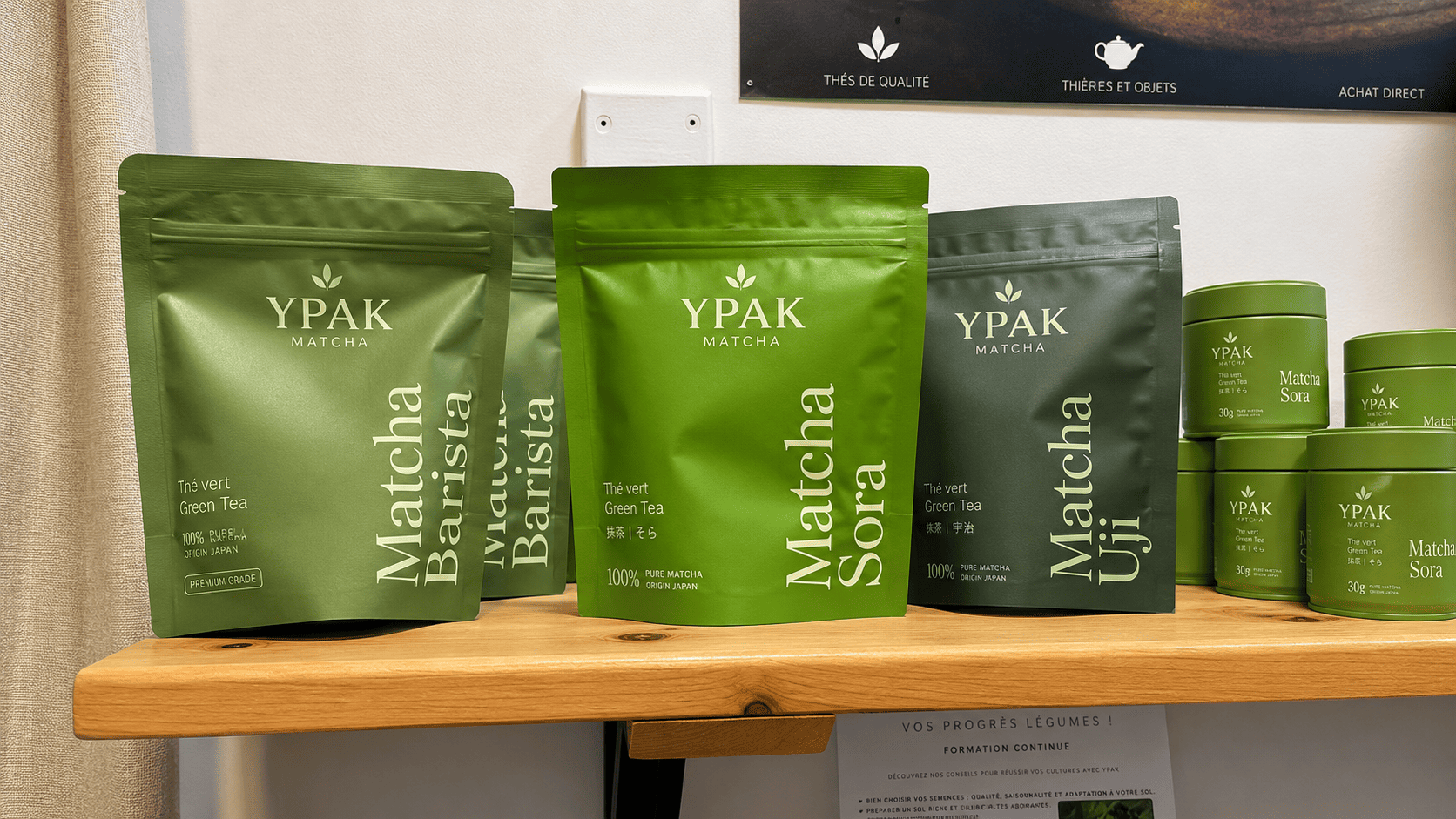
Check the Complete Packout
- Number of packets and direction within the secondary pack.
- Movement, compression and seal rubbing during shipping.
- Visibility of barcodes and lot‑codes at retail level.
- Convenience of dispensing packets in cafes or food‑service.
Pass Production‑Representative Packets.
The intended matcha, dose, film, print, filler and sealing conditions should be used for final approval. Early dimensions can be confirmed with empty samples, but dust contamination, settled thickness, or the manner in which the powder leaves the tear after tearing, cannot be determined.
Packet Approval Checklist
- Precision of the dose and available internal space.
- Cleanliness of seals, strength and leakage.
- Color, aroma and clumping post conditioning.
- Tear behavior and full powder release.
- Registration of printed codes, performance of packout, and readability.
Freeze the Specification for Repeat Orders
Record packet dimensions and tolerances, film layers, thickness, barrier target, food‑contact sealant, tear‑notch position, printing process, artwork revision, filling method, seal settings, inspection criteria, quantity and packing method. Maintain a controlled drawing and approved sample.
Check modifications to the matcha, dose, film, size, filling equipment or secondary pack before repeat production. This simplifies the comparison of quotations and decreases silent substitutions.
Conclusion
Single serve matcha packets should be designed backward from the portion and filling process. A flat pouch could offer a portable single‑serving format but consumers must confirm the bulk density, usable space, barrier film, seal cleanliness, tear behavior, printing and secondary packaging. The best foundation of production is a filled‑packet trial and controlled specification.
FAQ
What is the size of a single serve matcha packet?
The size is to be determined by the actual dose, bulk‑density interval, fill clearance and seal widths as opposed to weight.
Should matcha single serve packets have a zipper?
Typically not in cases of the entire amount being taken after opening. More important are a predictable tear notch and permanent seals that can be relied upon.
Which film is suitable for matcha packets?
Use a food‑contact structure with the oxygen, moisture and light protection necessary based on the product, shelf life and distribution route.
Is YPAK able to print multiple packet designs?
YPAK enumerates digital and gravure printing. Buyers ought to verify the most appropriate process to the amount of designs, quantity and repeat plan.
Post time: Sep-07-2026


