


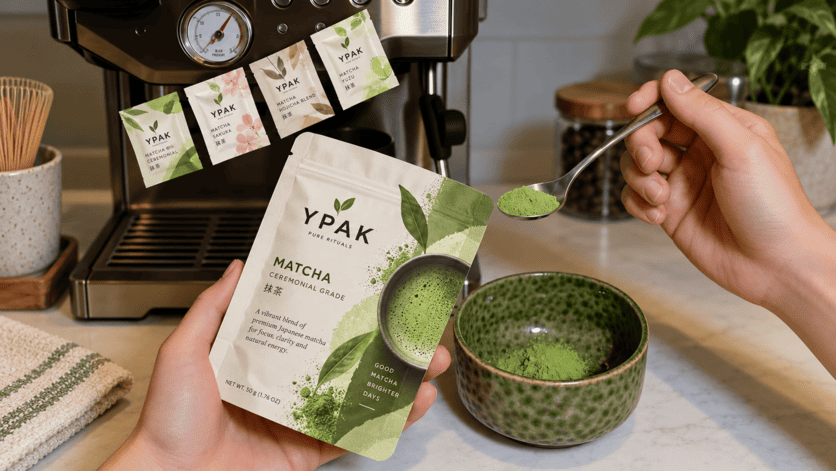
The origins of the packaging of the private label matcha do not start with an ornamental pouch but with a product and market brief. Determine who will be purchasing the matcha, the location where the matcha will be bought and sold, and the speed that the matcha will be used once it is opened, and what the market needs to know. Then construct the pouch format, insert or label system, artwork, sample and launch calendar that surrounds that commercial application.
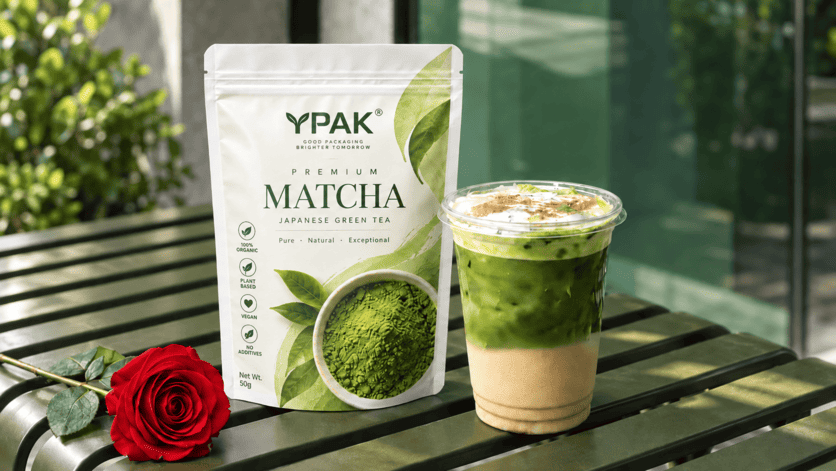
The size, structure, printing and finishes can be assisted by the packaging supplier; but the brand will take the responsibility of product identity, approved claims, label contents unique to the market, and authoring of final artwork. There is clear split of responsibility in the packaging project which helps maintain the project as the last unfinished step prior to launch.
Outline the First Selling Moment
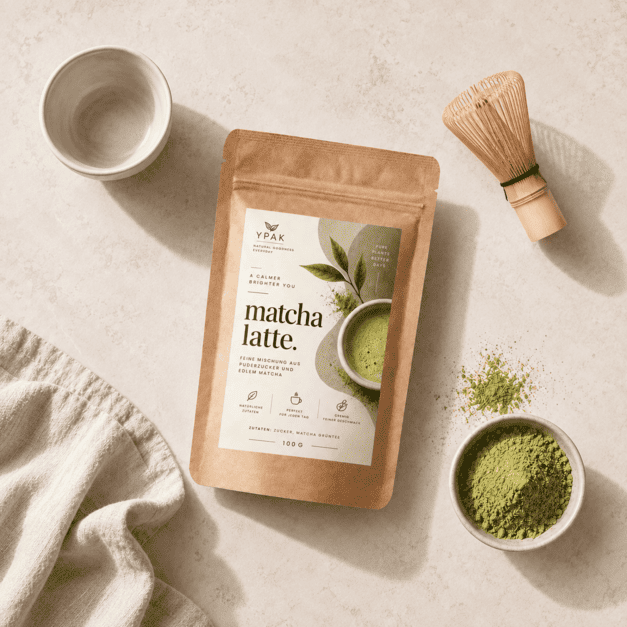
An envelope of a wellness e-commerce subscription has one pressure and one pressure on a crowded grocery shelf. The repeat scooping of a cafe refill pack can be the main priority, whereas a ceremonial gift requires a tight presentation and a shorter window to consume it. Write the first selling moment and the first use moment and then talk about finishes.
| Launch channel | Packaging priority | Question to resolve |
|---|---|---|
|
Direct-to-consumer |
Efficiency in shipping and visibility of stories and repeat opener. |
Will the pouch ship independently or a branded mailer? |
|
restaurant or food service. |
Quick manipulation, expansive access and repeated reclosing. |
What is the method of staff scooping and storing of the powder? |
|
Retail shelf |
Quick identification and legible product chain of command. |
What does a shopper have to know within 3 seconds? |
|
Gift or ritual set. |
Order of presentation and synchronized elements. |
What is and what is not included and what is the order of opening? |
Find Translation Product Positioning into Packaging Requirement
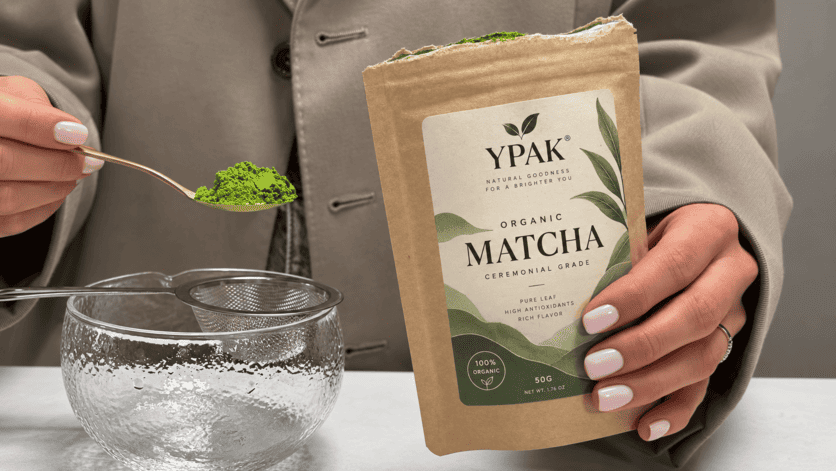
The positioning based on premium, everyday, culinary, organic, flavoured or functional influences more than colour. It alters anticipated fill sizes, information hierarchy, the ritual leading to the opening, how price is presented and the education needed on the pack. When the product will be used predominantly in baking or food service, then it is advisable not to imitate the customs of ceremonial matcha.
Specify the grade and proposed use of a product without any unsubstantiating remarks regarding its quality.
Identify the anticipated customer and the chief sales channel.
Select the period and serving pattern of consumption.
Find the best reason to suppose the product proposition.
List claims, which would need to be reviewed by law or certification.
Isolate permanent brand information and SKU-specific information.
Construct the Private Label Packaging Construction
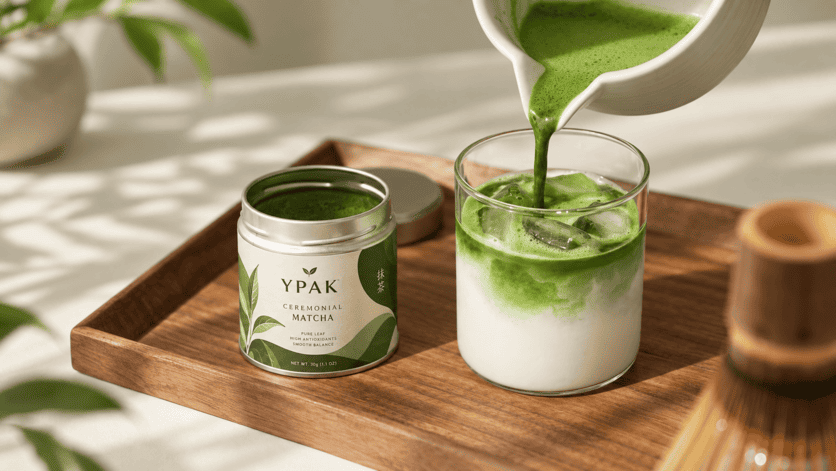
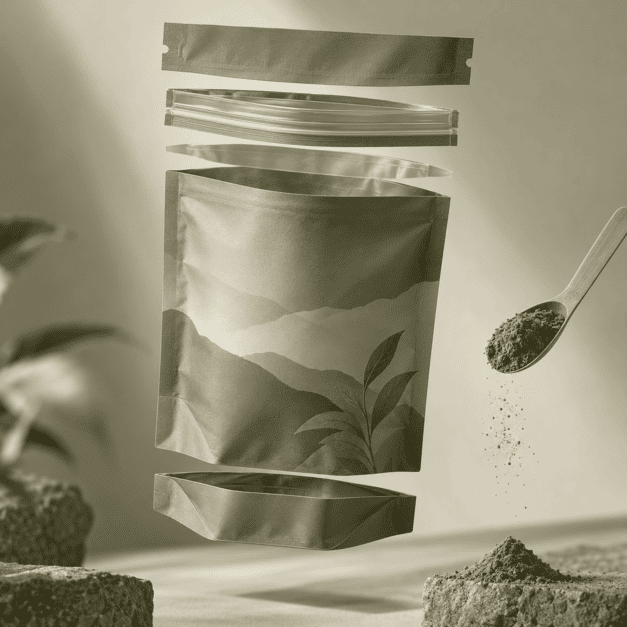
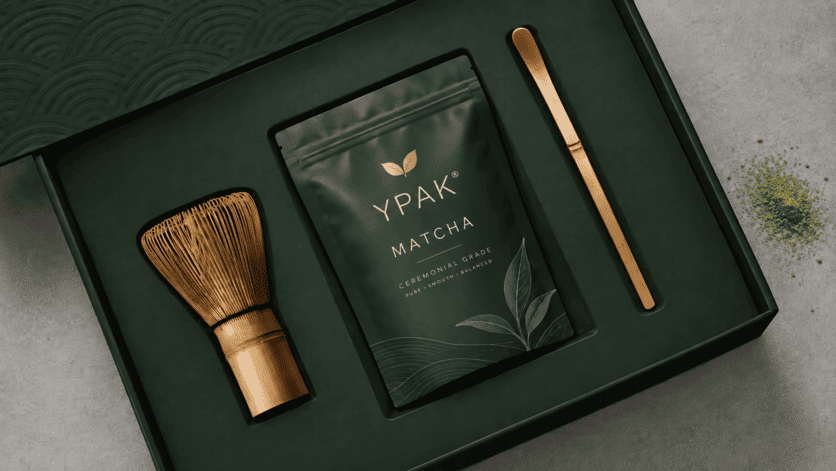
Choose what is received by the consumer. This system can comprise a main pouch, an outer carton, a scoop, an instruction card, a refill pack or a shipping layer. Every element must have a rationale. The presence of pieces is just to seem high quality and this does not add any protection or use.
On the main pouch, check fill weight, powder density, opening width, seal area, closure, direction of the barrier, and storage following opening. In case the pouch is going to be inside a box, make sure that the dimensions and the volume full of gas will fit into the carton instead of developing each of them out of flat artwork.
Design a Launch Range that will grow
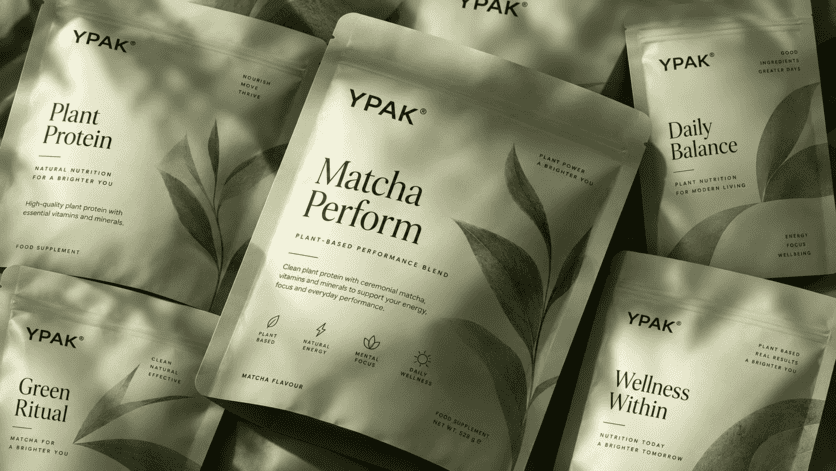
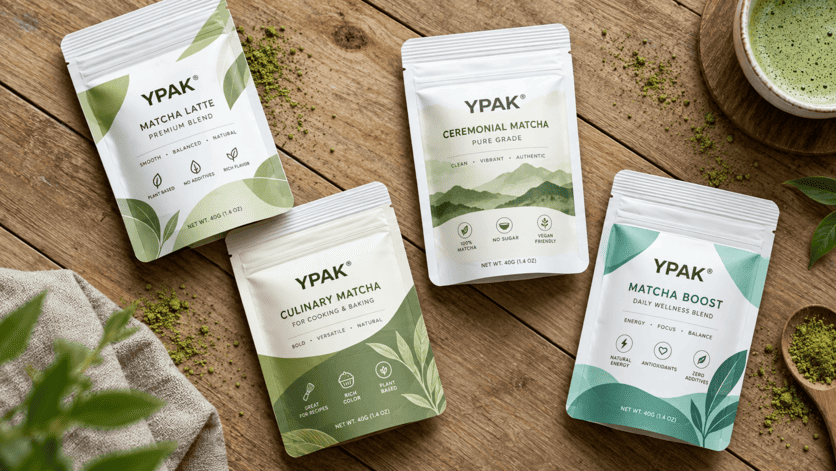
Launching a private label is not always associated with an enthusiasm as high as the operational clarity. Restrict the former range to SKUs which play a separate commercial role. Standardise a unified plate of positioning logo, product name, grade, origin, flavour/use, net weight, preparation instructions and colour coding. This allows subsequent extensions to be familiar without necessarily making all pouches the same.
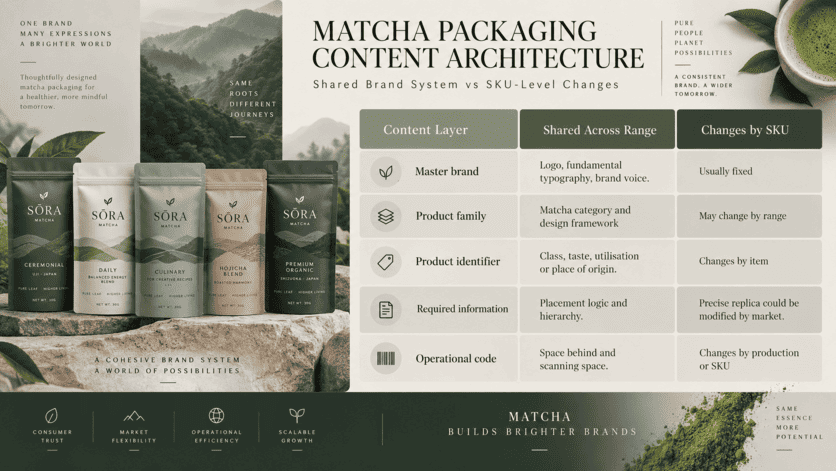
| Content layer | Shared across range | Changes by SKU |
|---|---|---|
|
Master brand |
Logo, fundamental typography, brand voice. |
Usually fixed |
|
Product family |
Matcha category and design framework |
May change by range |
|
Product identifier |
Class, taste, utilisation or place of origin. |
Changes by item |
|
Required information |
Placement logic and hierarchy. |
Precise replica could be modified by market. |
|
Operational code |
Space behind and scanning space. |
Changes by production or SKU |
Decisions On Separating Brand and Packaging Decisions
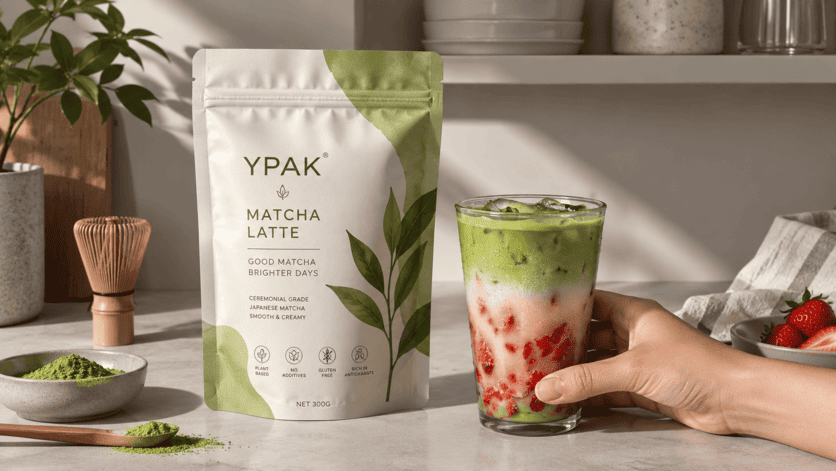
The development of packaging operates at a very rapid pace when there is an owner in every decision. Positioning, claims, legal copy, barcode data, artwork and launch priorities must be approved by the brand. The fill behaviour, sealing conditions and handling should be verified by the product owner or co-packer. The supplier of packaging must verify manufacturability, material direction, print set-up, dielines and preferred quality control.
• Brand: last copy, marketing assertion, logo and artwork acceptance.
• Product/ co-packer: fill weight, powder behaviour, equipment trial, sealing trial.
• Packaging supplier: converting and sample, pouch construction, print feasibility.
• All parties: approved sample, revision record, production release and change control.
Make decisions on the First Run of the Brand
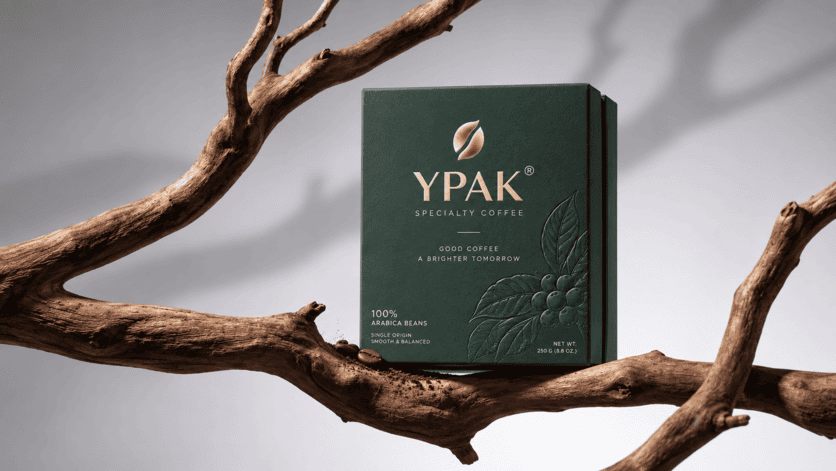
In case the structure fits the product, a stock pouch with a good design label can be a disciplined launching device. Depending on the artwork, a fully printed pouch might offer greater integration and allowable space to design but it also interdependentizes artwork and decision-making amid production. This ought not to be on the basis of a perceptions that a certain route is more professional at all times but rather the brand has been verified.
Check the final pack as a tangible item. The labels should be flat and glued on the shaped pouch. The designs in print should not encroach seals, gussets, zippers, and distorted parts due to filling content. In both routes, the information on the product must not be smeared as the consumer opens and closes the package.
Work Backwards To the Market Introduction
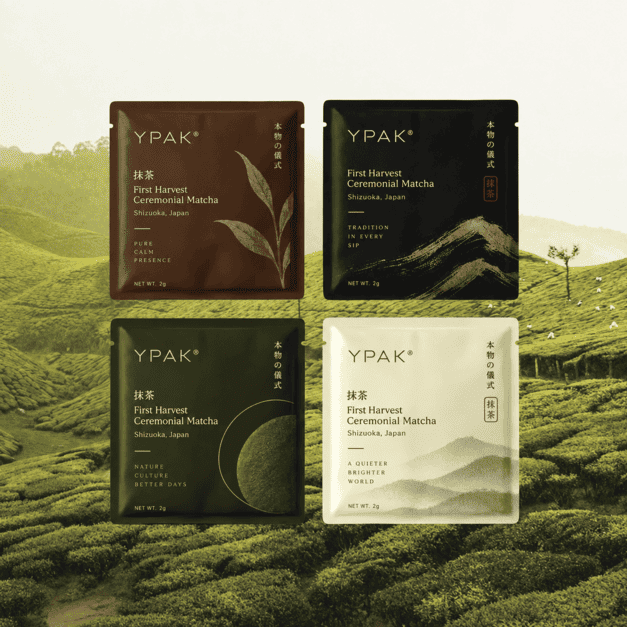
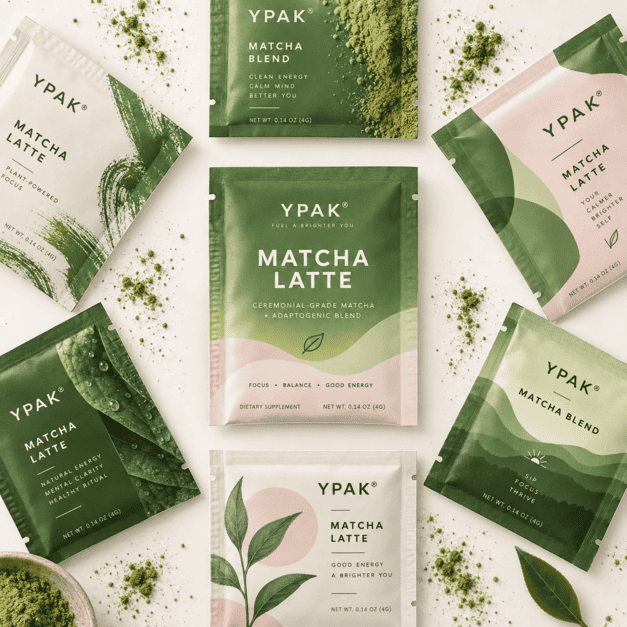
Establish the date the packed product should be available and reverse through filling, packaging delivery, production, sample approval, artwork and the initial brief. Set timelines on the brand team. A launch schedule only indicating factory production conceals the time taken to iron out copy, test fit, and approve colours.
Check market, product and channel requirements.
freeze the launch SKU architecture.
Accepted the structural direction and dieline.
Full replica of copy and artwork in the market.
Look at the filled-pouch behaviour and physical sample.
Produce under the revision approved.
Receive, check and fill and prepare the product to launch.
Use a Launch-Ready Gate And Transition to Production
Do not drop a private label pouch since the front panel appears complete. Final gate to verify product fit, permanent seal, use of closure, version of artwork, required information, barcode position, carton layout, and complete consumer opening process. Note approver of each area.
| Gate | Pass condition |
|---|---|
|
Product fit |
Intended matcha and fill weight act properly in the pouch. |
|
Use experience |
Opening, scooping or pouring and reclosure are similar to the brief. |
|
Artwork |
Proper version, hierarchy, legal copy and production layers passed. |
|
Brand system |
All launch SKUs are differentiated and relative. |
|
Operations |
Confirmation filling, packing, carton and coding process. |
|
Release |
A single revision control production is signed and revised with a single specification. |
Matcha Packaging (Private Label) Questions
Is it possible to use stock pouches to begin a private label?
Yes, provided the stock construction, size, direction of closure and barrier fits the product. This can then be branded with a corresponding label or sleeve system.
Who grants approval to the packaging claims?
Appropriate legal and certification review should be done to the brand placing the product on the market. A product claim should not be invented by a supplier of packaging.
What number of SKUs is a new brand to launch?
The number does not exist. Begin with products that meet different customer or channel requirements and operationally manageable by the team.
When to matcha the pouch?
Before production release. Fine powder can tell about the opening, zipper, seal-area, and cleanliness problems which could not be observed in case of an empty sample.
Be a Bringer of a Brand, Not a Reference Image
An effective query of the private label would consist of the type of the product, target customer, point of sale, fill weight, intended SKUs, target market, preferred introduction date, packaging details, brand resources and unresolved issues. Indicate what is fixed and where you would like to have recommendations.
This provides the packaging department with a business setting in regard to order, imprinting, sampling and timing. It also avoids a visual reference being an incidental technical specification.
Post time: Sep-16-2026


