


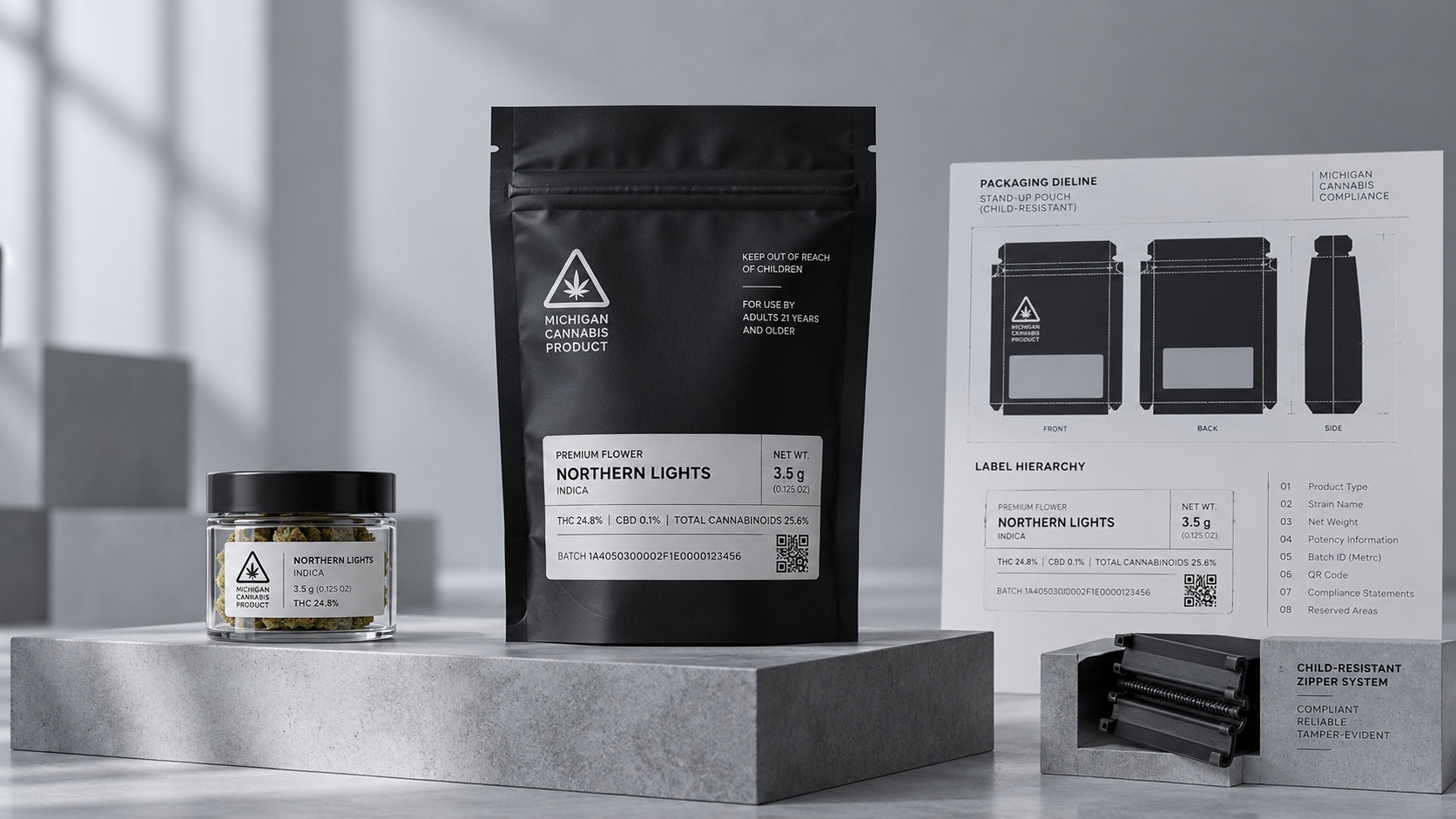
The packaging allotments of cannabis in New York go beyond the look of what is on a pouch. These are placed next to limits that regulate the way the licensed cannabis businesses sell and promote their products. A graphic can start on the packaging of the retail package, then on a display, a web site or campaign. Such a shift is also capable of transplanting the same creative property into a new regulatory environment.
To have a New York review, practically, must be invited to have two lanes. Part 128 addresses packaging and labeling of adult-use cannabis. Part 129 regulations are those to do with marketing and advertising. This guide demonstrates how to maintain connections between the lanes without considering them as detachable. It is not legal counsel; consult with the existing regulations and guidance of the office of Cannabis Management before approval.
Determine Is Element Packaging or Promotion.
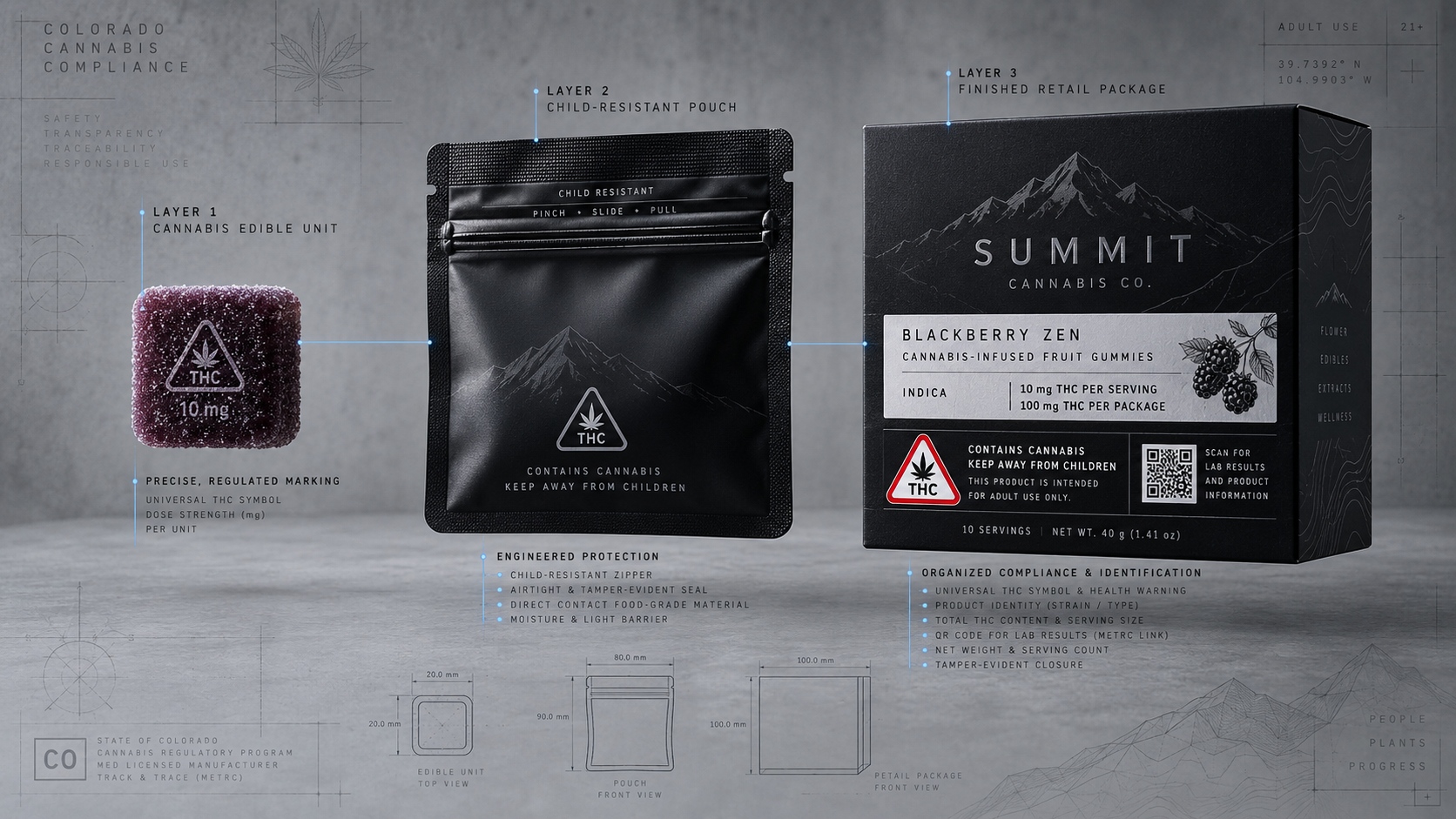
Begin with giving the name of the object being reviewed. Is it an instant box, packaging chamber, marketing division, dispensary picture or social inventive or web outline? Not everything can be called brand design, as the set of rules, which is applicable, can be different, depending on the country of use and the purpose of the element.
|
Element |
Primary Review Question |
|
Immediate container |
What does it directly contain the cannabis, and what should be left with it? |
|
Retail package |
Does the overmost retail cover meet Part 128 duties of packaging and labelling? |
|
Marketing layer |
Does it include necessary package identification and does it as well work in a promotion manner? |
|
Advertisement |
Is its placement, audience and content in compliance with Part 129? |
Prepare a usage register on each asset of artwork. The register is supposed to identify the approved surfaces and channels. This will stop a package illustration being automatically recycled in an environment that needs a different marketing assessment.
Develop the Package Outwards.
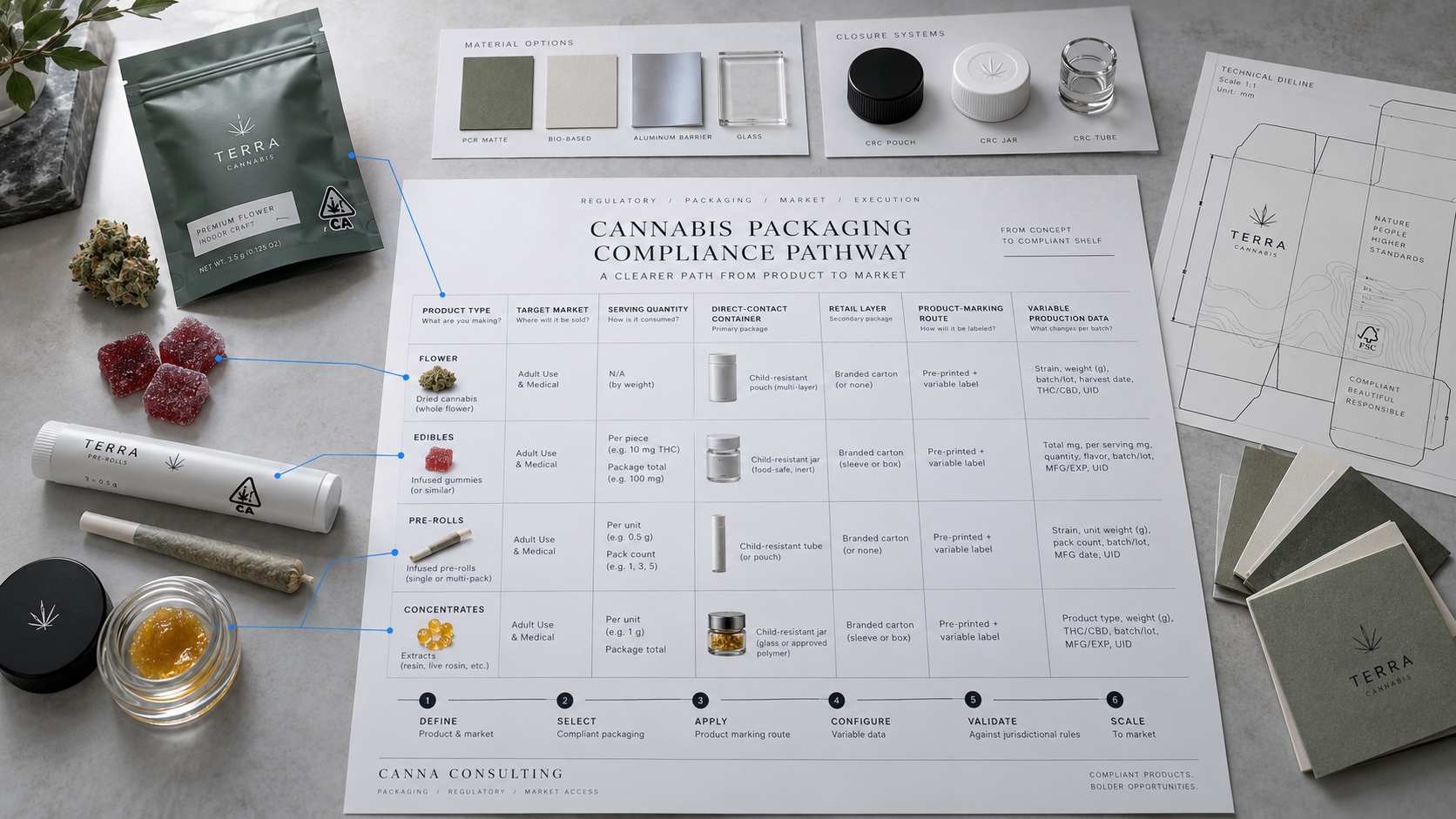
Part 128 of the New York guidance focuses on the outer-most layer of the packaging. Start at the layer present at retail and back up to a removable container. Determine which layer contains the universal symbol and any necessary consumer information. When the retail container is covered with a decorative sleeve or a marketing layer, the mixture still needs to convey what the requirements of the rules need to convey.
An outside-in map ought to depict:
the external layer being provided to the consumer;
any removable wrapper, sleeve or carton;
the directly contacting container with the product;
anything that can depart out of the outer package;
the initial track and trace of initial opening.
This is also a map that assists production. It determines which of the components changes would have to accompany which product and avoids the condition of the ornamental outer layer concealing regulated copy.
Prior Reserve Before Branding The Universal Symbol.

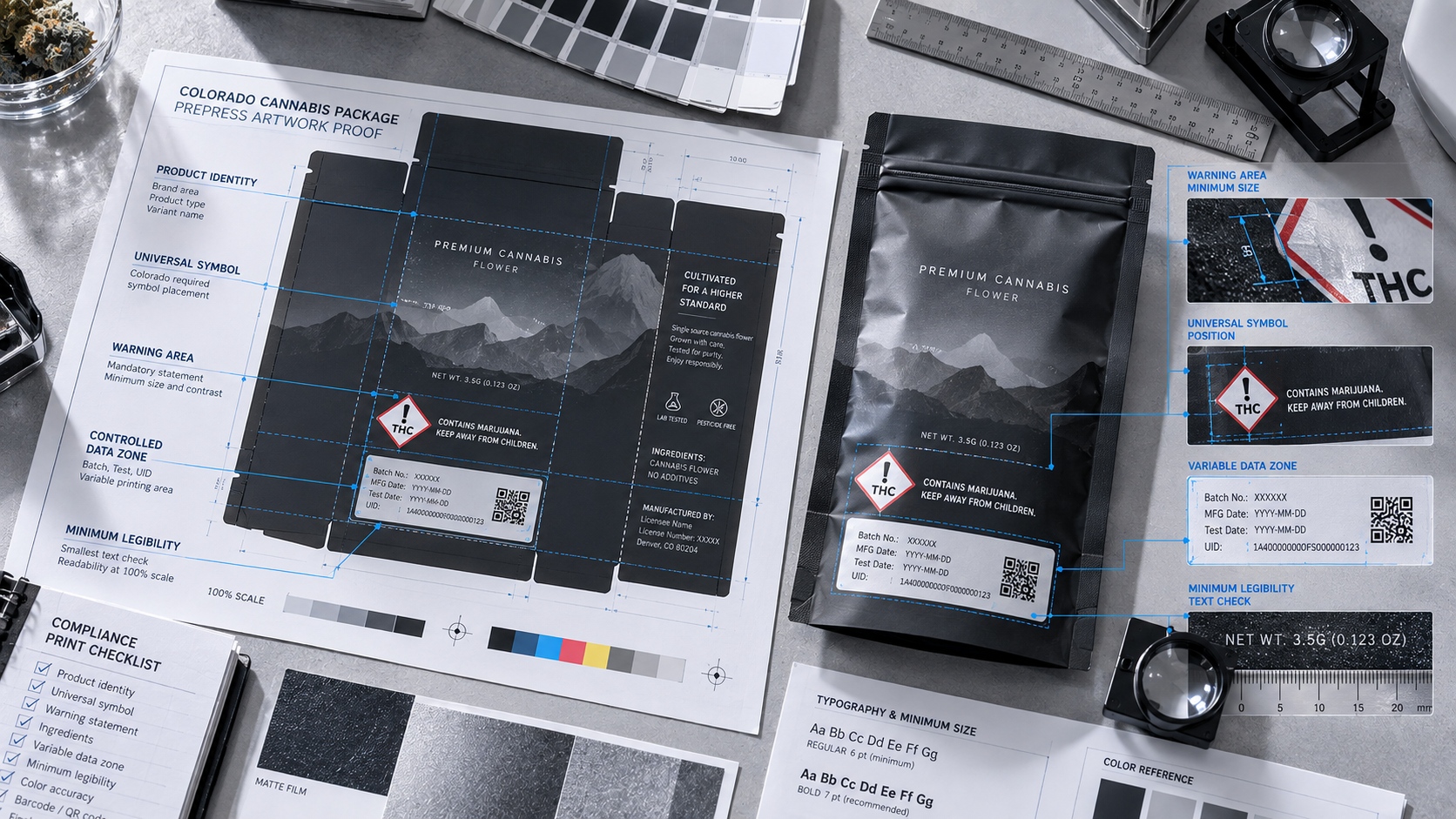
Part 128 guideline requires that New York must have at least one version of state universal symbol on the most outer-level of packaging. The symbol must be regarded as controlled art. Use official file, maintain its figure and amount of contrast and clear area.
Put the symbol on the first dieline draft, not as a prepress patch. Visibility can be diminished by metallic effects, windows, seam and folds. Check final printed package in its normal retail orientation. When a layer is stripped away, also know what identification should stay on the component under it.
Architect- Design Consumer Information Architecture.
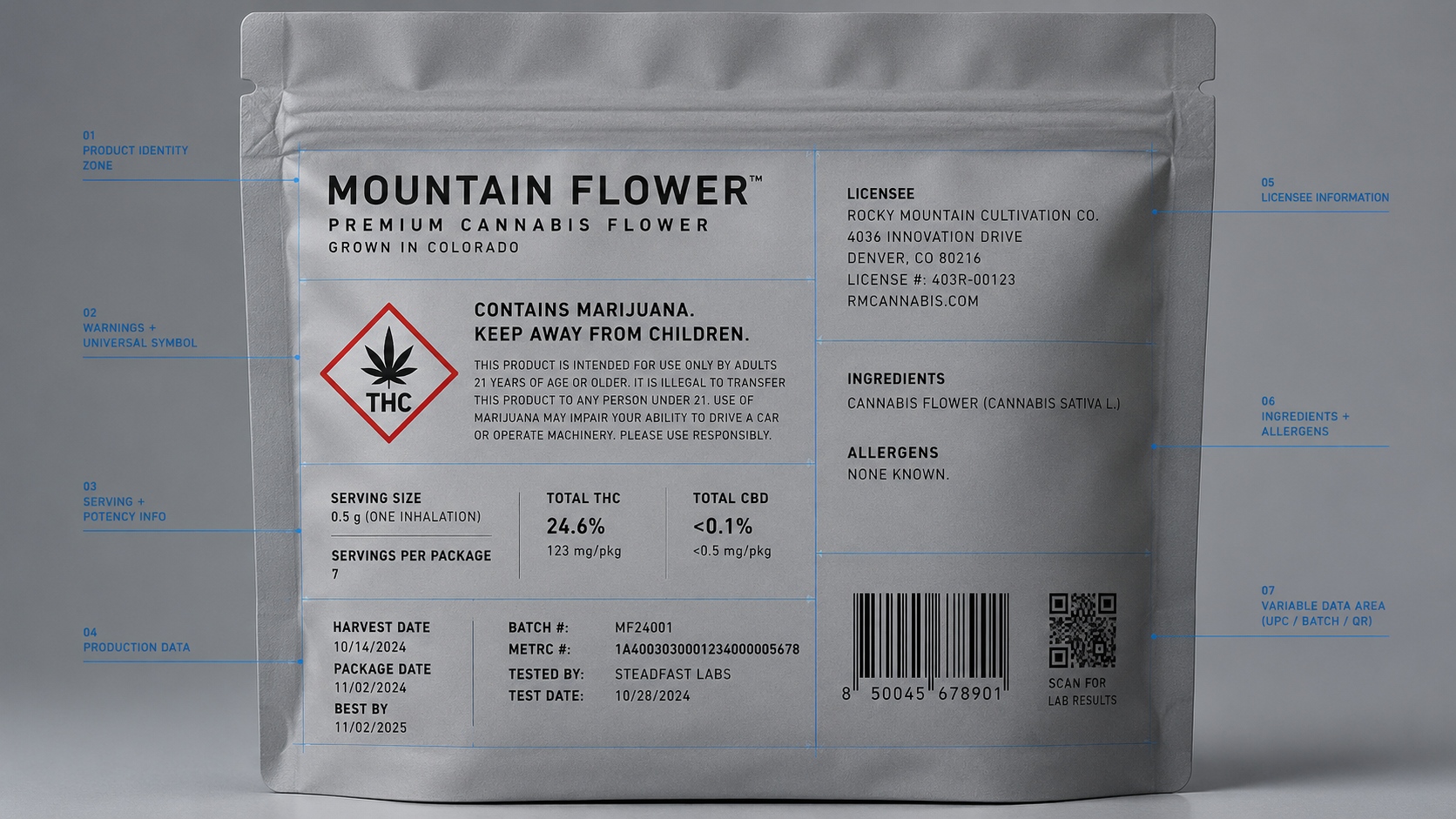
Compulsory content is vying with brand and product information. Win that hierarchy and not tiny type competition. Organize consumer-related information: name the product, learn about the quantity and strength, read warnings, manage the instructions to use or store, and find the licensed source.
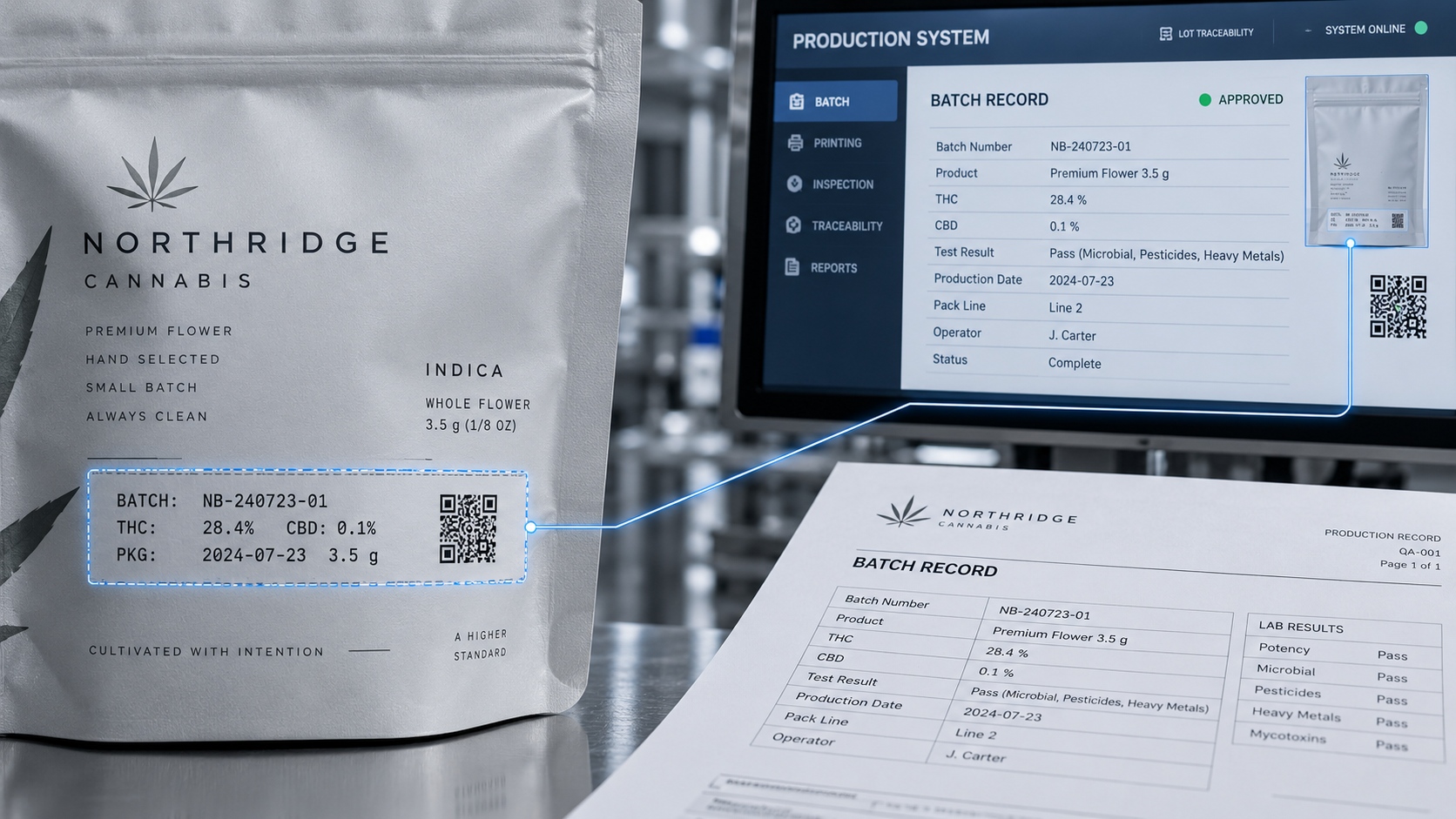
Construct duplicate on the basis of regulated records. The approved specification provides product identity. The ingredients and allergen data are based on the published formula. Potency values are obtained of the authorized test record. Current systems provide licensee and tracking information.
Where the pouch is small, ask yourself whether this can have different format as either label construction, or extended-content method. Do not think that a QR code will be able to substitute information that will be needed on the physical package.
Organize Child Resistance, Tamper Evidence and Integrity.
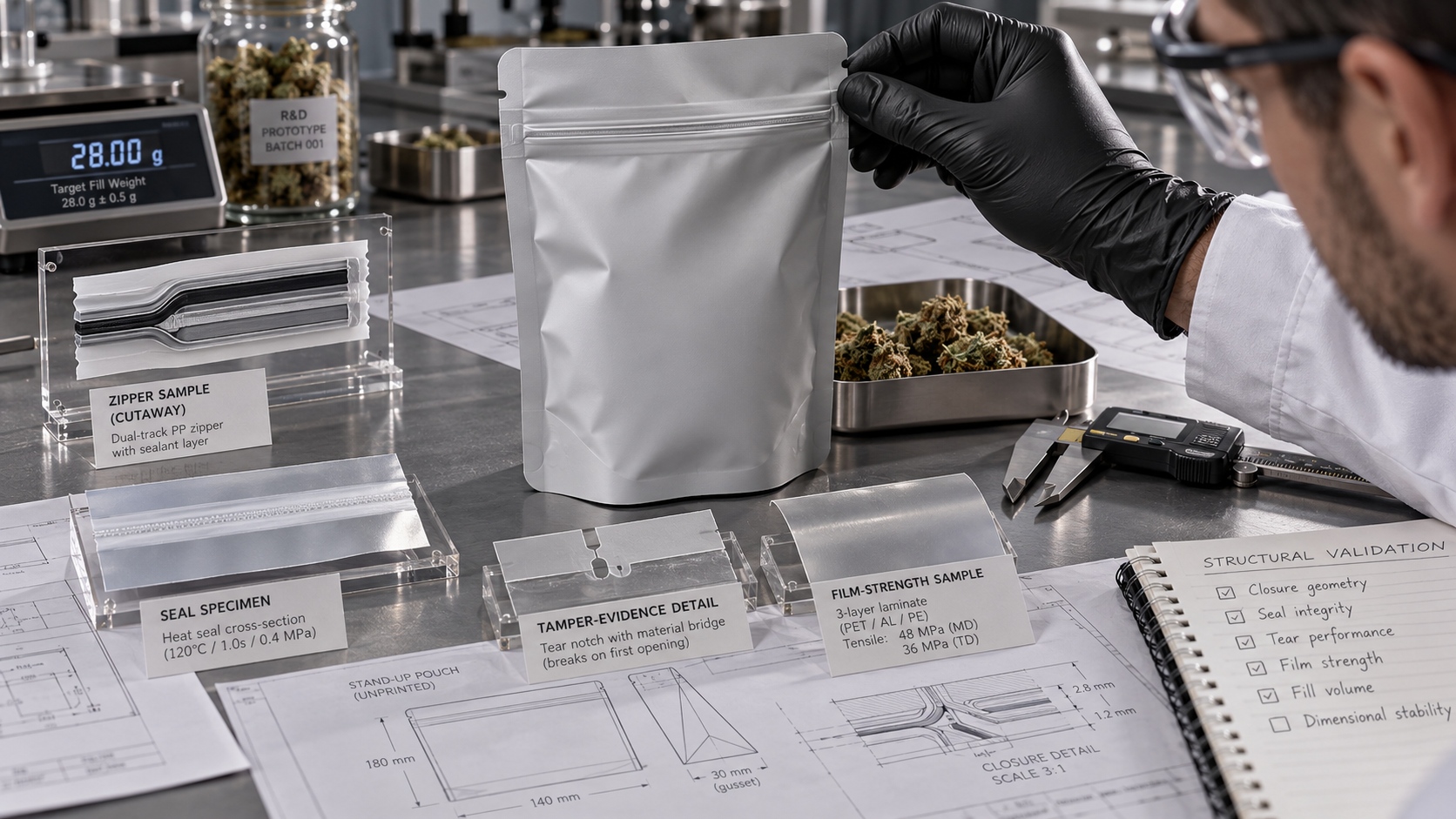
Arguity is also carried out by protective features. Child resistance is supposed to restrict access of the children. Tamper evidence assists a buyer to identify opening in the past. Reclosure enables a package with a multi-use to be reclosed. The integrity of the barrier and seal safeguards the quality of the products. None of the four roles are necessarily undertaken by one feature.
In a bespoke pouch, record every activity in the specifications. Then test filled by handling (distribution-like) and repeat adult. In case a child-resistant performance required relies on a tested configuration, maintain the corresponding closure, dimensions and material conditions.
Also review instructions. A mechanism of adhering to which an adult is unable to comprehend, may result in torn packages, failed resealing or retransfer to an uncontrolled place.
Total Impression For Youth Appeal Audit.
New York subjects exceptional boundaries to packaging and marketing targeted to individuals less than 21. Not only the presence of cartoon, but the overall impression should be taken into account during the audit. Candy similarity and characters, fonts, neon treatments, flavor imagery and package shapes may collaborate to ensure riskiness.
Independent reviewer should be used that was not involved in the design. Questions to ask include, what age group will the package seem to target and whether or not the package would seem like one of the non-cannabis food items are more familiar to some. Store record of review with the approval of the artwork. A catchy alarm bell cannot necessarily heal a general youthful presentation.
Adults can also have unique design. Highlight material texture, low key color, provenance of a product, a coherent information and a quintessential brand system over innovation indicators.
Design Materials without Exaggerating Sustainability.
Material reduction, recyclable packaging and environmental messages are being contemplated more by the packaging teams. This is particularly applicable to the New York market planning, yet sustainability claim should be true in all the contexts of the entire package and actual disposal.
Do not just inform that a laminate can be recycled at any place or a zero waste product, unless you can prove it. The actual result may vary with a closure, coating, label or local collection gap. Speak qualified, concrete words that are okay to the target market.
Design wise, minimize extra layers at the initial stage. A pouch with a clear printed label plan can choose to forego a corrective sleeve or oversized carton. It is less difficult to enhance sustainability before it is too late to change the packaging architecture.
Manage the Practice of Packaging to Marketing Handoff.
A package evidence is certified to be on a physical retail environment. When the brand team transports the artwork into an advertisement, other questions are brought up: Where will it be? Whom do we expect to see? What are the claims, calls to action or lifestyle associations included? Is the placement within New York limits?
Develop two approval stamps within asset library: approval to package and approval to use in marketing. They cannot be considered as synonyms. Part 128 and Part 129 are connected, however, the same graphic might need a new re-examination in case of another change of its purpose.
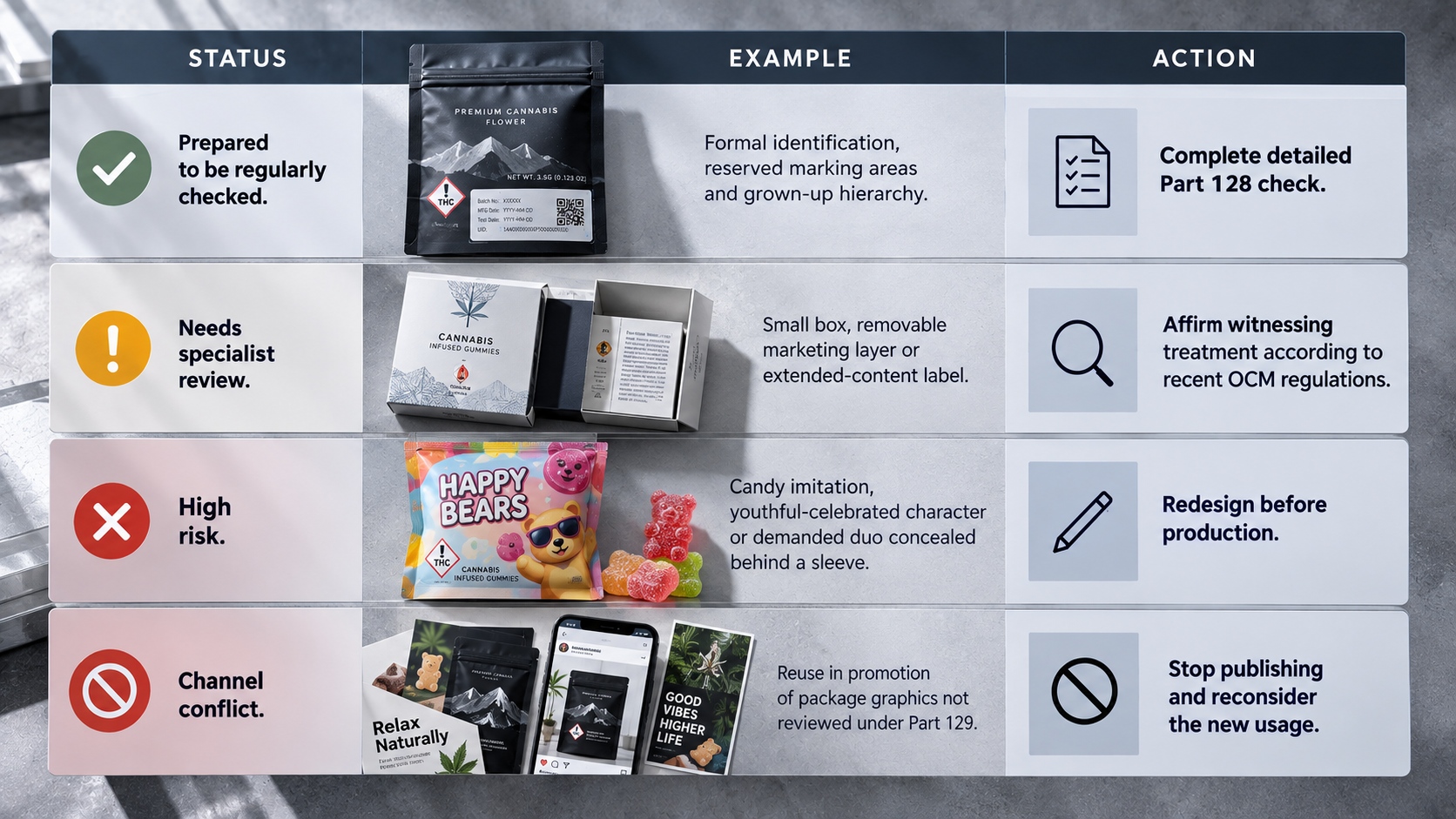
New York Artwork Red-Flag Review.
|
Status |
Example |
Action |
|
Prepared to be regularly checked. |
Formal identification, reserved marking areas and grown-up hierarchy. |
Complete detailed Part 128 check |
|
Needs specialist review |
Small box, removable marketing layer or extended-content label. |
Affirm witnessing treatment according to recent OCM regulations. |
|
High risk |
Candy imitation, youthful-celebrated character or demanded duo concealed behind a sleeve. |
Redesign before production |
|
Channel conflict |
Reuse in promotion of package graphics not reviewed under Part 129. |
Stop publishing and reconsider the new usage. |
Frequently Asked Questions
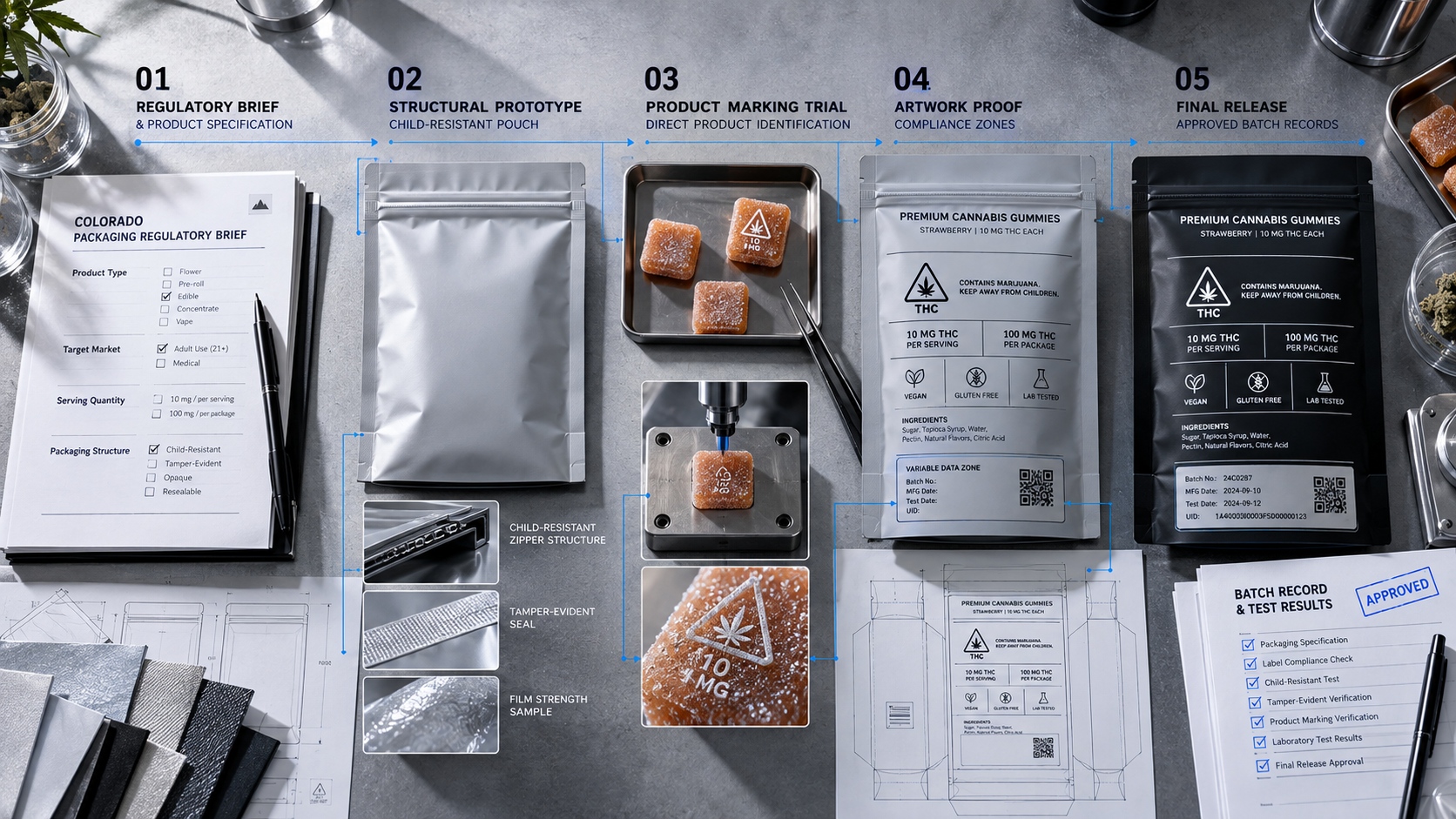
Are the New York packaging and advertising laws similar?
No. Part 128 deals with packaging and labeling, Part 129 deals with marketing and advertising. They are interconnected, and acceptance in one regard cannot be presumed to encompass the other.
Would a marketing sleeve have the universal symbol?
New York guidance concentrates on the outer most layer of the packaging, with a marketing layer being used in this case. Lock in the precise setup and all the information needed prior to production.
Is YPAK legally approved?
YPAK helps with package engineering, closures, printable areas and custom production. The final regulatory treatment should be approved by the New York licensee and qualified compliance advisers.
Construct A Single Package with Two unmistakable approval chase after paths.
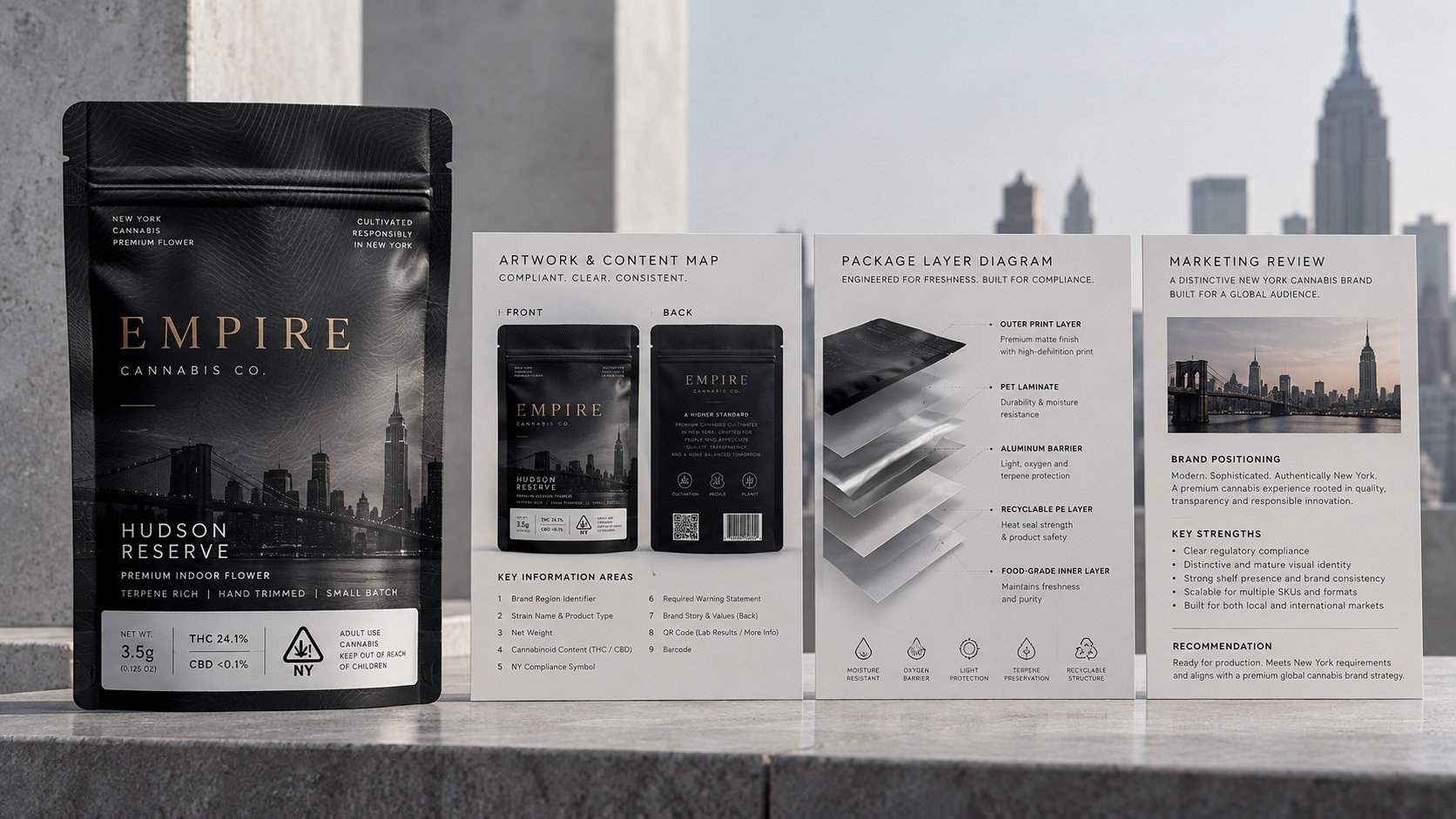
Provide the SKU type, package layers, fill volume, closure requirements and target artwork area to YPAK. We can aid in the development of a pouch that provides requisite information with a consistent residence yet maintaining a space to an adult-intellectualized brand system.
CTA: Request a Custom Packaging Review Related page: Explore Cannabis Bag Structures
Post time: Oct-17-2026


