


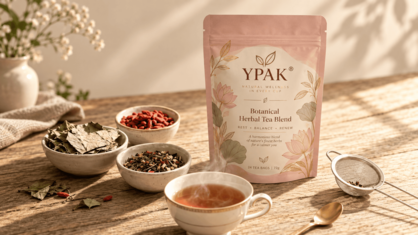
An order of production The order of production development A bespoke printed tea pouch should be defined based on the final package format and functionality: the stuffed format and functionality are defined, the production dieline is obtained, artwork is built upon this dieline, a printing route is chosen, colour and special effects are approved, and a controlled version is released to production. Planning of the graphics prior to pouch structure is fixed generates additional unnecessary reworking.
Supplier brief must provide type of tea, fill weight, pouch size, seals, gussets, zipper, tear aptitude, material orientation, artwork tally, number of artworks in a single piece, finish, coding area and destination. This transforms a visual design to a manufacturable specification.
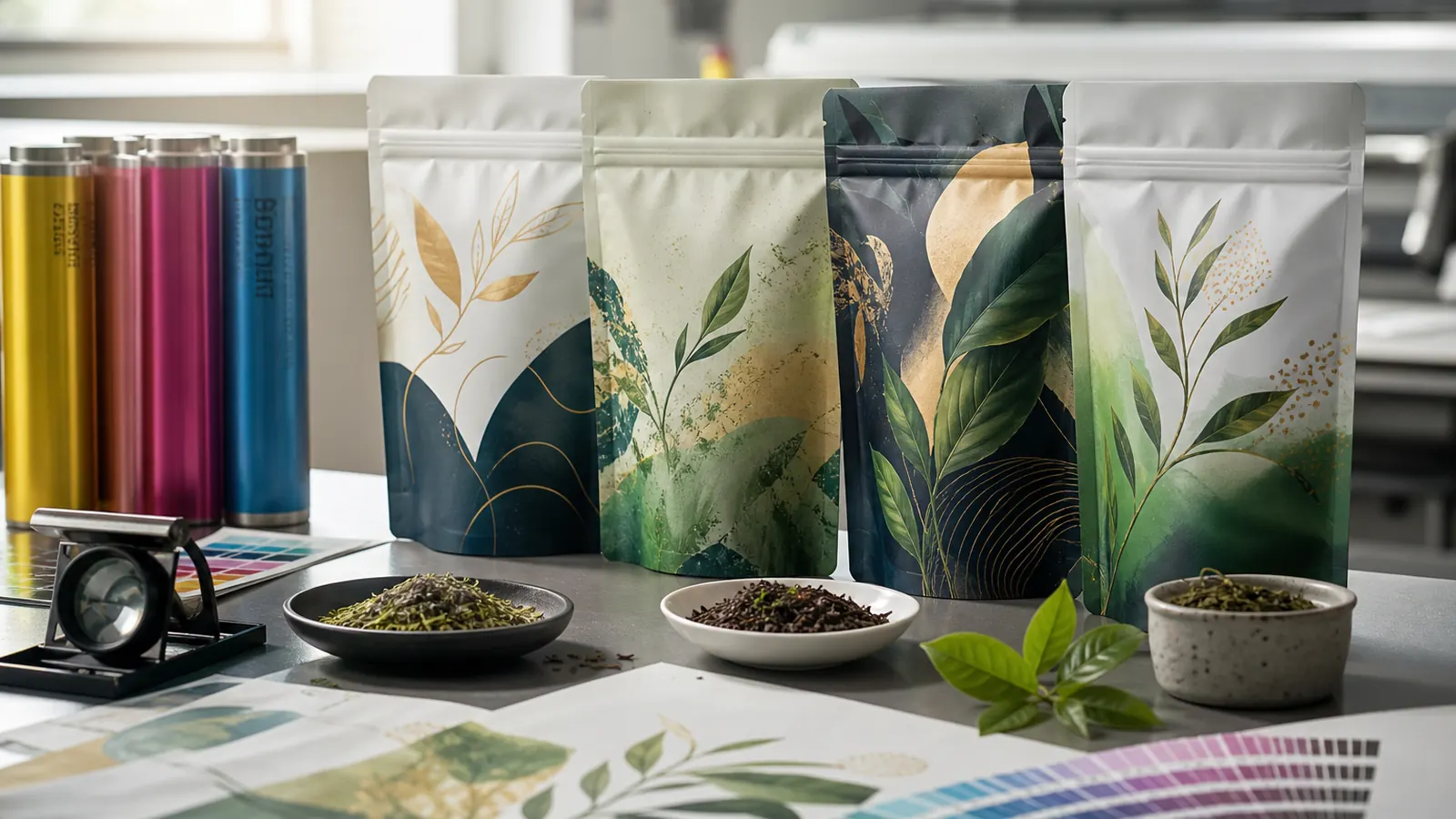
A flat-bottom pouch, side-gusset bag and a flat pouch do not have the same visual surface as stand-up pouch. Seals, gussets and folds are known to modify everything that is visible when the bag is empty, filled, standing or held. The placement of the zipper and tear notch also varies the space where a top can be used.
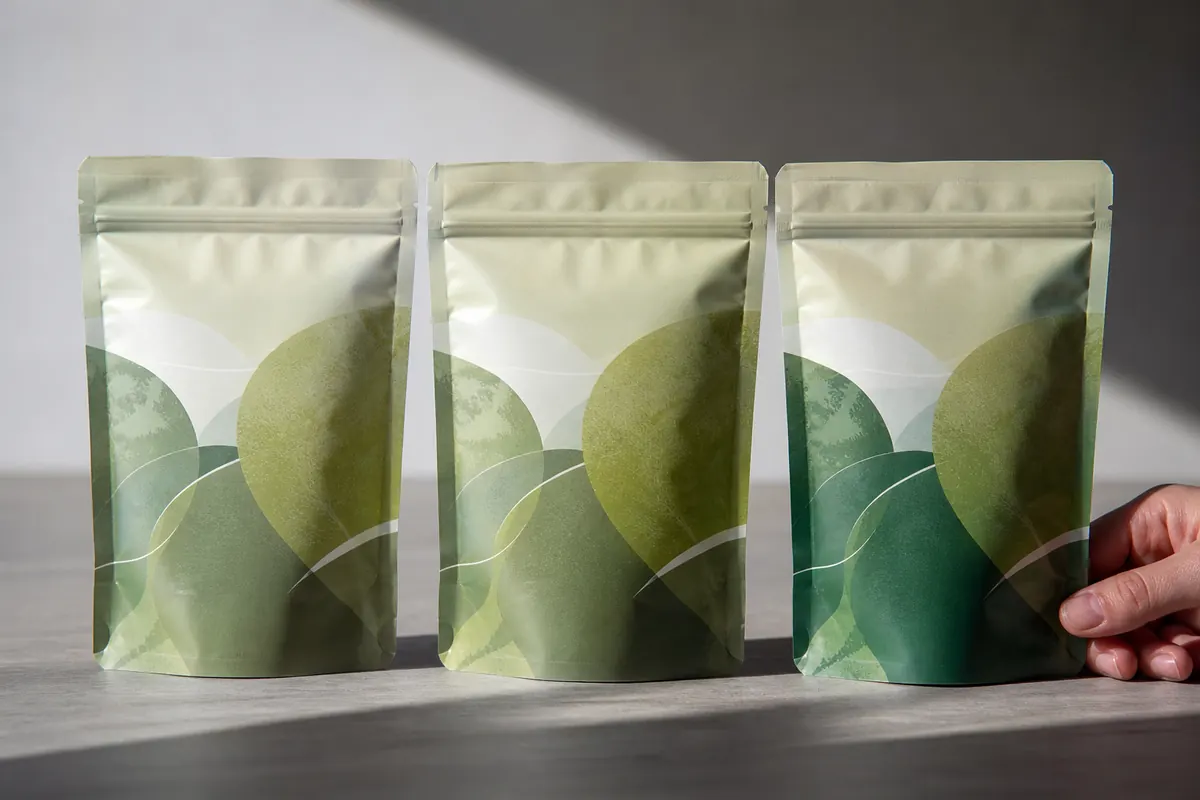
Dieline is not just a crop box. It reveals boundaries of panels, seals, faces, areas and tintures of registration, which can be obscured or deformed. Inquire about structural references and lines that should not be printed. Even where the program of design permits it, do not put critical writing on edges.
Stick the most important product name, and differentiator, on the panel that is facing the shopper. Apply side and rear panels to support the information, but ensure that the pouch is inserted with checking how it fits after filling. A rear panel which seems generously viewable on screen may change to be thin when a pack is enclosed with side seals and gussets.
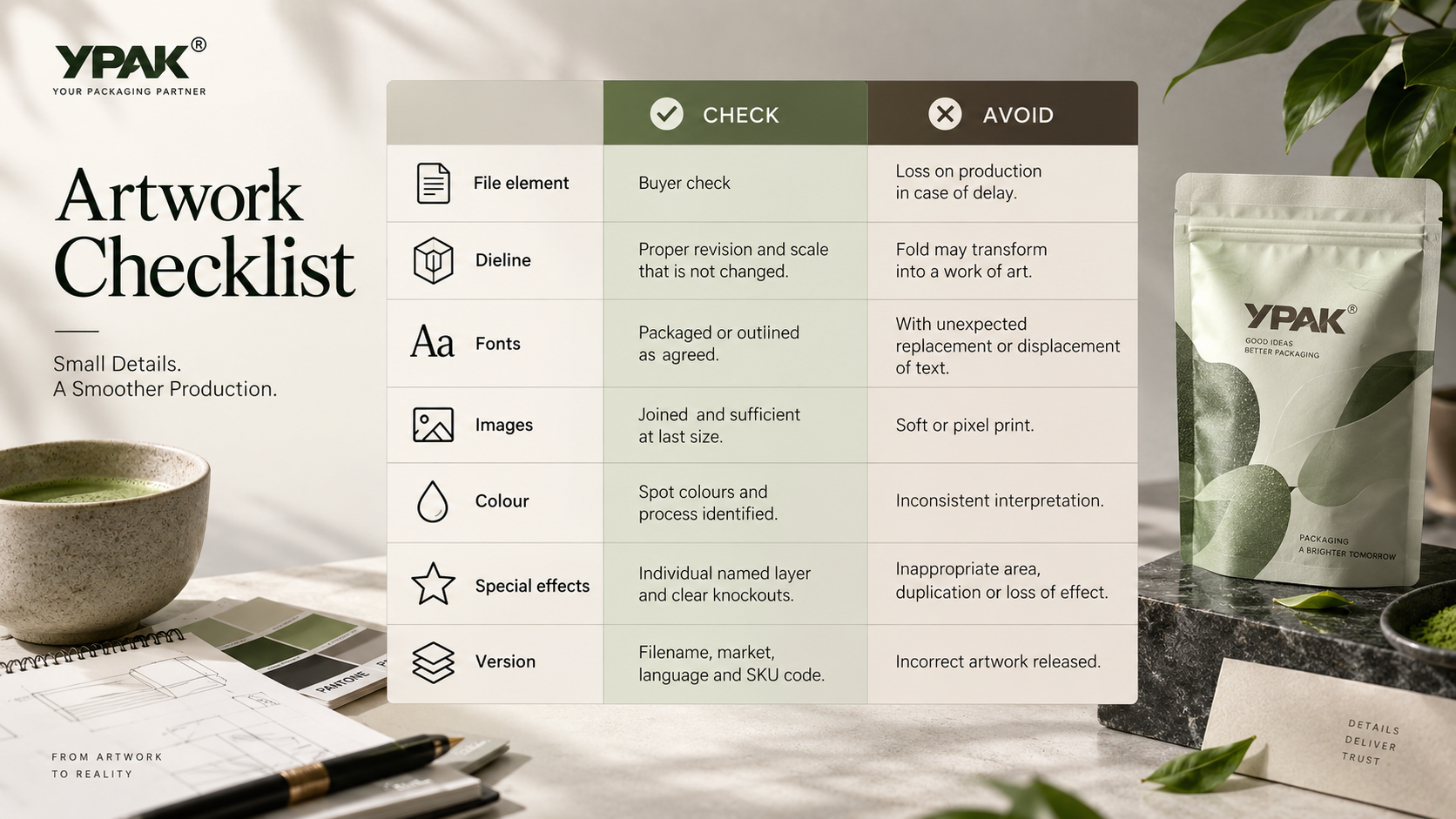
Transmit structured source files and not just a flattened preview. Individual process colours, white ink, metal or foil, varnish, tactile, cutting reference as per a file description by your supplier. Convert or package fonts and store associated images at suitable effective resolution.
The digital and conventional printing paths are capable of supporting any number of variations in order size, frequency of repeat, artwork alteration, colour control, substrate and special effects. You must not narrow down the decision between short run and long run. Enquire about the route capability of opaque white, fine type, gradients, brand colours, photographic detail and repeat orders on the choice of film.
When a number of varieties of tea have common design system, display the entire assortment when quoting. Based on this the printer will be able to detail whether common items can be shared such as colour stations or setup items. Keep that definition in commercial scope; necessarily do not presume it on the basis of similar looking artwork.
Depends on substrate, white layer, and the surface texture and viewing light. Kraft look can be used to warm palette; metallized film can be used to light up or darken specific areas, matte and soft-touch surfaces can cause apparent contrast to be less evident. Not all these can be captured by a computer monitor.
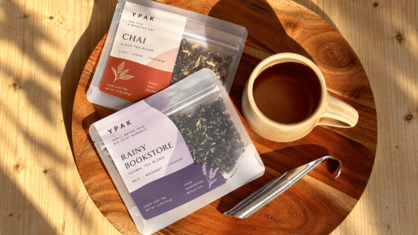
A PDF is the layout confirmation plus copy but not the colour as well as pouch behaviour. To represent material and finish, a print flat sample can be used, but not the converting process itself. A prototype made represents size and feel, whereas a sample intended for production presents more convincing data as to what will actually look like and work. Establish what every show is anticipated to endorse.
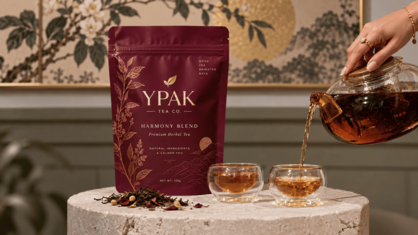
The released dieline, artwork files, rendered reference, colour and finish reference, construction specification as well as the sample revision and list of accepted deviations (where applicable) should be included in the final approval package. Scattered message approval is challenging to duplicate.
Repeatable orders only become repeatable when the supplier is able to determine the approved construction, artwork, and colour target, finish and sample. When product copy is to be made, save the copy by giving a new name other than overwriting the old copy. In case of a substitution of the substrate or the printing route, determine what visual and functional approvals should be redone.
Request the supplier to identify retained tooling or setup references, artwork storage guidelines and the procedure of a repeat verification. Maintaining its own master archive including final files and approval dates should be maintained by the brand.
Before being released, examine the manner in which variable production information is going to be added. Lot codes, best before date, traceability mark require a surface that is operational but quiet and smootht in nature accepting the intended coding process. Do not keep this zone near folds, heavy varnishes, windows and dark paintings until the coding system has been proven. The area should be left blank by the artwork without printing any sample dates that may be confusing as final data.
The person inquiring should be the filler or co-packer who should be asked to confirm code orientation on the actual line. A visually convenient place can have the opposite side during the production or it may be simply buried when the pouch is added to a carton.
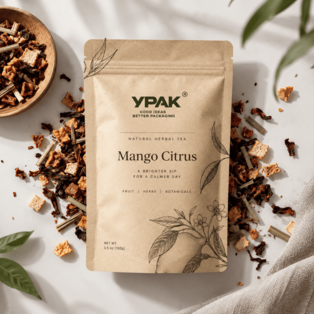
Is it possible to create art work even prior to the pouch size being decided?
Preliminary work can be started and definitive production artwork may be done at confirmed manufacturing dieline and completed sizes.
Is PDF evidence sufficient to approving colour?
No. It is handy in copying and positioning, physical colour and finish ought to be checked on a suitable print reference.
Is it possible to have multiple tea flavours sharing a design file?
They ought to employ monitored versions of SKUs. Some common elements of design can be retained, however product identifiers, copy and production filenames must be clear and distinct.
In what areas do new approvals need to be changed?
Alterations to size, material, print route, finish, artwork, zipper, forming or any other manufacturing-related factors can restart a visual or functional approval.
Post time: Sep-16-2026


