


Stand up matcha pouch has a gusset bottom which expands becoming a bottom after the matcha has been added to the bottom. The format provides a big printable front panel, small shipping profile and convenient retail display, but can and should only work well when the dimensions, gusset and top design is the same as the real powder and fill process.
The weight of the net is not the only factor to consider when purchasing pouch size. We have bulk density of the matcha, headspace, zipper location, seal allowance and how the gusset opens that affect the usable capacity. To be certain that the pouch is stable enough to hold the art, it is needed to be filled to ensure that it displays the artwork accurately and passes through filling, packing and distribution without distortion.
Establish the Matcha Program Prior to the Dimension choice.
Begin with grade, net weight, sales channel and serving routine. A limited ceremony product will entail an alternate display and entry to a household size retail pack or cafe refill. Note either that the pouch will be stuffed by hand, an auger system or a contract packer.
Give a Format Brief.
In the initial specification, there should be:
- · Weighed powder bulk density and target net weight.
- · Method of filling, equipment limitations and opening needed width.
- · Shelf life which is not opened yet and expected time of opening.
- · Zipper, tear feature and permanent top‑seal features.
- · Display conditions, ecommerce and case‑packing conditions.
These specifications enable the supplier to suggest a pouch geometry to one of the defined commercial jobs as opposed to a generic label like capacity.
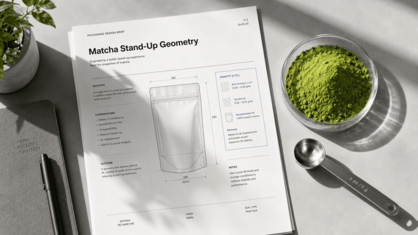
Learn How a Stand Up Pouch will Come to rest in the Base.
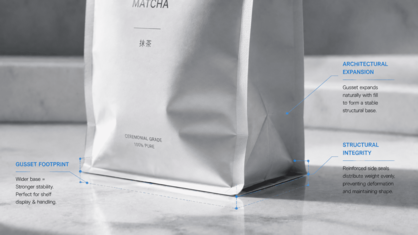
The lower gusset is creased in the pouch that is empty. The more product is provided the more it expands and creates the footprint on which the pack is supported. Even stand of the pouch is dependent on width, depth of gusset, and geometry and distribution of the seal, and distribution of the product.
A pouch being empty will be symmetrical, and will behave differently when filled. Fine matcha can either be uneven or not fully sunk into a gusset which has not been fully opened. Accept the form and fill weight, and the routine to be used.
Outside Dimensions vs Fillable Space.
Quoted height and width are generally used to refer to outside of the pouch. The zipper, tear notch, top seal, side seals and bottom construction reduce the amount of internal space that the powder can have. Neither the dimensions of the artwork are shown as the actual fill line.
Indicate the Usable Product Zone.
Ask the supplier to determine the suggested fill area on the drawing. Make sure there is clearance under the zipper, and over the expanded gusset. Target fill should have no excessive fill but should have adequate fill to allow dust‑control and final sealing.
Bulk Density is Capacity.
The difference in the matcha grades and the conditions of processing can result in the occurrence of different weights in the same net weight. Take bulk density of representative production as the measured bulk density and refine the estimate by taking physical fit samples. Never reduce the size of coffee, loose tea or any other powder without experimenting.
Having normal variation in the trial. A pouch may cause difficulty closing when there is a lighter batch which is more voluminous than the batch in a pouch. The adopted dimensions should be capable of helping in the day to day manufacturing rather than just a single thought‑out sample.
Compare Stand Up Pouch Purchasing Scenario.
Table is an overview of structural priorities of common programs. It fails to offer universal dimensions since the density of the product, equipment and brand requirements vary the usable capacity.
| Application | Structural priority | Main validation question |
| Small premium matcha | Small body and flat bottom. | Is the low fill weight open and stand? |
| Regular retail pack | Reclosure, access and front‑panel display. | Is scoop and reclose shelf stable? |
| Cafe refill | Big opening and high volume of use. | Does the pouch facilitate effective filling, scooping and handling? |
| Ecommerce program | Controlled case fit and headspace. | Will the pouch be in shape and position after distribution? |
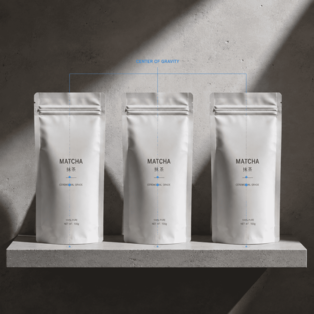
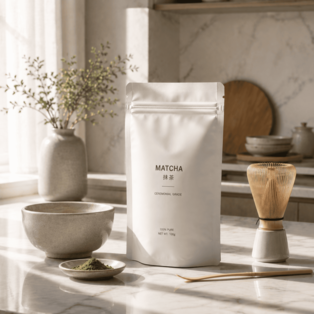
Design the Gusset to present Stable Shelf.
Stability can be enhanced by a broader base, though it alters the use of material, the shape of the front panel and case packing. A small base may tip and in case the gusset is over‑sized, the gusset may not be deployed at low fill weight. Don't evaluate each dimension to its full extent.
Test the Lowest Expected Fill.
Checking stability needs to be done when the minimum commercial fill weight is met and when normal settling has occurred. Place samples in real‑life shelves and counters and watch leaning, rocking and panel collapse. Add packs in other positions in the production line.
Do not allow Powder to stay in the Bottom Fold.
When the gusset is not constantly open, powder fine can be laid in folds. This can decrease apparent capacity, provide an uneven base or render recovery of products challenging. The direction to be used as well as pouch presentation at the machine affects the way in which the powder gets to the bottom.
Checking filled samples: At the end of the trial, open the pouch and assess whether or not there is powder around the gusset. Make sure that the consumers are able to take most of the product without either cutting the bag or shaking it too hard.
Make Planning the Top Area around Filling and Reclosure.
The size of the pouch mouth must be wide enough to fit the filling process and cleaning up the seal area. There are a zipper, tear, as well as permanent heat seal and they all need vertical space. They ought to rectify their standings before the endorsing of artwork.
Keep Seal Zone Clean.
The permanent seal can permit the creation of channels or weak points with the help of matcha dust. The rate of filling, dusting and the seal temperature, pressure and dwell time must be documented in the trials. The increased pouch does not necessarily have to be superior as long as the pouch mouth is tricky to offer to the equipment.
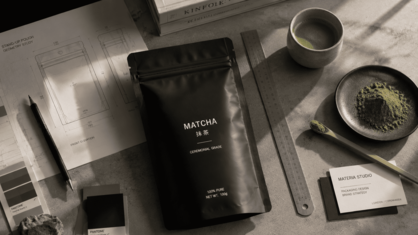
Pair Pouch to Filling Equipment.
Preformed‑pouch lines can utilize vacuum cup, grippers and opening devices that rely on the stiffness of the panel and the surface finish. The pouch support and hand access needs that are manual are separate. Send pouch supplier equipment model and dimensional limits.
Test samples that are not to be printed. Check pouch, opening, dosing, settling, top cleaning, sealing and rejecting. The format that appears appealing on the shelf might not work when it cannot be opened by the filling line.
Select Barrier Materials irrespective of the Shape of the Bag.
Geometry, rather than protection, is stand‑up. The laminate has to continue to fulfill the matcha criteria of oxygen, moisture, aroma and light. Foil, metallized and suitable directions of high‑barrier PE can be considered depending on the shelf life, market and sustainability goals.
Check the Gusset and Folds.
The converted pouch should be included in barrier approval since it is possible that folds and repeated flexing may not act the same as a flat film. Inspect prior to filling, post filling, throughout transport and compression, the bottom, side seal and transition.
Compare Stand Up, Flat and Flat‑Bottom Pouches.
Stand‑up pouch provides a gusseted bottom that makes an efficient use of the material and displays well on the front. Sample or small portions which do not require to stand can be fitted in a flat pouch. A flat‑bottom pouch is a box‑shaped footprint but with additional panels but built as a more intricate design.
Select the format of fill volume, stability, equipment, artwork and distribution. Within the tea pouch category, YPAK has stand‑up, flat and flat‑bottom, which allows customers to compare changed samples of the identical matcha program.
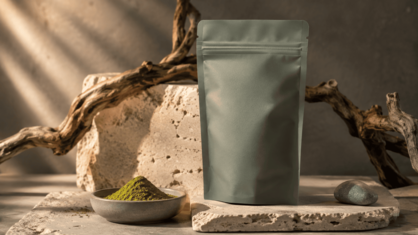
Construct Art on Final Filled Geometry.
The visible height of the front‑panel is modified by the bottom gusset once it is filled, and safe print areas are marked by side and top seals. Where folds and curvature will not reduce the readability place the brand, product name and vital information.
Look through a Full Printed Sample.
A flat evidence could not reveal the bulging of the panels, or gusset position or the facing of the pack. Check color, registration, barcode legibility and needed information on a filled sample under a supposed retail lighting.
Check Ecommerce and Case‑Packing Performance.
A free‑standing pouch can be shipped either lying flat, standing up or in secondary packaging. The fitment of units into a case is dependent on headspace, depth of gussets and rigidity of panels. Excessive motion can lead to the creasing of artwork or change of the retail position.
Select the number of packs and orientation wanted. Checks such as compression, vibration or drop, etc., as dictated by the distribution route should be applied and care taken to ensure that, at the end of unpacking the pouches do not fall and also to maintain the integrity of the seals.
Take the Filled‑Pouch Evidence of Approval.
Approval file will identify width, height, gusset convention, material, zipper, tear feature, seal size, artwork revision and accepted weight. Attach pictures or samples retained of the accepted position and line of fill.
Set Repeat‑Order Controls
Retest: In case of a change in the powder density, net weight, dimensions, gusset, material, closure, filling equipment or case configuration. Repeat orders are expected to copy usable capacity and stability and not to duplicate the outside dimensions on a quotation.
Conclusion
An efficient stand up pouch to matcha unites the bottom‑gusset geometry and powder density, clearance, barrier structure and distribution. The actual product is used to verify the correct size as opposed to a standard chart. Filled‑pouch experiments are helpful to buyers provide the thumbs‑up to capacity, shelf location, artwork and production implementation as a single repeatable specification.
FAQ
Why did the matcha powders two different pouch sizes have the same weight?
They may differ in terms of their bulk densities and hence the same net weight may be of varying volumes. Testing is required of physical fill.
Is the size that is listed as the pouch size equal to its usable capacity?
No. Seals, zipper, tear feature and gusset construction decreases the powder space.
How can buyers inspect the stability of a stand‑up pouch?
Load with the desired matcha when the weight is lowest, and leave to normal settling and be tested on realistic shelves and counters.
Does a stand‑up pouch come with a high barrier?
No. Stand‑up refers to the format. The choice of material structure and completed seals determine oxygen, moisture and light protection.
At what time can the stand‑up pouch format be re‑tested?
Retest following alterations in powder density, net weight, size, gusset, material, closure, filling equipment or shipping case.
Post time: Aug-26-2026


