


Airtight matcha packaging must not only regulate the air that passes through the film. Leakage can originate at a dirty heat seal, a folded corner or an unfinished zipper or too much air in the filling. It is possible however that a package with a strong barrier material may not protect matcha during normal distribution and usage.
The task to purchase is to establish the areas where airtightness is needed, the probable places of leaks and sign the completed pouch where actual production will take place. The material, closure, dimensions and filling controls should be considered as a single specification, as opposed to different design options.
H2: Clean up Factory Airtightness and Consumer Reclosure.
The unopened pack and the opened pack are dependent on the different controls. The permanent top heat seal offers the initial closure before sale. Once the consumer has taken that seal off, a zipper might minimize repetitive exposure, but does not restore the factory status.
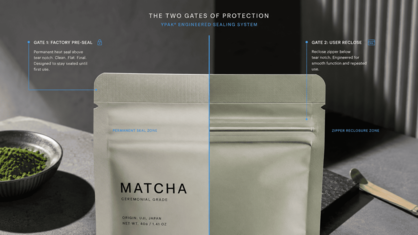
Specify the Unopened Requirement.
Indicate the necessary shelf life, distribution route, storage temperature and tamper-evident opening. A single-use sachet, retail pouch and food-service refill cannot have the same single closure specification simply because they all have matcha.
Specify the Opened-Use Requirement.
Note the days that the product is used on average, the number of times the product is opened and the number of times the user pours or scoops. This data reveals the necessity of a zipper and the amount of contamination that should be tested with the reclosure.
H2: Find all the Possible Leak Paths.
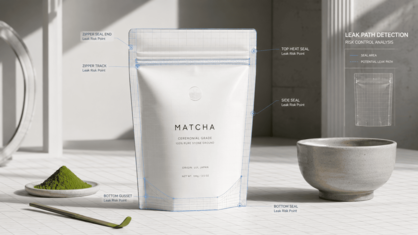
The loss of airtightness can be on the top seal, side or bottom seal, gusset folds, zipper ends and material creases. Pouch conversion generates a geometry not contained by a flat film sample. It is advisable that buyers examine the entire form rather than making reference to a material data sheet.
The risk varies with the structure adopted. Stand-up pouches add a bottom gusset, flat-bottom bags employ multiple folds, and flat pouches have simpler geometry, but contain less space available to fill and reclose. The test plan should be appropriate to each format with its real seals and folds.
H2: Name the Permanent Heat Seal Initially.
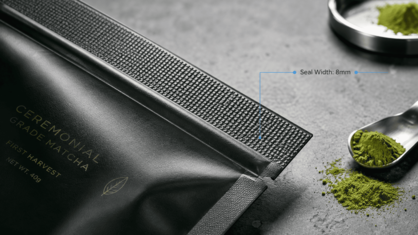
The heat seal helps to preserve the unopened matcha in storage and transportation. It must be specified in terms of the food-contact sealant, seal width, temperature, pressure, dwell time and permitted fill height. These values should be operating within the stable operating range of the production equipment.
See past an Ideal Sample.
A trial, done slowly and with care, can result in a heavy seal which can not be made again at commercial pace. Experiment with sufficient converted pouches to see normal variations in temperature, alignment, powder movement and operator handling. It should be approval not the best single sample.
H2: Develop a Clean Seal Zone Fine Powder.
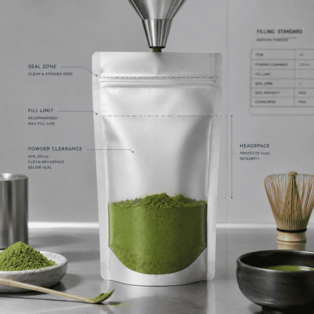
The matcha may fly up in the air and will rest on the sealing way. A thin coating can form a channel or decrease the area bonded. The filler and the pouch must thus be made in such a way that powder does not touch the permanent seal during the cycle.
Check the opening size, position of the nozzle, fill limit and necessary clean headspace. Check pouch holders, cleaning and dust extraction procedures with the co-packer. When repetitive line fills multiple powders, use changeover controls to ensure that no residue can affect the quality of seals.
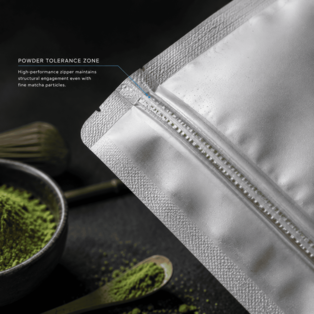
Check Zipper Position When filling.
A zipper near the pouch mouth may limit nozzle access and gather powder prior to sealing. Test the hole and the filled pouch. Closure should be positioned in such a way that it aids in filling the product but not pushing it into the zipper track or the top-seal.
H2: Select a Zipper which can be closed with matcha present.
A zipper must run the entire width of the pouch and give a definite indication of whether it is closed or not. Fine powder may be retained within the profile, add force to close or hold one part open. These problems are not detected in empty-pouch testing.
Open and close cycle filled pouches. Apply matcha to the track, inspect alignment, closing performance, retention of powder and scooping. In the case of cafe packs, test should involve handling routine on the staff level instead of exclusively with the packaging technicians.
H2: Decrease the Oxygen in the Pouch.
Even an airtight package can start off with an excessive amount of oxygen in the headspace. Large size, low fill volume and uncontrolled settling contribute to higher quantities of air held. Adjust the net weight and pouch volume to match and take note of the final height of the filled pouch.
The demand of a high oxygen target can be sustained using nitrogen flushing, but should be quantified. The outcome depends on gas flow, the opening of the pouch, the fill speed, the powder to travel and the time to seal. Compare residual oxygen in a number of filled samples and remeasure after any pertinent production variations.
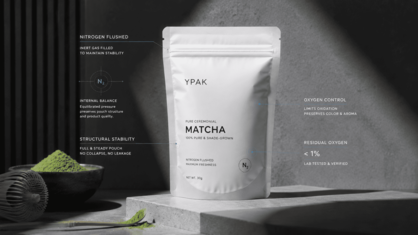
H2: Use Seal Integrity and Light and Moisture Protection.
Matcha should also be opaque in nature so as to restrict the exposure of moisture and light. Metallized and other barrier laminates can be taken into consideration based on shelf life, distribution and sustainability objectives. None of them are able to recompense a leaking seal or a poorlily closed zipper.
YPAK has a stand-up, flat-bottom and flat-pouch tea packaging, recyclable and compostable directions. The chosen design must be transformed into the desired pouch and tested once packed since its folds, insertion and flexing of the zipper can change functionality.
H2: Design the Opening and leave Reclosure Intact.
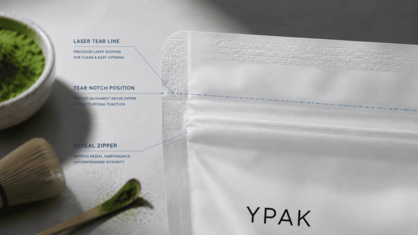
Laser scoring and tear notches must enable the consumer to cut the top off still keeping the zipper intact. Ensure that the tear is not flowing into the profile, exposing the film or taking away excessive material above the closure. This opening should also be large enough to allow the desired scoop.
Keep Instructions Practical
In case the zipper requires a specific closing action, give clear guidelines and check the capability of consumers to adhere to them. Airtightness relying on a peculiar method is not likely to be preserved during the use of the product.
H2: Fill Pouch Pre- and post-Distribution.
Apply matcha-filled converted pouches, which are to be closed on the suggested line. The handling should be preceded by the first inspection which depicts the shipment. Compression, vibration, drops and repeated flexing can show whether the seal or fold has failed which cannot be seen right after the production.
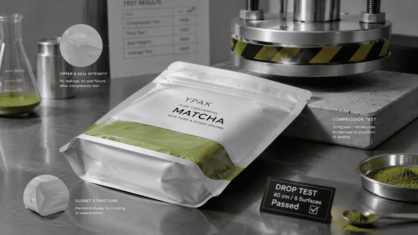
Create an Evidence Set.
Approval record may consist of:
- · Checks on wrinkles, channels and powder in the seal.
- · The seal-strength at the recommended machine settings.
- · Leak or pressure testing that was appropriate to the pouch construction.
- · A residual-oxygen is obtained with the use of an oxygen target.
- · Zipper-cycle leads to a contamination of matcha.
- · Seal, fold and damage of barriers post-distribution inspection.
Record the sample size, method and acceptance rule. When the conditions cannot be duplicated, a statement the pouch passed testing is of less use.
H2: Diagnose Failures Pre-Change the Material.
In case of loss of protection of a pack, the laminate can be replaced, but this will fail to solve the real problem. Original location of failure should be identified. The channels labeled as powder channels lead to filling and seal-zone control; uneven top seals lead to equipment settings or alignment; challenging reclosure leads to zipper choice and contamination; high residual oxygen leads to pouch volume or flushing.
This diagnostic order prevents a buyer paying a greater barrier when the identical path of leak exists. Only when it is observed that the current structure and not the sealing system is the limiting factor should material changes be made.
H2: Regulate the Approved Specification Among reorders.
Note the laminate, dimensions, sealant, zipper profile, seal widths, fill limit and production settings in a single approved specification. Retain filled reference samples and the revision of the artwork with the results of the tests. This establishes a common standard of the brand, converter and co-packer.
Repeat the tests with the affected when there is a change in the material supplier, laminate, closure, dimensions, fill weight, filling line or distribution target. Air tight matcha containers should be reproducible after the first order.
H2: Conclusion
Airtight matcha packaging is done by regulating the entire process of filling to consumer resealing. A permanent seal that is reliable, a zipper that will withstand powder, a pouch that will hold an appropriate volume, an opaque barrier and post-distribution testing gives a greater testament than a zipper statement or a film specification.
H2: FAQ
Is the resealable zipper similar to an airtight seal?
No. The unopened pouch is safeguarded by the permanent heat seal. The zipper decreases the exposure once opened and can only be checked by using matcha alone.
What is the most frequent reason of a matcha pouch to leak?
Common reasons are powder in the heat-seal region, lines, improperly adjusted settings on the machine, broken creases, unfinished zipper sealing and shipping strains.
What is the amount of empty space that a matcha pouch should have?
A sufficient amount of clean space is required to fill and seal, but should not be excessively headspace. Establish dimensions using actual weight of powder settled and net weight.
Will a high-barrier laminate assure airtightness?
No. Barrier material stops the transmission through the building, and airtightness is also subject to converted seals, folds, quality of closures and fillings.
What tests do you need another airtightness test?
Retesting occurs when the laminate or supplier, sealant, dimensions, fill weight, equipment settings or distribution requirement varies.
Post time: Aug-20-2026


