


Packaging matcha powder is not an easy task, a choice of a pretty pouch. The powder is light and can be scattered easily and is oxygen, moisture, light and heat sensitive. The product should be covered in a package prior to opening, it should be feasible after opening and be stable during filling, sealing, coding and distribution.
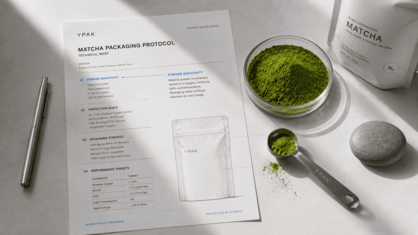
The matcha and its journey to the customer is the right direction to begin with. A 30 g ceremonial product, a multi-use cafe refill as well as a single serve blend develops the various requirements of barrier, opening size, headspace and reclosure. The process below helps a brand to convert those needs into a pouch specification that can be replicated by a packaging supplier/co-packer.
H2: specify the Matcha Product Before picking a Pouch.
To begin with, put in the powder to be packed. Grade, particle size, sensitivity to moisture and intended use influence the behavior of the product used in the filling and storage. Flake powder can get into the air, or it is accumulated in a zipper track or in the spot of a heat-seal. A mixture of sugar, milk powder or flavorant might flow and absorb moisture in a different manner compared to pure matcha.
Write a Detailed Product Brief.
Provide the supplier and co-packer information to be tested but not a general request to provide a premium tea pouch. The brief should identify:
- · Type of product, grade and formulation.
- · Net weight and anticipated filled volume.
- · Target shelf life, and destination market.
- · Exposure to humidity and temperature of storage.
- · Single or repeated use.
- · Filling and sealing by hand or using a machine.
Such information eliminates any comparisons of the quotations on their appearance as the proposed pouches are created to work under various conditions of operation.
H2: Have a Protection Goal that is Achievable.
The quality of matcha is generally determined by the color which is green, aroma and easy handling. Protection has a defined time span and area distribution. Indicate the time period over which the unopened pack can maintain a satisfactory quality, the period over which it can be stored in a warehouse or transportation and the rate at which the pack is usually used after being opened.
The only performance requirement that should be left out is the use of the word fresh. The conditions of exposure and a shelf-life goal will be required by a supplier when prescribing a barrier. In case the nitrogen flushing is planned, indicate the target residual oxygen and the method to measure it. The benchmarks can then be related to filled-pack outcomes.
H2: Choose a Food-Contact Barrier Structure
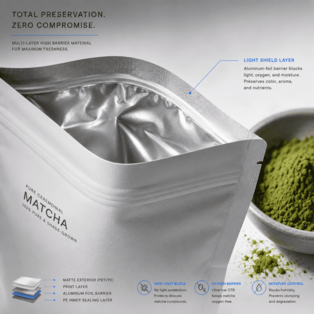
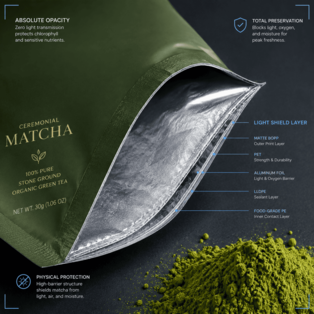
A matcha pouch would be typically a printable outer coating, a barrier coating and a food-contact sealant. Each of the layers has a different task. The outer web underpins artwork and cannot resist damage to the handling, the middle construction is not as exposed to the environment and the inner layer must be capable of closing reliably whilst remaining food safe.
Light, Oxygen and Moisture Tests.
An opaque high-barrier laminate is a common starting point of sensitive matcha as it addresses four risks at the same time. Foil and metallized structures provide a variety of combinations of barrier, stiffness, appearance and cost. Recyclable or compostable solutions may also be considered but the argument of sustainability does not exclude the need to check the safety of the products and their performance of sealing.
Order the proposed layer structure, the thickness of each layer and its usage. Shun not a pouch on a name of material. The result actually varies on the converted pouch, its seals and the manner in which it behaves upon filling.
H2: Select a Format that is Filling Process Appropriate.
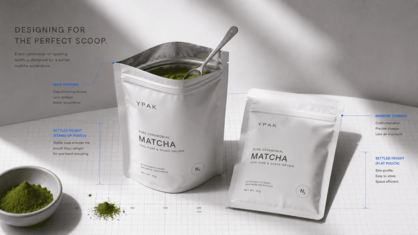
There must be a match between the net weight, filled volume, display method, opening routine and packing equipment. YPAK uses tea packaging in the form of stand-up pouches, flat-bottom bags and flat pouches, giving the choice of the package to the commercial activity, instead of restricting all matcha SKUs to one form.
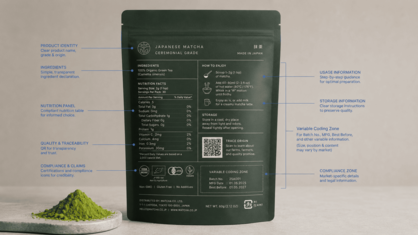
Stand-Up and Flat-Bottoms.
A stand up pouch will include a stable retail display and a broad aperture, which can be scooped and reused. A bag with a flat bottom has more than one printable panel, and a well-organized shelf display. As the matcha does not fit in a package as the whole tea leaves, either form will need to be filled with actual powder.
Portions and Samples Flat Pouches.
A flat pouch has the ability to minimize unused areas to samples, single servings and compact refills. It is carton-efficient but limited display depth, and it can be inconvenient to dig in and out. The dimensions must be approved before the opening width and distance between the fill level and seal area is checked.
H2: Dimensions Confirm Dimensions An actual Fill Test.
The nominal pouch sizes do not give information on the workability of the completed pack. Set up an unprinted sample in the required net weight, smooth out the powder and record the height of the final powder. Make sure that the pack is well placed, it fits into the shipping case and there is sufficient clean space to close it.
Oversizing results in extra headspace, and can make a minor quantity seem feeble on shelf. In the event that it is small, it increases the chances of having the powder into the zipper or seal. The correct size provides adequate working area yet does not include the superfluous air.
H2: Controlled Headspace and Oxygen on filling.
High-barrier material is incapable of compensating a high volume of trapped air. Indicate fill level, vibration or settling procedure and sealing order as a way of controlling the headspace. When nitrogen flushing is applied, check the flow of gases, pouch opening, fill speed and time prior to sealing on the actual line.
Determine residual oxygen in filled samples as opposed to using film data alone. Recheck when simulation of handling or distribution is done as a result of flexing and seal damage as the outcome may change. The process must be stable in such a way that it produces similar packs within a production run.
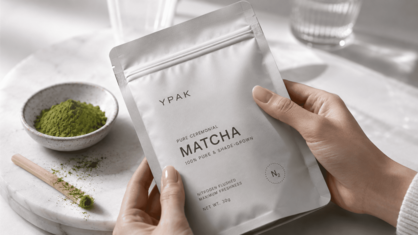
H2: Drop Matcha off the Seal and Zipper.
Powder in the sealing line may form holes, wear down the permanent top seal or cause a zipper to be hard to close. The filling needs to keep the product below the seal area and the dust in the air should be trapped. The co-packer should be discussed about pouch holders and nozzle filling and cleaning procedures.
Test The Closure Under Actual Use.
In the case of a resealable pack, the permanent heat seal is used to safeguard the unopened product and the zipper will assist it to be used after it is opened. Test one of these functions at a time. Unzip and rezip the zipper with the matcha inside of it, check the fit and ensure that the tear notches do not damage the reclosure. When a long-lasting seal is more suitable to consumption, single-use packs might not need to have a zipper.
H2: Make Art around a finished Pouch.
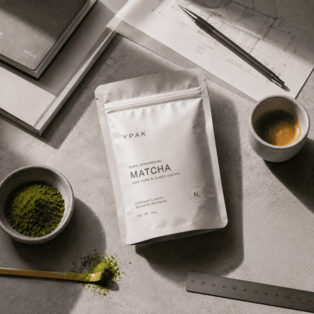
Digital printing may be employed with smaller launches or a variety of SKUs, but gravure might be suitable with larger and more dependable programs. It should be decided according to the number of orders, how often the artwork and color should be ordered and how the production should be planned. Soft-touch or metallic effects are to be tested on a physical evidence to see the contrast, scuff resistance and code readability.
H2: Pre-test Converted Samples in Bulk production.
Approval is not a completed specification of a planar film, or a computer mock-up. Requested converted samples were sample made in the chosen material, size and closure. Pack them with the appropriate product and machinery and expose the packs to the conditions that they will undergo in storage and shipping.
The approval review should cover:
- · Appearances, standing and case fit.
- · Seal strength, powder contamination and leakage.
- · Zipper cycles, tear opening and access by consumer.
- · Light and barrier barrier protection against shelf -life target.
- · Location of artwork, legibility of barcodes and dates.
- · Abrasion performance, compression performance and drop performance post packing.
Record the material structure, dimensions, tolerances, print revision/packing method that was accepted in one controlled specification. This is used as the benchmark to produce and make subsequent orders.
H2: Not Design, but Sanction the Process of Production.
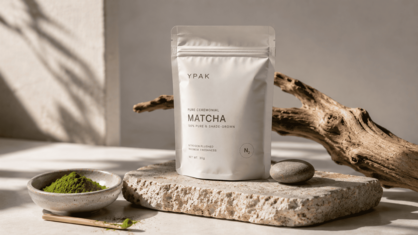
Maintain approved samples and test records with purchase specification. In cases where the recipe, fill weight, pouch material, closure, dimensions or filling equipment is altered, recheck the appropriate checks instead of making assumptions that the previously approved will be applicable.
H2: Conclusion
To package matcha powder reliably, defining the product and shelf-life target prior to determining which barrier, format and dimensions and closure to surround the filling process are required. Place a filled pouch on a filled converted pouch and seal it and sign it. The overall pack testing prior to large scale production provides the brand with a more reliable outcome as compared to selecting a pouch based on appearance or material assertions alone.
H2: FAQ
Which information do you require to pose a matcha pouch quotation?
Add the type of matcha, formulation, net weight, filled volume, shelf-life objective, market, storage conditions, pouch form, opening pattern, filling technique, order quantity and artwork condition.
Are matcha powder always supposed to be nitrogen flushed?
Not automatically. To help in the control of oxygen and its value, nitrogen flushing can be applied and its value should be compared with the product and residual-oxygen target, pouch barrier and actual filling process.
Is it possible to pack matcha in a transparent pouch?
The powder will be exposed to more light, as it is transferred into clear space. Should there be a need to obtain a commercial visibility, commercially test the size of the window and the construction of the barrier with the help of the shelf-life test. Light-sensitive matcha is more likely to be specified by a fully opaque pouch.
At which point is it approved to packaging artwork?
Accept artwork when last pouch size or gussets, seals, zipper and coding, are checked. Recheck on a complete physical specimen and then bulk print.
What is the reason to have a new packaging test?
Redo any pertinent tests when there is a change in the powder formulation, fill weight, material structure, dimensions, closure, filling equipment, destination market or shelf-life requirement.
Post time: Aug-20-2026


