


Custom printed mylar bags are a series of connected choices. The pouch structure is determined by the product. Print route is affected by an order plan. The dieline is the controller of the artwork and the sample is supposed to respond to the risks that are of interest before production. A request of a price, accompanied by a logo, leaves too many variables to be answered.
Approval gates are used in a sound project. Every gate validates a particular data prior to time and money proceeding to the next level. The following process will assist a buyer to create a clearer request, and minimize late artwork, material or filling changes.
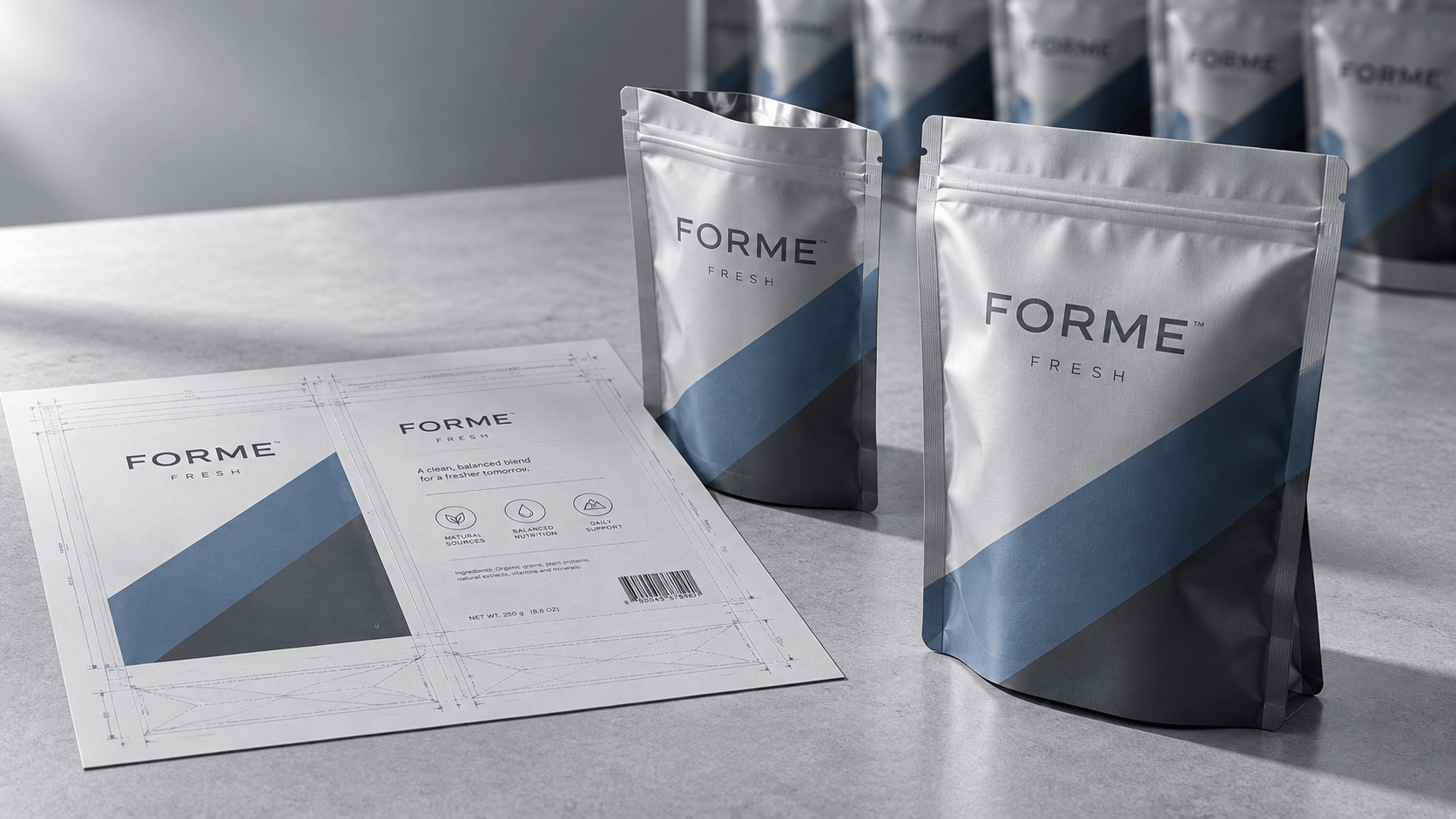
Stage 1: Repackage the Package and then Get a Quote.
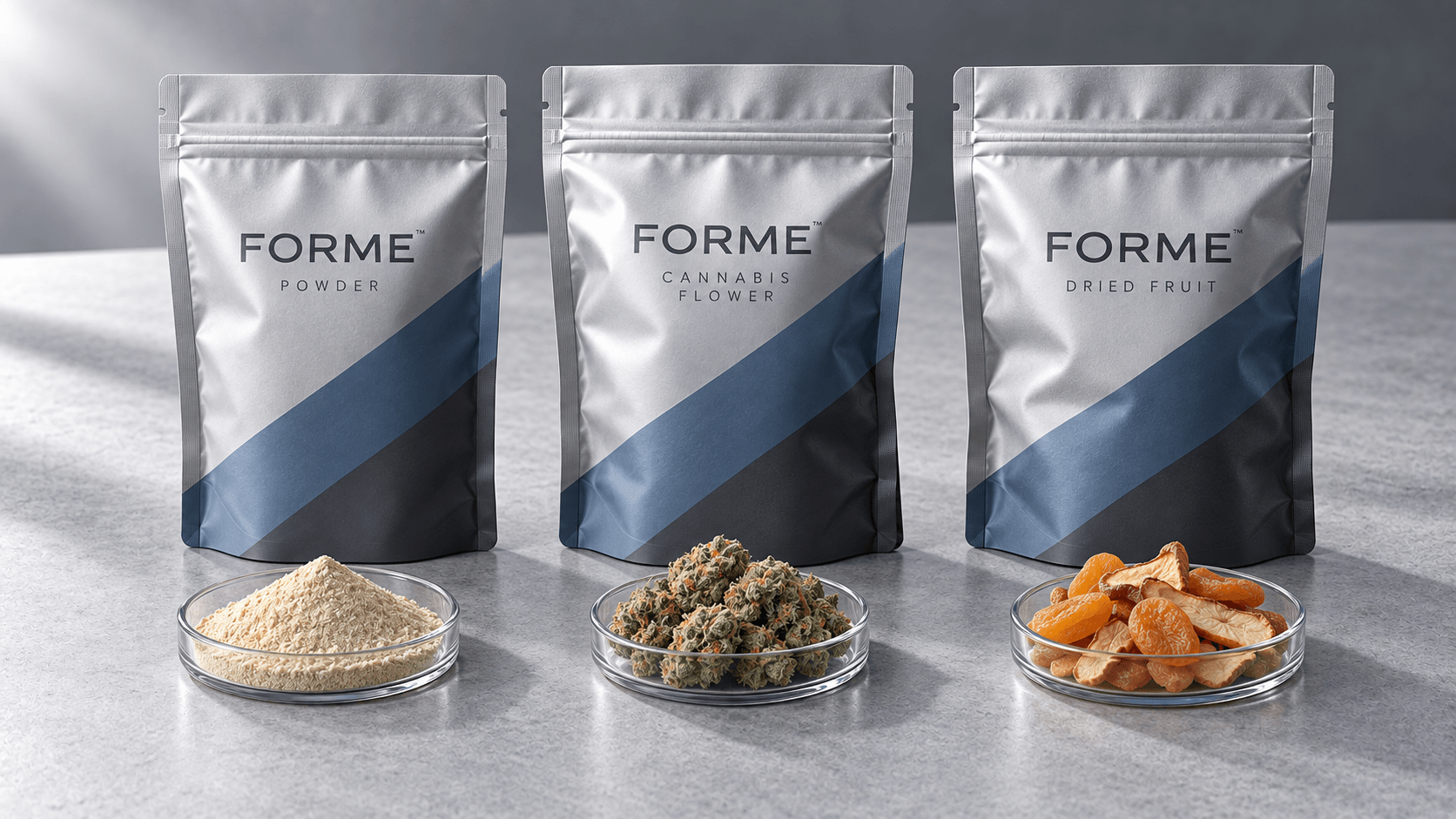
Begin with product, not bag picture. Indicate the contents as being dry, oily, aromatic, sharp, moisture sensitive or light sensitive. Supply target fill weight and more significantly measured product volume. Identify the sales market, anticipated shelf life, method and use cycle filling.
Then specify the desired format: flat pouch, stand-up pouch, flat-bottom bag or some other construction. List zipper, child-resistant, tamper-evident, valve, window, hang hole and tear-notch requisites. Do not think that every feature fits in with every material or regulation.
Order quantity is important, but MOQ and lead time are assured in the precise structure, print route and supplier schedule. Never publish a general number that is not known by the specification.
Stage 2: Select the Printing Path.
Smaller-runs like a few SKUs or projects requiring fewer traditional plate set-ups can be done with digital printing. Gravure can be applicable to high volume, repeat production, where the set up of the procedure is warranted. Relevant structures and supply chains may also be taken into consideration by flexographic printing. The optimal path is based on quantity, colors, material, finish, artwork and repeat-order plan.
Compare the costs of routes based on the full project cost and not the unit price. Add setup, plates or cylinders as needed, sampling, SKU modifications, inventory risk and future amendments. The low unit price will become worthless when the brand will have to possess non-modernized packaging following any regulatory or recipe change.
|
Project Characteristic |
Supplier Question. |
|
SKU count |
What happens to multiple designs in the print route? |
|
Order volume |
What are the set up and repeat economics? |
|
Color requirement |
What will be the procedure of brand color specification and approval? |
|
Finish |
Does the effect work with the process and film selected? |
|
Revision frequency |
What is needed to change set up or tooling? |
Stage 3: Build the Production Dieline.
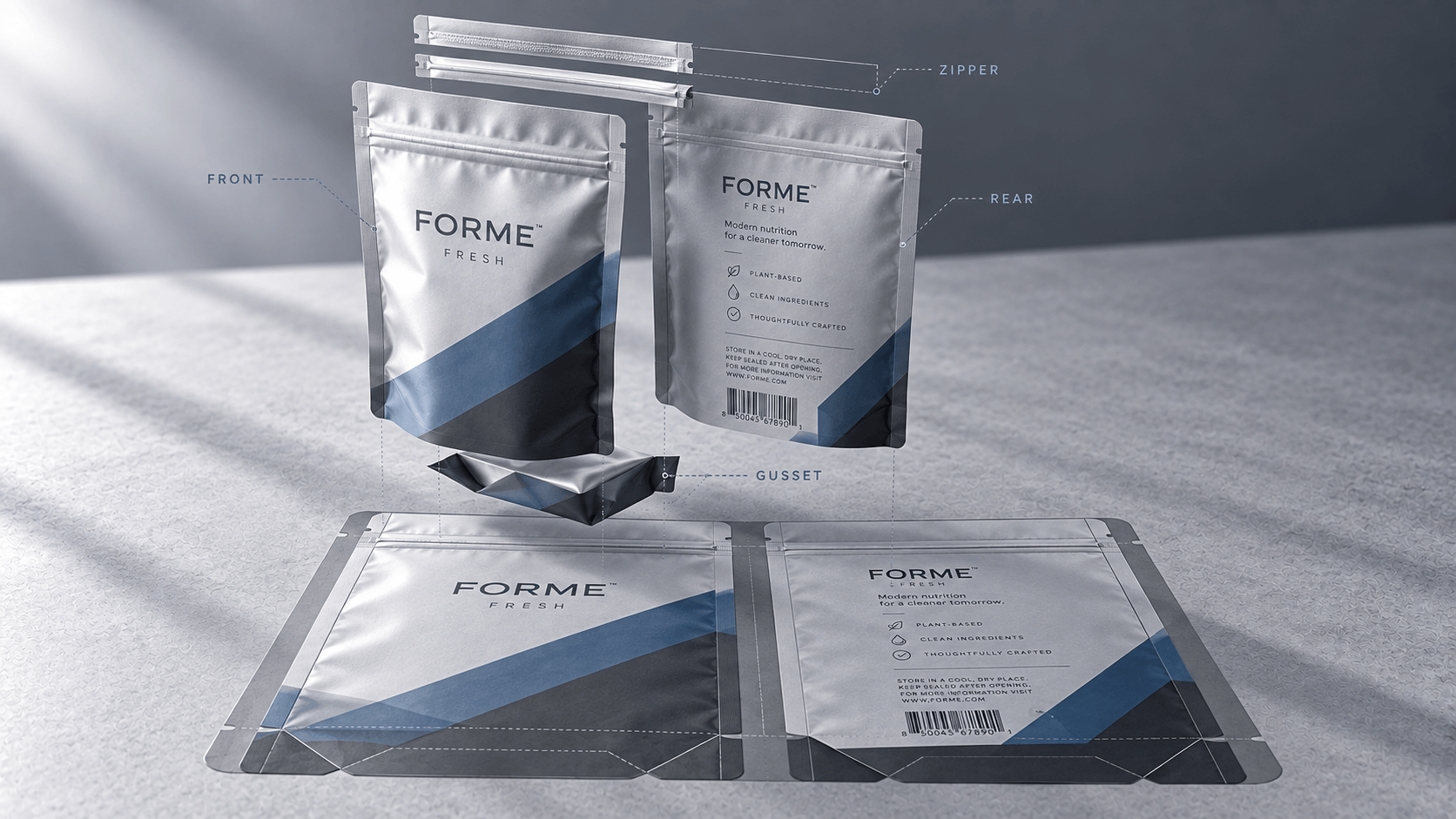
The supplier will be required to develop or verify the dieline of the chosen pouch. It must portray trim, bleed, seals, zipper, notch, gussets, folds, coding area and safe zones. The finalization of artwork cannot be on an estimated rectangle.
Check dimensions of suppliers required order and units. Test the fill you intend to use since the identical square size will act differently when using thick powder, full flower or irregular snacks. Capacity and opening access can be the quickest to be sure of with a physical size sample.
Lock the dieline revise, prior to graphic production. In case of the zipper action or heightened bag, the artwork needs to be reshaped and revisited.
Stage 4: Choose Finishes, White Ink and color.
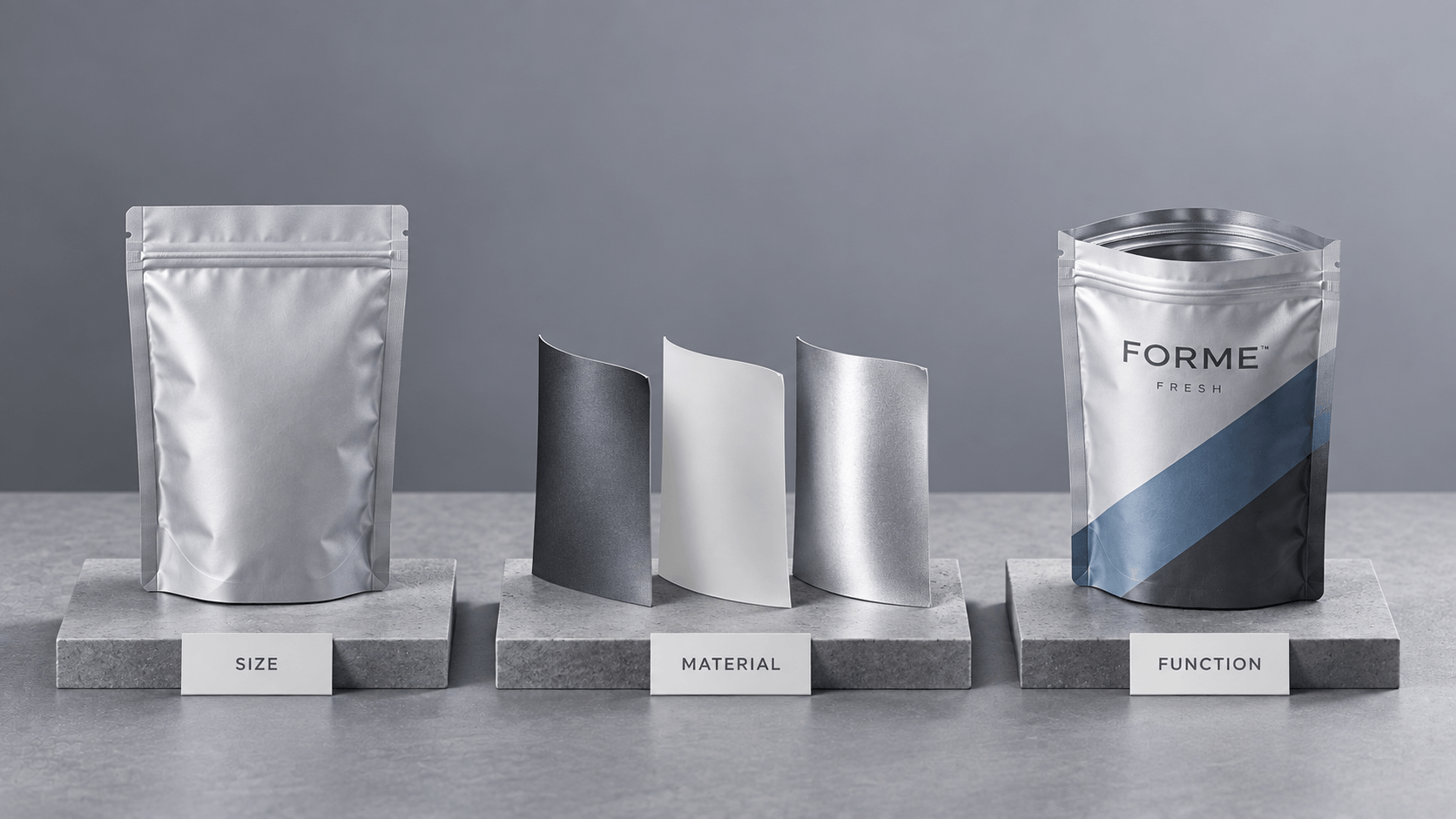
Indicate the nature of colors as process or a measured physical standard. Appearance is dependent on the substrate. Transparent and metallic films tend to require a white-ink strategy that is deliberately introduced. Kraft-like surfaces have the ability to dull colours. Gloss finishes and matte finishes vary the visual depth and glare.
Inquire about what finish limits require individual artwork layers. Store regulatory text, variable codes and scannable symbols on surfaces that have been found to be legible. In case a premium effect is essential, then determine which component needs to be brought to the fore rather than to apply all the finishes.
Stage 5: Determine What the Sample should prove.
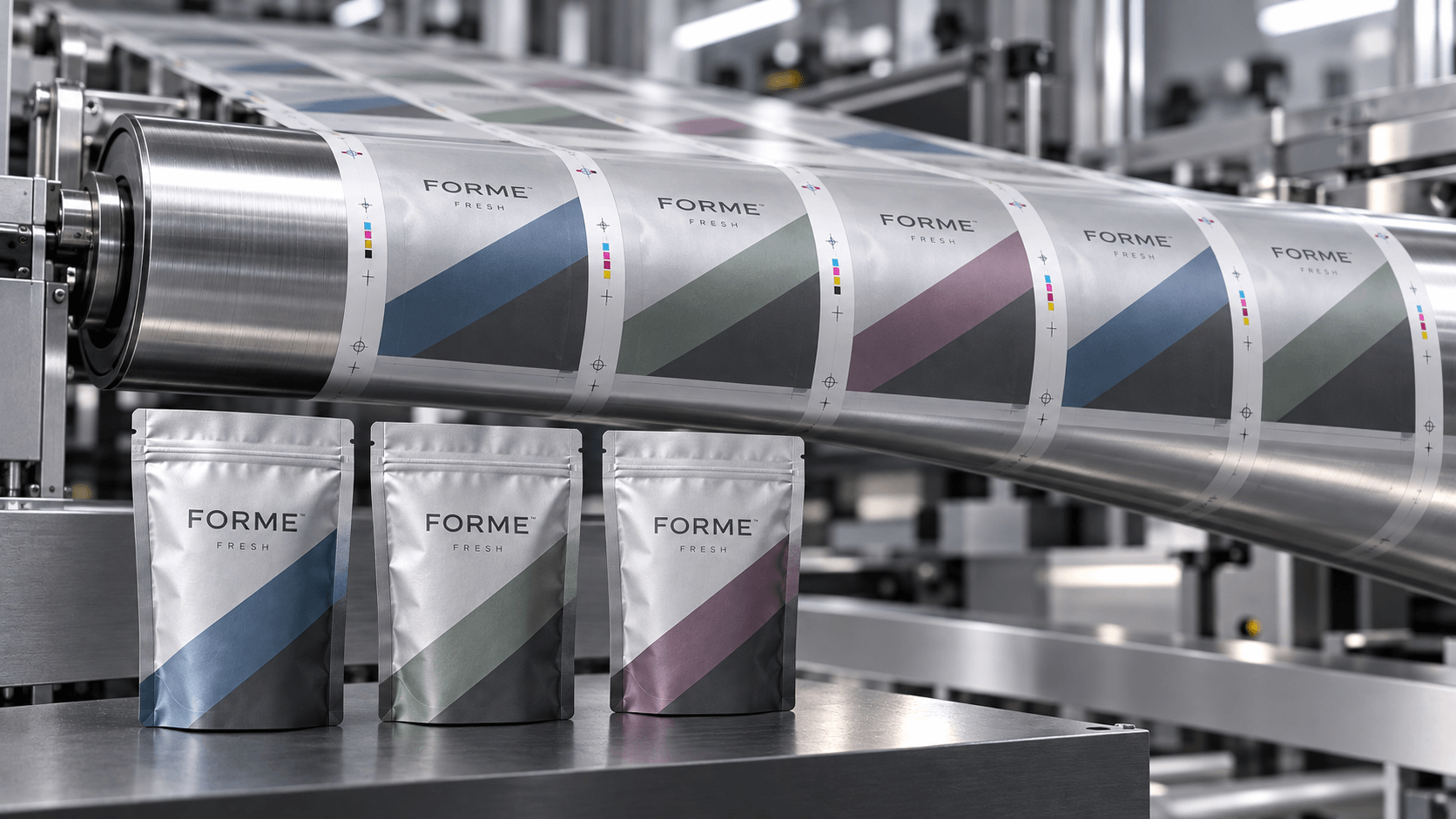
Various samples respond to various questions:
• Capacity of a size sample, shelf shape and opening.
• Feel, opacity and overall appearance are displayed on a material swatch.
• An approximate visual output and a printed prototype layout.
• Zipper, seals and filling behavior are tested with a functional sample.
• A proof of production process is an evidence that is nearer to mass output.
Write down the sample objective then order it. A stock pouch which has not been printed cannot authorize a brand color and a visual mock-up cannot demonstrate barrier or child-resistant activity.
Stage 6: Accept Artwork without Omission of technical details.
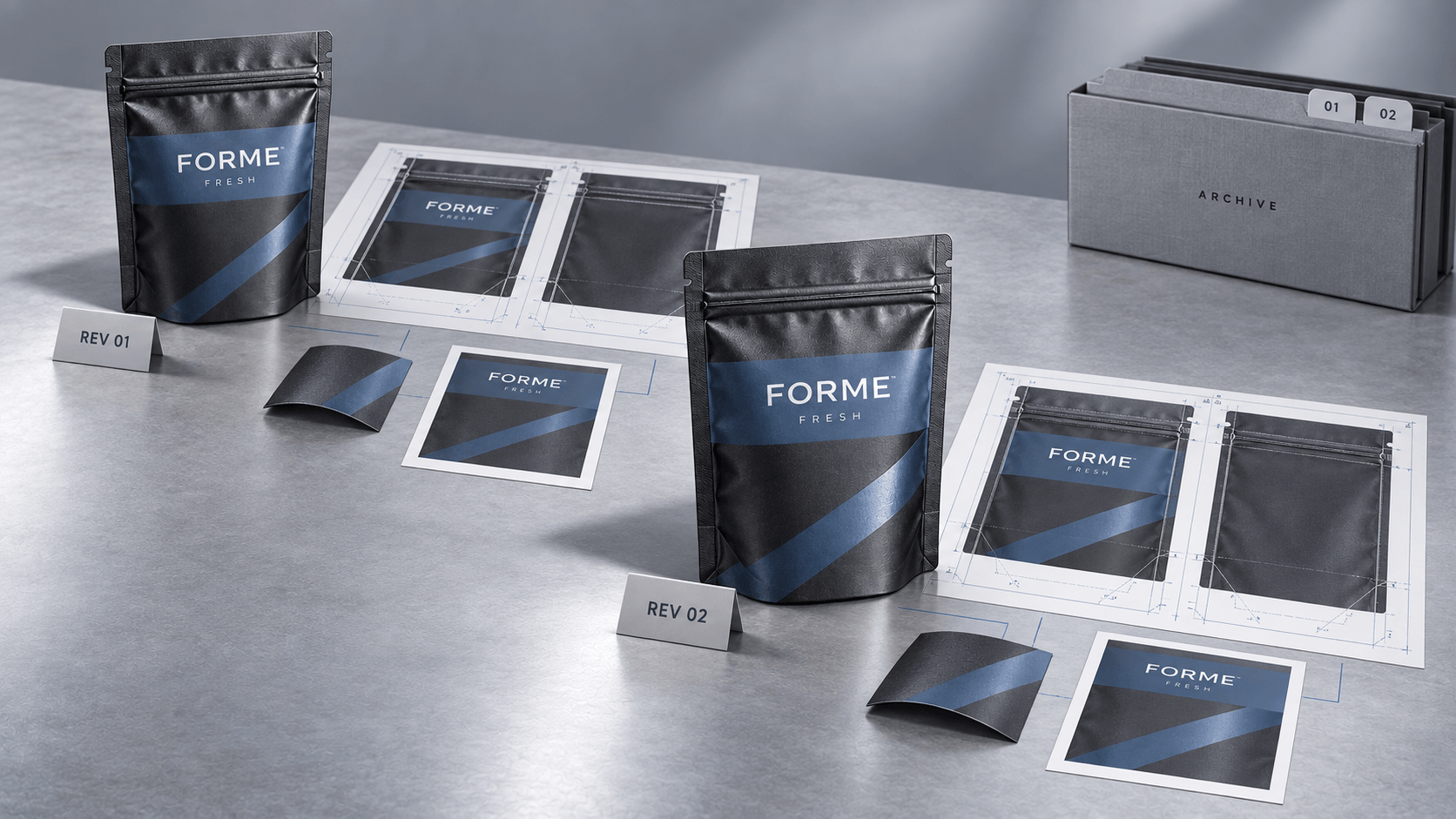
Check a controlled copy deck to confirm products, ingredients, warnings, contact information and variable data. Consider spelling apart, not design. Then preflight link, font, image resolution, color mode, overprint, white ink and finishing layers.
Print the evidence on 100 percent. Read small writing and codes without enlargement. Fold around a pouch sample to observe information entering seals or gussets. Approved author must sign a revision with a unique number instead of an email attachment named final final.
Stage 7: Bigger than Proof to Mass Production.
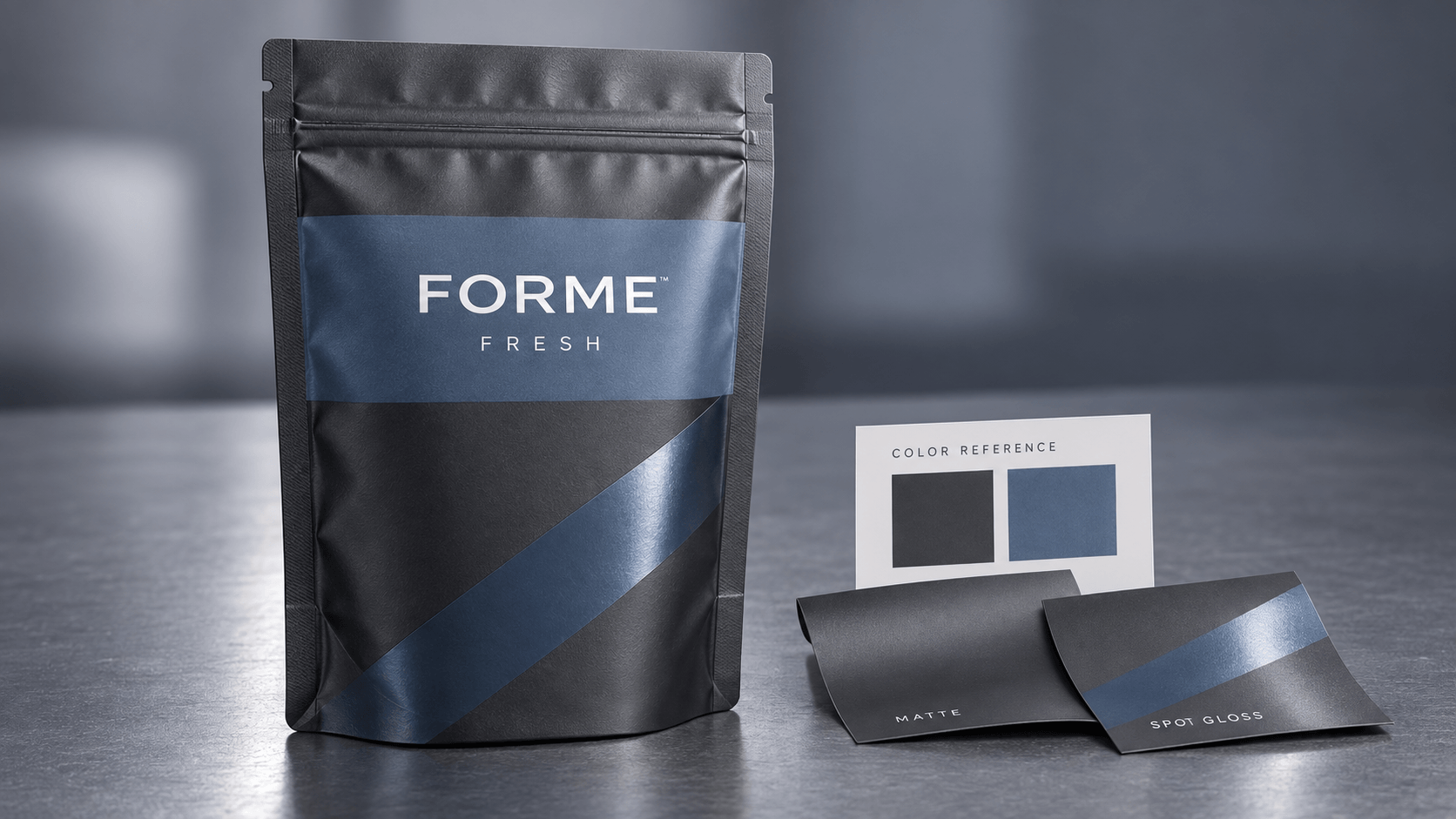
One release record: Before production, verify the accepted material, size, print file, zipper, finish, quantity and how to pack. Explain the acceptable color reference and how the initial output of production will be verified.
The supplier then prints, laminates where necessary, cures in line with the process, cuts and shapes the pouches. Every stage is able to affect the outcome. Registration influences fine graphics, lamination influences appearance and seal position is influenced by forming. The quality control must be based on the agreed specification and not only by comparing with a screen image.
Stage 8: Check the Completed Bags.
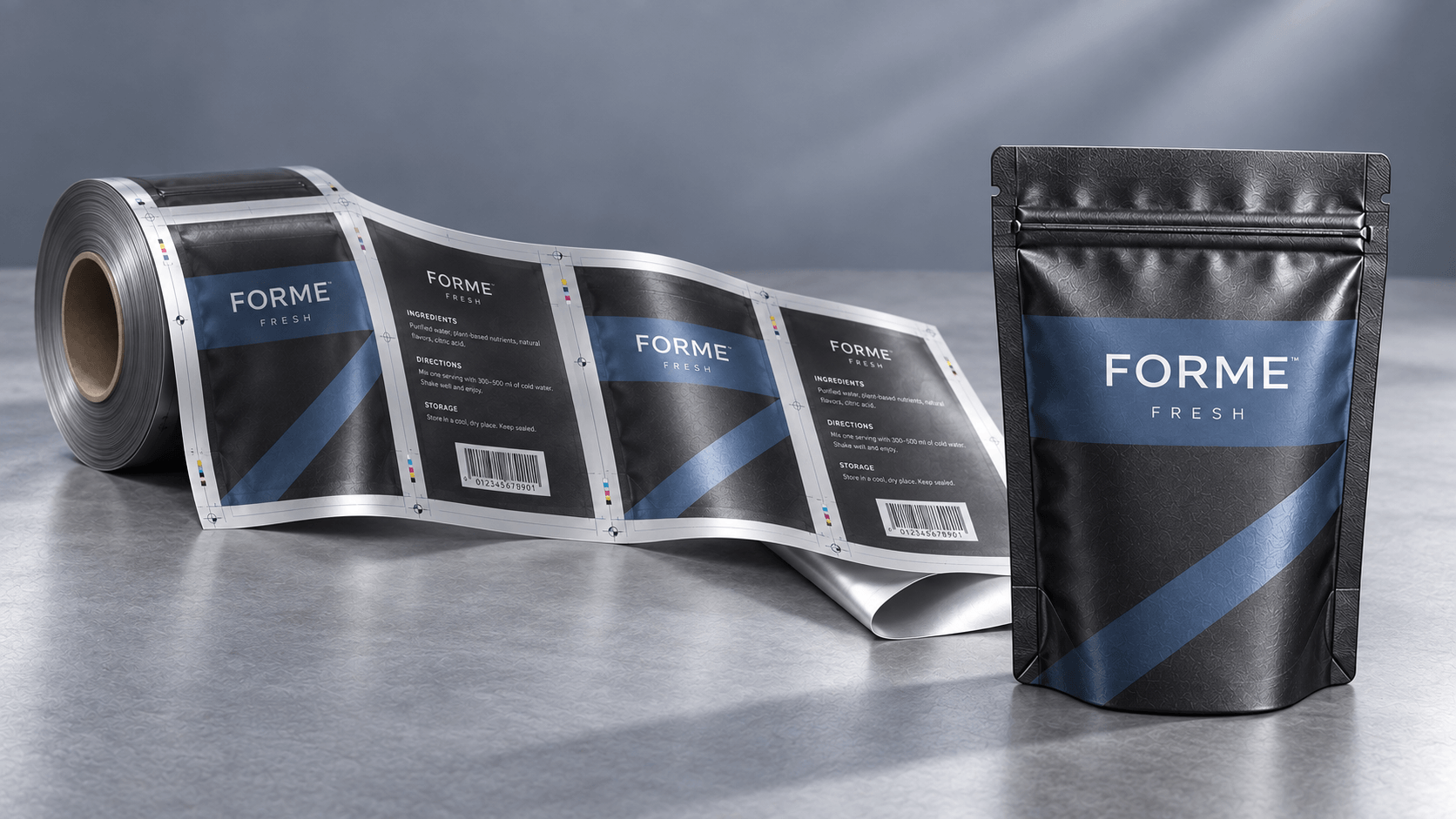
Apply sampling plan to the order and risk. Check size, print location, color, registration, surface flaws, smell, pitting of zippers, seal appearance and number. Test barcode/QR-code scanning of formed bags. Stuff representative pouches and complete the process of closing as in production.
Performance verification is not to be confused with visual inspection. Child-resistant or any other technical claims like barrier or food-contact must have pertinent documentation and testing to the given package.
Get ready to do Reorders and Artwork Revisions.
Store the discharged artwork, dieline, material definition, approved sample and production order number. Prior to a reorder, note the formula, regulations, claims, contact information, barcode or target market has changed. Repeat orders are yet to be reviewed.
In case of multiple SKUs with a single template, use a component matrix. It must indicate what piece of material, size, zipper and artwork revision is on which piece. This will not allow an up-to-date design to be combined with an outdated structure.
File Submission Checklist of Buyer.
• Brief on product and target-market.
• Weight filled and volume of product measured.
• Pouch format and functions desired.
• Approved copy in a copy deck that can be edited.
• Linked high-resolution images and vector logo.
• Specified brand colors and finish references.
• Destination checks of barcodes or QR-codes.
• Warnings and symbols approved by jurisdiction.
• SKU list and quantities to order.
• Approver and revision process of named artwork.
Frequently Asked Questions
What is the best printing technique that can be used to print custom mylar bags?
It is based on volume, SKU, artwork, material, finish and reorder plan. Request the supplier to give alternative options in comparison to the entire project.
Does it have a digital mock-up to approve production?
It is able to sanction layout direction but not all materials, color or optical effects. Use the sample level which corresponds to the actual risk of the project.
Is it possible to reuse one dieline on multiple products?
Yes, when the fill, structure, closure and information requirements are appropriate. All SKUs require individual content and end-artwork.
Change to Repeatable Production.
Send the product specifications, volume, target quantity, format, approved copy and preferred finish to YPAK. We are able to assist in the definition of the pouch, prepare the dieline and coordinate the sampling prior to mass production.
CTA: Submit Your Custom Printed Bag Brief
Related page: Browse YPAK Packaging Products
Post time: Oct-17-2026


