


Food should determine the specification of edible Mylar bags, not the name of the category. A piece of chew, coated with sugar, a piece of hard candy, and a chocolate-coated piece can be located on the same retail shelf, but will have different demands to the food-contact layer, moisture, grease resistance, seal cleanliness and temperature exposure.
To the purchaser of packaging the pragmatic task is to transform these product behaviors into a single repeatable pouch specification. That specification must withstand filling, sealing, coding, cartoning, distribution and repeated use by the consumer, and there must be enough printable space to carry product and market information.
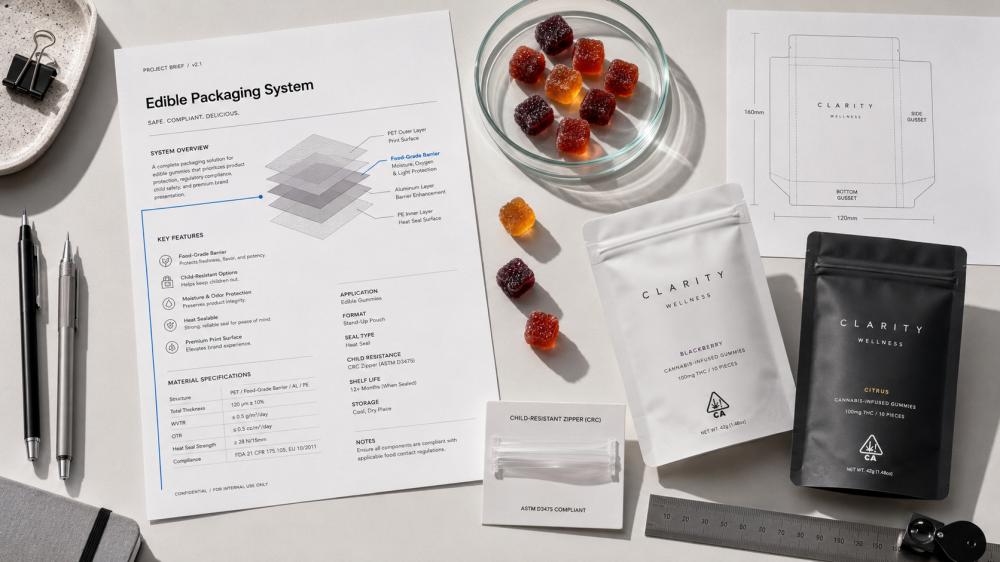
Sort the Foodstuffs First, and Then Pick the Bag.
The initial supplier brief must be a description of the real food. The term edible is too broad to ascertain a laminate, closure or dimension. Take note of the behavior related to recipes that can impact the pouch prior to comparison of quotations.
Create a Product Behavior Matrix.
| Edible type | Main packaging exposure | Specification focus |
| Firm or sanded gummy. | Moisture exchange and loose sugar. | Seal integrity and reseal. |
| Oil-coated chew | Migration of surface oil and product. | Food-contact sealant and resistance to greases. |
| Hard candy or mint | Sharp edges and loss of aroma. | Puncture resistance and barrier. |
| Chocolate-coated piece | Heat, scuffing and fat migration. | Temperature route and interior surface. |
| Snack cake or biscuit. | Crumbs, breakage and headspace | Handling protection and opening size. |
This matrix does not pick the final material alone. It determines the risks that need to be evidenced in the process of sampling and excludes the possibility of a single successful pouch being replicated in products with different behaviors.
Determine the Laminate Food-Contact Side.
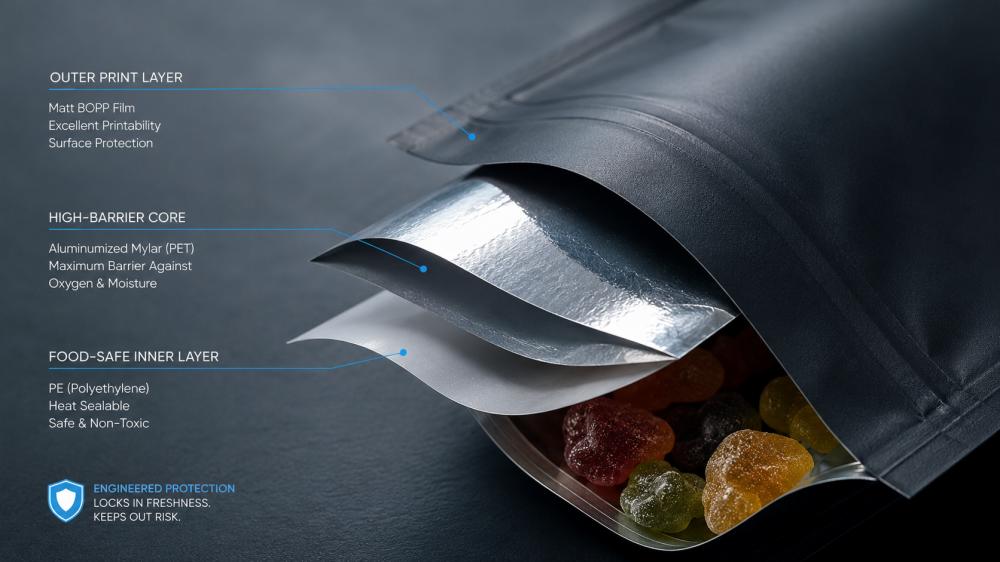
The interior layer is in contact with the edible, creates the heat seal and should be appropriate to the desired product and packaging environment. Customers cannot allow a construction to be approved based on how it looks on the outside or the name Mylar. Request the entire proposed laminate as well as the sealant, adhesives, inks, zipper and any foil or metallized barrier layer.
How to match the Sealant to Product and Process.
Check with the supplier on the desired food, filling temperature, contact time, storage conditions and destination market. A compatible inner layer is required to seal within the operating window of the packing line. The completed structure and its documentation must be aligned to the precise order as opposed to a sample.
Control the Moisture without Guessing the film Thickness.
Moisture may be gained or lost by edibles during storage. Gummies can get sticky or tough, sugary coatings can dissolve, and crisp products can get soft. The appearance of a thick film does not necessarily offer the necessary moisture protection. Relate product sensitivity, desired shelf life, climate and pouch surface area to pertinent barrier information.
Test Texture when in the Intended Climate.
Store filled samples under conditions that represent the destination and distribution period. Test the texture, clumping, coating status, odor and appearance of the pack at regular intervals. The outcome is more practical than comparing material names without the actual edible inside.
Keep Oil, Sugar and Crumbs Away from the Seal.
A lot of pouch failures occur during filling as opposed to storage. Oil, sugar, crumbs or bits of the product may be left on the heat-seal field or zipper track. An excellent laminate cannot make up a seal that is contaminated. Establish an upper limit of fill height and a space above the product.
Design the Opening for Clean Filling.
The filler, scoop or manual loading process should be able to fit into the clear opening. Check product drop, static, seal-jaw clearance and cleaning routine. In case the product is filled by a co-packer, it needs to examine converted samples prior to the freezing of dimensions and zipper location.
Select Format from Portion and Access Pattern
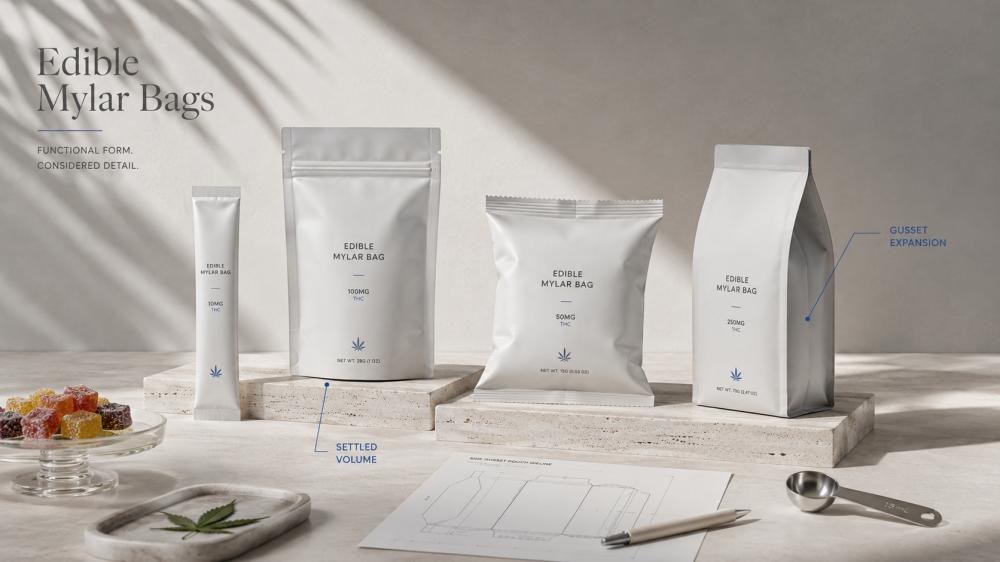
YPAK offers flat, stand-up and gusseted versions of candy and edible uses. The most appropriate format varies according to the geometry of the piece, filled volume, store presentation and the number of times the consumer opens the pack.
Use Flat Pouches for Compact Portions.
Single portions, sample packs, mints, small counts of candy and compact chocolate can be packaged in flat pouches. The small-sized panel renders information hierarchy significant. Before artwork starts, heat-seal allowance, tear notches and zipper space should be saved.
Larger Fills: Use Stand-Up or Gusseted Pouches.
Stand-up pouch offers a bigger display area and can accommodate multi-serving products. Gusseted formats have the ability to support either more or less regular volume. Verify size with actual fill due to the effect of bulk density, settling and headspace on capacity compared with net weight alone.
Distinguish Between Initial Sealing and Reclosure.
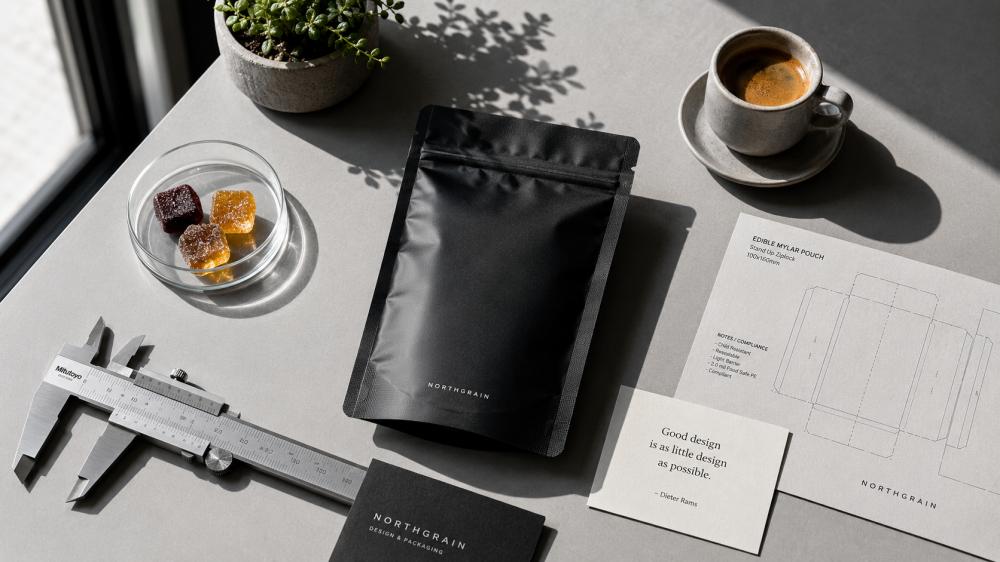
The top heat seal offers the initial permanent closure. The package has a zipper that can be resealed once it has been opened, but the zipper does not replace the heat seal. The test of reclosure performance must be conducted in the presence of the edible since the presence of sugar, crumbs and oil can affect the zipper track.
Specify Controlled Access Only Where Necessary.
An ordinary zipper and a child-resistant closure are different systems. The needs are based on the product and destination. When controlled access is needed buyers must verify relevant rules and demand documents to the specific pouch-and-closure system. Adult usability ought to be verified during the same approval.
Plan for Temperature and Distribution.
Heat may make gummies soft, cause chocolate coatings to deform or promote the movement of oils. Flexibility and sealing behavior are susceptible to cold. The distribution route cannot be addressed by the pouch specification but it must be considered in relation to the temperatures and handling conditions anticipated of the final product.
Accept the Filled Pack, Not an Empty Mockup.
Settling, scuffing and grease stains, puncture, seal contamination and panel distortion appear in filled samples. Include compression, drop and carton-fit checks appropriate to the route. An empty pouch that is visually clean does not mean that the product that is packed will come in the same state.
Reserve Space for Food and Market Information.
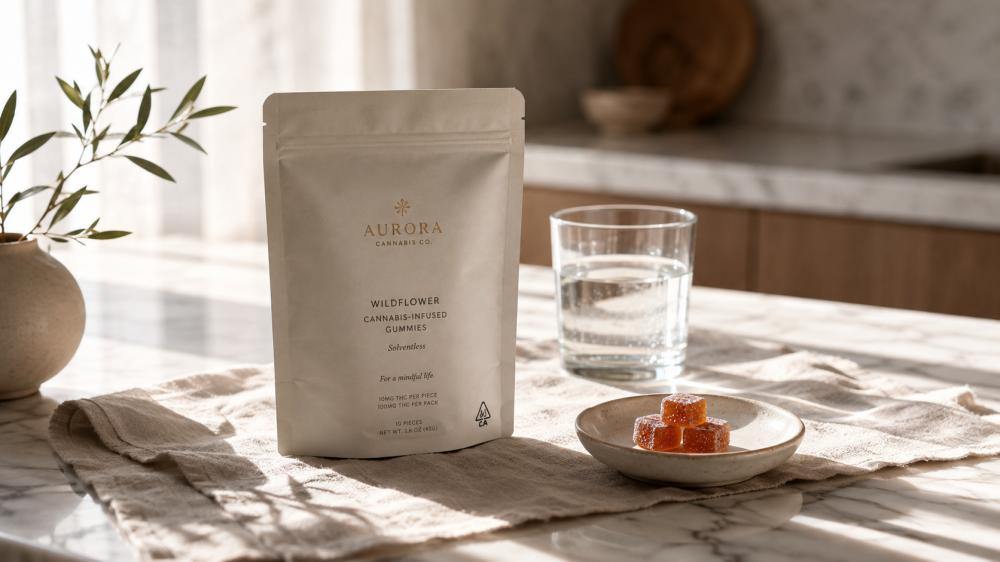
Artwork should be capable of fitting the brand and all the information needed by the destination. This can be product identity, product ingredients, allergen information, product serving or dosage information, product warnings, opening instructions, batch and date coding depending on product and market.
Check Variable Codes on Completed Pouches.
Keep barcodes, QR codes and date-code areas out of folds, gusset corners and areas with high reflectance. Scan codes on filled pouches, as opposed to flat artwork proofs. The opening path and tear notch should not eliminate data that are still required following opening.
Match Printing to the Product Range.
YPAK lists digital and gravure printing, as well as customizable finishes. Digital printing can support smaller quantities, numerous flavors or artwork that is apt to vary. Gravure can be used for higher-volume programs that are stable. Compare printing path based on total SKU quantities, revision risk, color expectations and repeat-order plans.
Control Shared and Variable Artwork.
A brand architecture may be shared throughout a product family, with variations in flavor, number or portion information. Create common information zones and controlled variable zones. This minimizes the errors in artwork without pushing all of the flavors into an inappropriate design system.
Develop a Production-Ready RFQ.
A comparable quotation requires each supplier to receive the same commercial and technical brief. Be sufficiently detailed to be able to differentiate between a real structure difference and a price difference.
● Edible type, surface condition, number of pieces or net weight and filled volume.
● Shelf-life goal, storage conditions and moisture knowledge, grease or heat sensitivity.
● Format, size, closure and food-contact requirements.
● Destination market, sales channel and information requirements.
● Packing procedure, SKU-based order quantity, artwork condition and delivery deadline.
● Sampling route, filled-pack tests and approval responsibilities.
Ask to have the proposed laminate, dimensional tolerances, printing route and sample stages provided in writing. Only when these conditions of approval are aligned, should there be comparison of quotes.
Conclusion
Edible Mylar bags are most suitable when the food determines the specification. Product surface and texture define the inner layer and seal risk; moisture and temperature define barrier and distribution checks; portion and access define the pouch format; and market information defines the artwork area. YPAK allows customization of materials, sizes, bag types, zippers, finishes and printing, while the buyer supplies a single controlled product and production brief prior to bulk approval.
FAQ
Can the Same Edible Mylar Bags Be Used for Gummies and Chocolate?
Not automatically. Gummies and chocolate may vary in moisture characteristics, surface oil, temperature sensitivity, piece geometry and filling technique. Test all products in the proposed pouch.
Can a Resealable Zipper Replace the Top Heat Seal?
No. The top heat seal ensures the initial closure, and the zipper usually supports reclosure after opening.
Should Edible Mylar Bags be Child-Resistant?
This is based on the product and destination market. Make sure to confirm that the applicable rules have been utilized and certify the precise closure arrangement and documentation where necessary.
What Must Be Approved Prior to Mass Production?
Approve the laminate, food-contact layer, dimensions, filled volume, seals, zipper, opening behaviour, print, codes, artwork orientation, packing-line behaviour and carton fit.
Post time: Aug-31-2026


