


Matcha Stick Packs: Size, Film and Filling Recommendations
Matcha Stick Packs: Size, Film and Filling Recommendations
Matcha stick packs have a lengthy and thin shape to hold a fixed amount of powder. It is possible to fit the shape with sample kits, but can also establish a more restrictive range around the dosing nozzle, around the seal, and the width of the openings. The same stick that may seem effective on the paper might be hard to fill or empty easily.
In this guide, the geometrical and line arrangement will be fixed on what makes a narrow matcha packaging look unlike a wider sachet. It addresses dose volume, lane pattern, rollstock interaction, vertical seals, slice, tearing and secondary packout. Before the drawing is considered approved, buyers ought to ensure the supplier and packer they intend to do business with is capable of supplying the exact form.
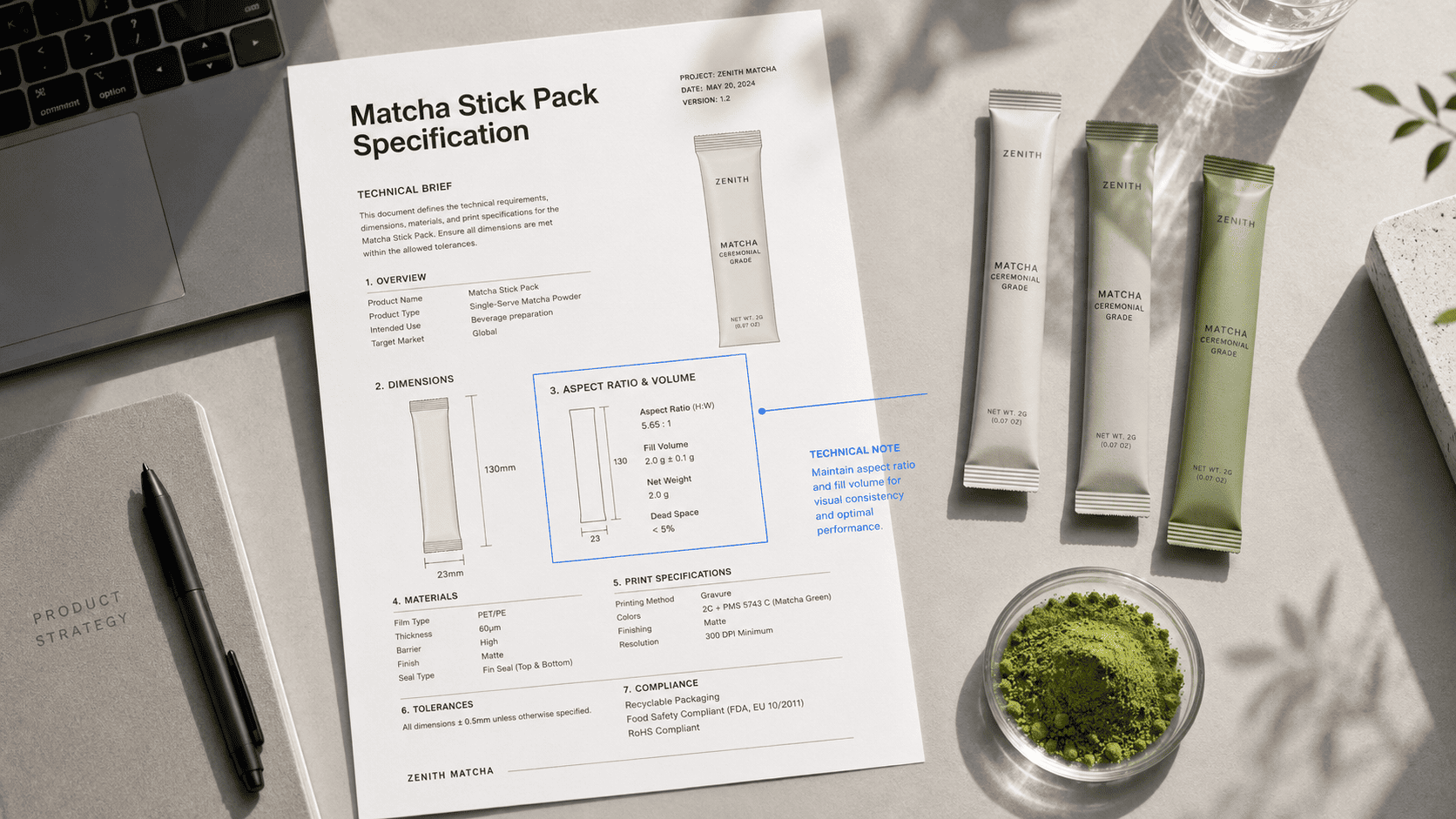
Assure a Stick format Suits the Dose.
The first choice is that of the actual matcha proportion being able to pass through a small hole without dragging down the filler or polluting the seals. Dense matcha can be required to flow in a separate fashion than latte blends. A broader sachet could be safer when dose is bulk or formula bridges easily.
Screen the Product Before Designing the Stick
- Weight and maximum possible powder volume.
- Minimum and maximum bulk density between product lots.
- Flow, bridging, and static behavior, as well as dust behavior of the filling room.
- Minimum opening needed to cleanly discharge by the consumer.
Pre‑Select the Stick Width and then Select the Stick Length.
Width governs the access area of the nozzle, the flow of the products and space assigned to longitudinal seals. Length will then add the fill space, top and bottom seals, tear area and print zone. It is not possible to just change the length of a stick that is too narrow to fit the powder or filling equipment.
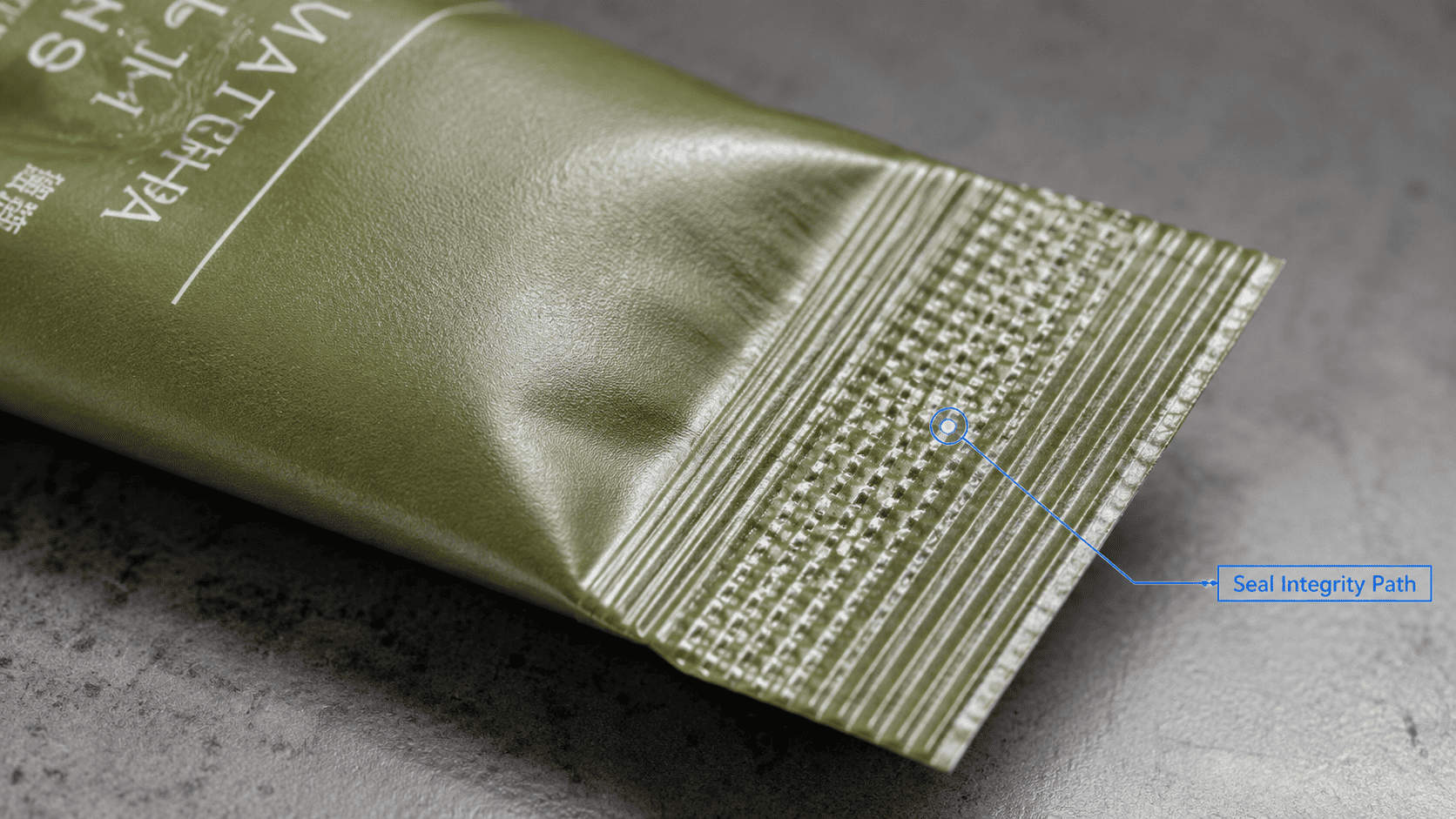
Construct the Dimensional Stack.
- Final exterior and practical width in between seals.
- Longitudinal‑seal allowance and overlap at appropriate points.
- Airspace above the maximum filling level.
- Depth of top and bottom seal and grip area to tear open.
Compare Decisions in Common Stick‑Packs.
The checks outlined below assist teams in making decisions regarding the viability of a narrow format. When there is a failed condition, it does not necessarily mean that there is a requirement of a different film; it may mean that the width, nozzle, line configuration or even the selected use case must vary.
Decision Table
| Decision | Useful when | Main validation question |
|---|---|---|
| Narrower stick | Free flow of powder and a reduction in material use. | Is it possible to fill the nozzle without seals that are contaminated? |
| Longer stick | It requires more internal volume but not width. | Will the portion still discharge completely? |
| More lanes | An increase in output is necessitated on compatible equipment. | Will dose and registration remain constant across the lanes? |
| Deeper end seal | There is need of more sealing area or grip space. | Does it decrease the amount of usable volume or disrupt the tearing process? |
Design Around the Dosing Nozzle
The nozzle has to contact or go into the forming tube without scraping the film or propelling powder to a seal. Even minimal variability of nozzle diameter and usable stick width could augment stoppages. Test the minimum opening condition, not just based on nominal dimensions.
Check Nozzle‑to‑Pack Clearance
- Nozzle outside diameter and actual centered position.
- Distance from nozzle to product bed.
- Clearance during film movement and jaw closing.
- Powder pattern at normal line speed and startup.
Schedule Lanes and Width of Web.
Multi‑lane production is usually a consideration in the design of stick packs, where a series of narrow packs are cut over a single web. Lane count influences the total web width, registration, slitting and output. Increased bandwidth can be done with more lanes, and more lanes also mean more locations where tension, dosing and seal alignment issues have to be held constant.
Check Each Lane, not just the center.
- Lane and run stage dose variation.
- Seal position on the left, center and right side of the web.
- Registration and cut accuracy in entire width.
- Identification of lanes to investigate defects and sample.
Choose Film for Folding and Tracking Stability
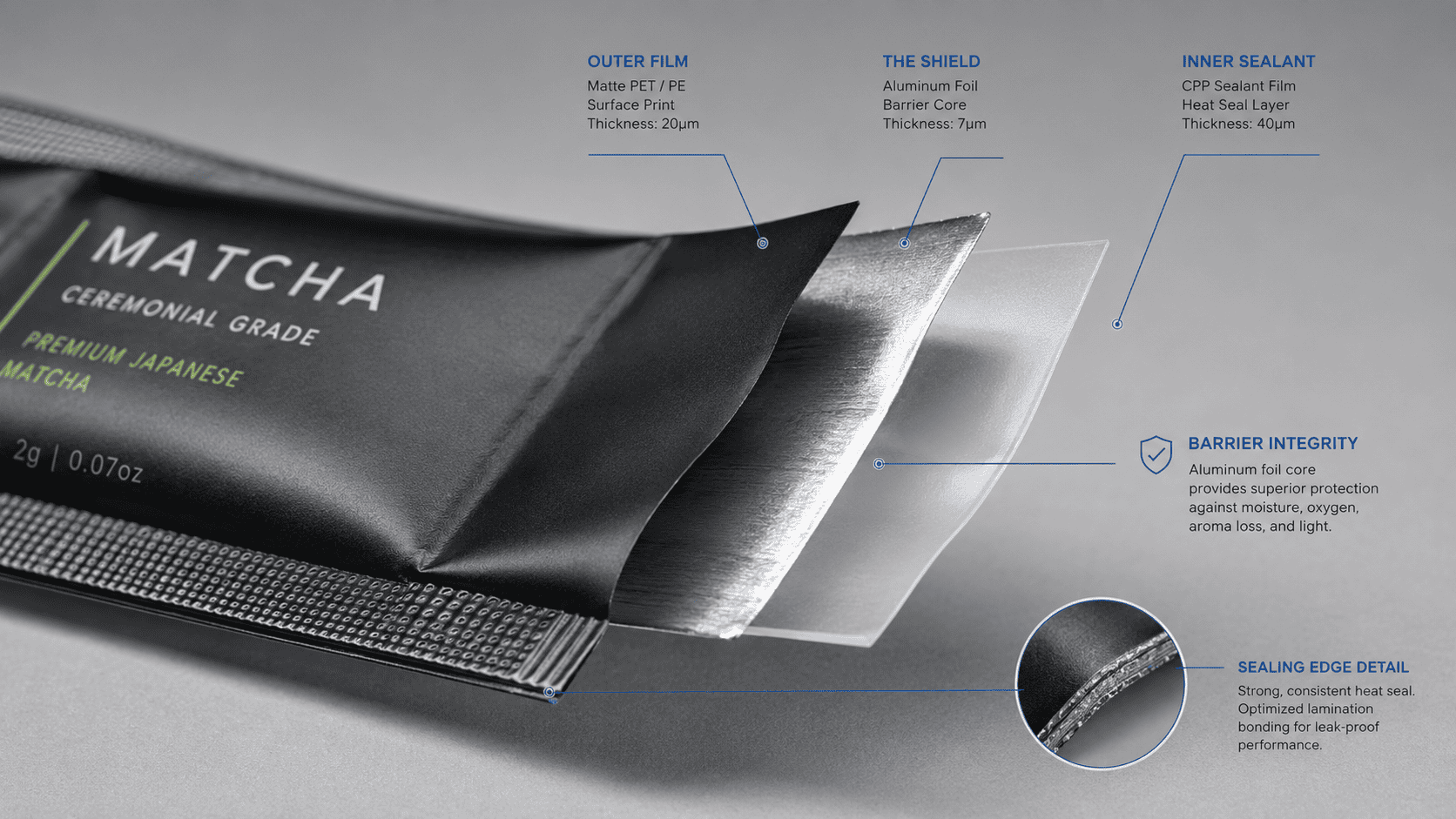
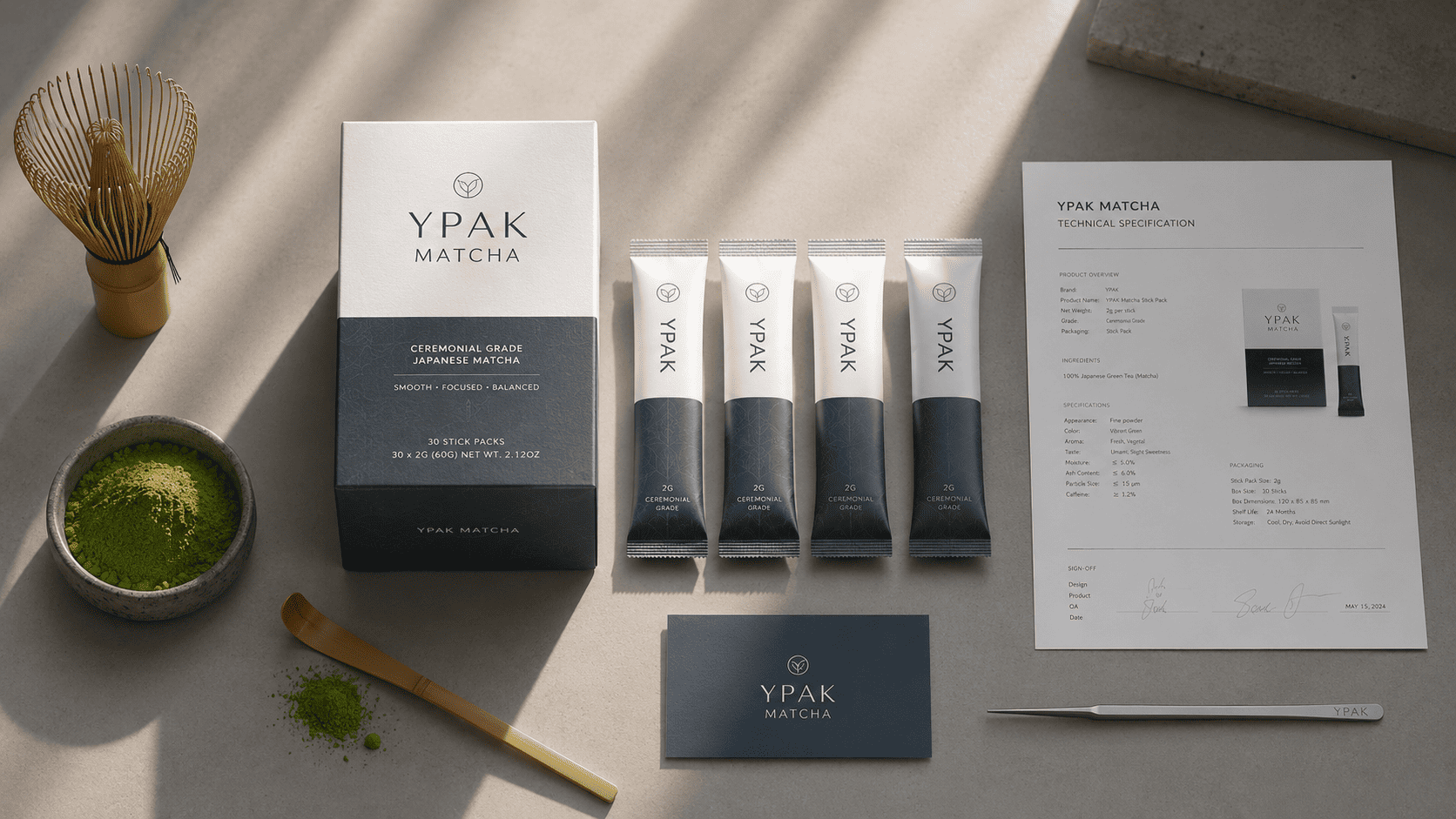
An appropriate laminate is necessary to cover matcha and be stable with a narrow web created and sealed. If the curl is excessive, variable slip or variation of thickness may cause movement of the web off of the registration target. The film stiffness should also not be hard to handle and make the finished stick hard to tear.
Indicate the Rollstock Data.
- Layers structure, overall thickness and tolerance.
- External and internal friction values as and when necessary.
- Direction of roll, core, winding tension and splice marking.
- Print repeat and positioning‑mark print registration.
Safeguard Matcha with the Full Barrier System.
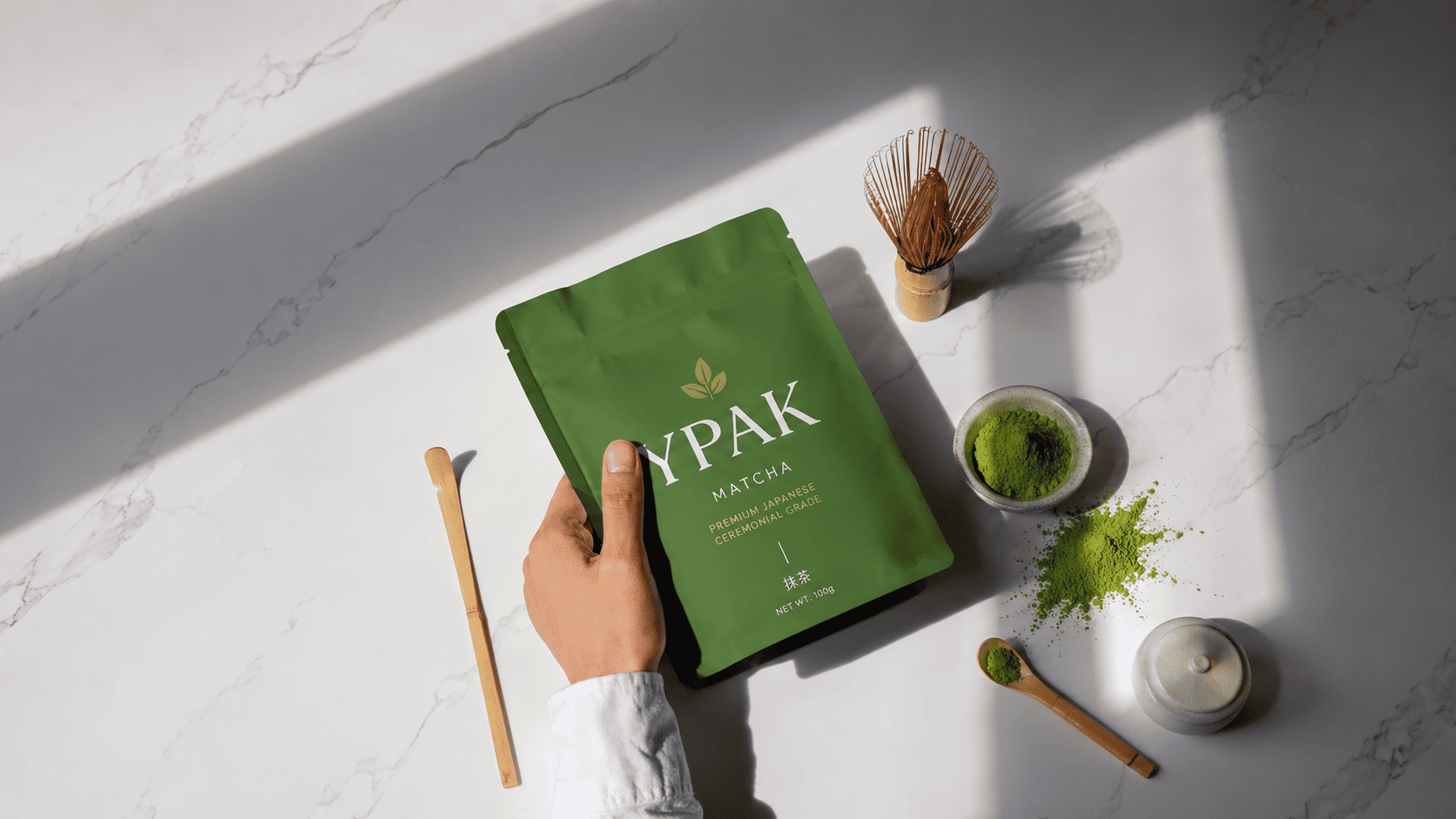
The matcha is sensitive to oxygen, moisture, light and heat and that their narrow shape does not diminish this aspect. Barrier targets must indicate shelf life, distribution conditions and the secondary carton or outer pouch. Performance data on the entire laminate should support the conventional, it is recyclable or compostable description.
Review Barrier Evidence
- Oxygen and moisture transmission with mentioned test conditions.
- Post printing/conversion light protection.
- Food‑contact sealant compatible with the formula.
- Barrier performance following folding, sealing and transport.
Control Longitudinal and End Seals.
Stick packs typically rely on a longitudinal seal and top and bottom seals. Locations react uniquely to temperature, pressure, dwell time and powder contamination. Seal window should be tested at realistic speed which includes possibility of lanes that are warmer or colder than the centre.
Seal Performance by Location (approve).
- Longitudinal‑seal consistency and overlap.
- The strength of end‑seals with and without adjacent powder dust.
- Wrinkles, channels, burn‑through and film distortion.
- Conditioning and handling condition, and leak or burst.
Coordinate Cutting and Tearing

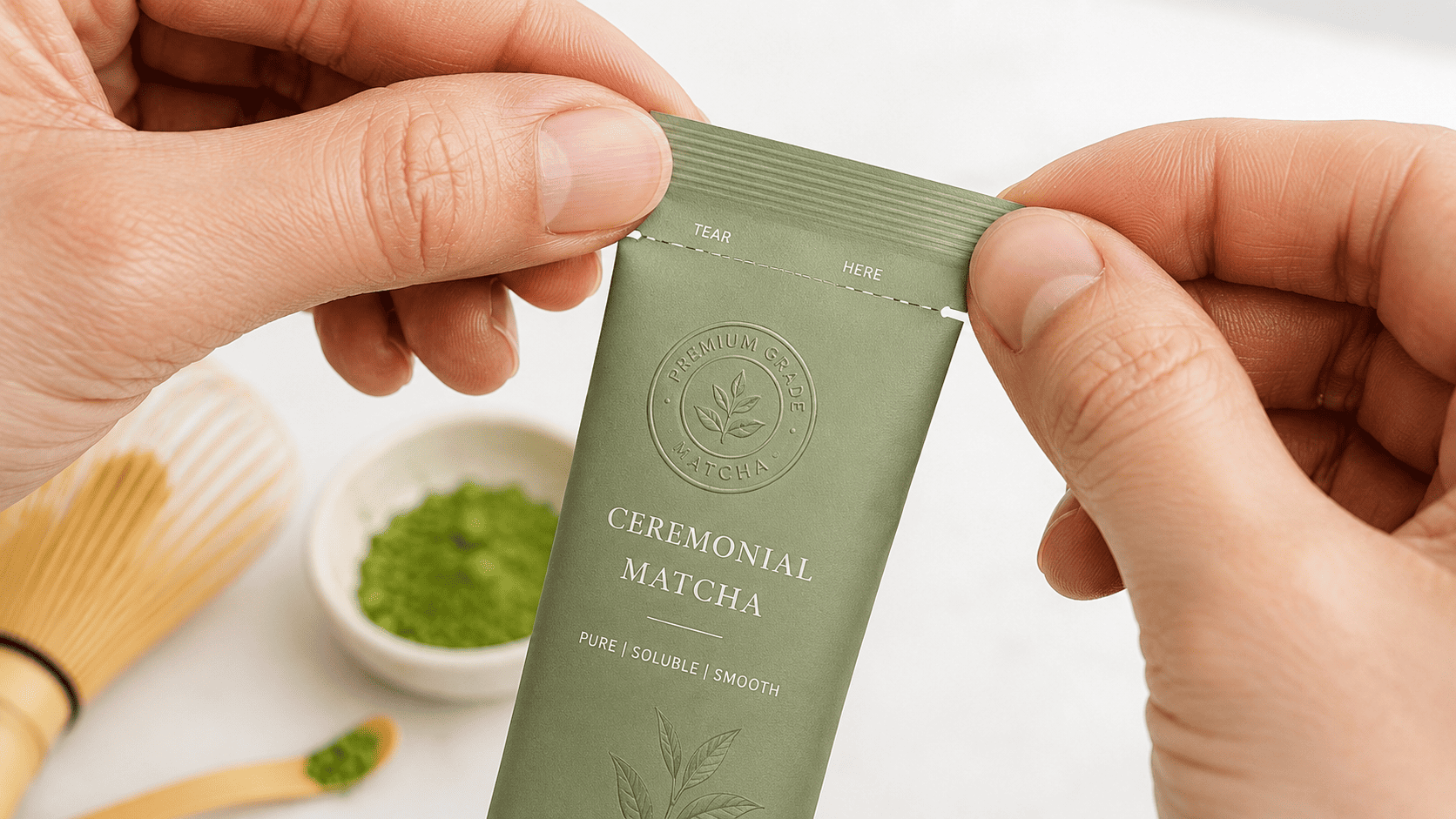
The narrow stick may be annoying in cases where the tear has a small aperture. The notch and cut must provide just sufficient ability to open the pack but leave the entire dose to escape. Direction of tear should be checked on the chosen laminate and other locations on the rest of the web.
Test Real Opening Behavior
- Grip space higher than the desired tear line.
- Notch position in relation to seals, text and codes.
- Opening width achieved by different users.
- Pour into the desired bottle, cup or bowl.
Use the Narrow Print Area Purposely.
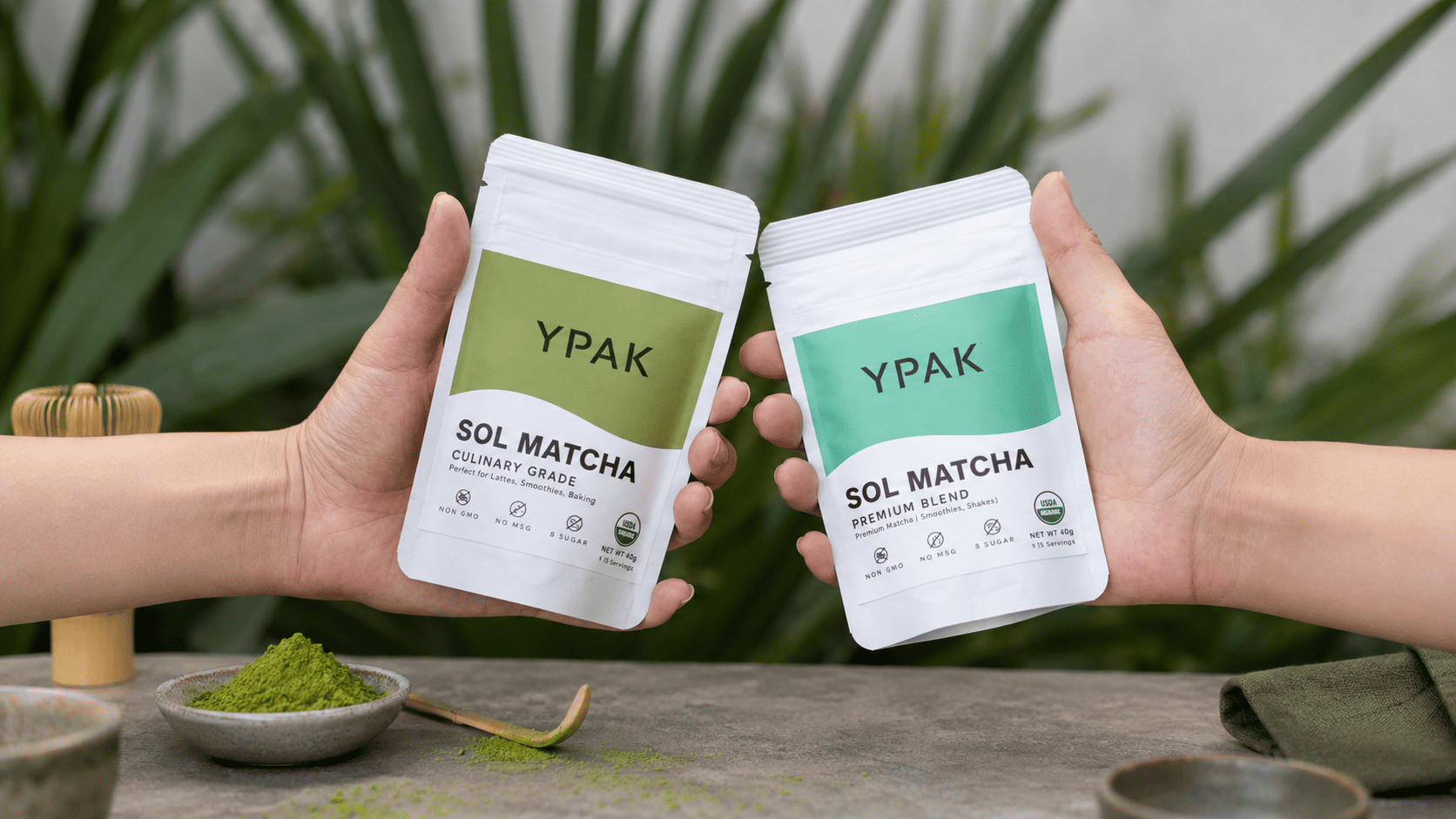
The space (horizontal space) used to display product identity, dosages, instructions and codes is limited in matcha stick packs. The artwork is supposed to have a sharp vertical axis and the vital information should not be near seals and cutting lines. Check the actual completed pack rather than just approve a final package that has been enlarged on the computer screen.
Approve production order Artwork.
- Electronic evidence of copy, dimensions and version control.
- Color, fine text and repeat accuracy. Printed roll proof.
- Transformed samples in cut position and panel position.
- Post‑rubbing coded sticks and post‑packout coded out.
Authenticate Secondary Packout and Dispensing
Long straight packs can change their shape, shift or become misplaced within a carton. Fix the number, orientation and dispensing technique and approve the outer package. There should be transport trials to verify that the end seals do not rub along with other sticks or that compression does not alter the appearance but rather finishes it.
Consider the Retail Unit wholesomely.
- The number of sticks and side position within the carton or in the outer pouch.
- Movement, bending and seal abrasion during distribution.
- Barcode, lot‑code and preparation‑information visibility.
- Ability to take out one stick and leave the rest in place.
Freeze Lane‑Specific standard of production.
The controlled record must contain completed width and length, seal size, film construction, roll design, lane design, nozzle configuration, dosing requirements, sealing requirements, notch location, artwork modification and packout procedure. Multiple lanes and stages of an approved run should have their samples held.
Reanalyze modifications in the matcha formula, dosage, film, filler, lanes or second pack prior to repeat production. This avoids a narrow‑format adjustment generating a new filling, sealing/opening issue, not apparent in the original drawing.
Conclusion
Compared to wider sachets, matcha stick packs demand tighter geometry, dosing and multi‑lane control coordination. The fitting of width should be done to fit and suit the powder and nozzle then length finalized. Before the release of the specification, rollstock stability, barrier performance, longitudinal and end seals, cutting, tearing and packout should all be demonstrated using production‑representative samples.
FAQ
What is the desired width of matcha stick packs?
Should be determined by the nozzle clearance, powder flow, seal allowances and clean discharge opening required rather than appearance.
Will stick length make up a small width?
Only partly. Adding length increases volume, however, this does not eliminate improper nozzle access, seal contamination or an excessively narrow opening.
Should separate checks be made in all lanes?
Yes. Dose, seal position, registration and cut can be different between the web, so the samples should indicate their lane and run stage.
Which film should matcha stick packs be used with?
Take a food‑contact laminate with the necessary barrier and with stiffness, which has been tested in regards to friction and sealing behavior on the target equipment and shown.
Post time: Sep-07-2026


